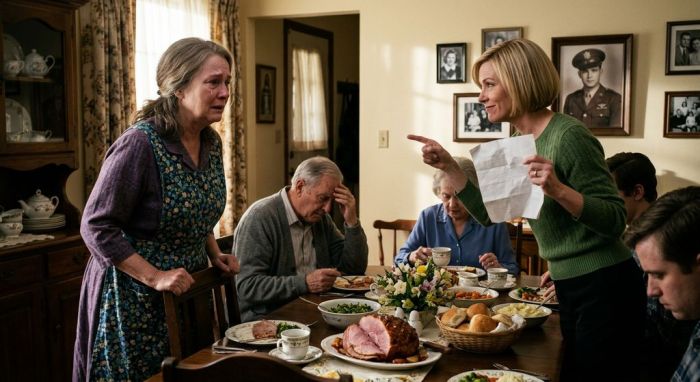
It was Easter Sunday, and the ham had just come out of the oven, when my sister Diane stood up at the head of the table, tapped her water glass with a butter knife, and announced to the whole family that I had sold Grandpa's war footlocker.
I remember the exact sound the glass made. A sharp ping that cut straight through the laughter of my grand-nieces, who were still arguing over the last dinner roll. And I remember how the room fell quiet before Diane even finished her sentence, because that was the kind of woman she had always been. She knew how to hold a room.
"Ellen sold it," she said, and she said my name like it was something that had gotten stuck to the bottom of her shoe. "She took Grandpa's footlocker — the one with his medals, his letters, the photographs from the war — and she sold it to a pawn shop in Harrisburg. Four thousand dollars. That's what she got for our family's history."
The blood left my face. The kitchen tilted. My brother Paul set down the carving knife and stared at me with an expression I had never seen him wear before. My sister-in-law Marilee covered her mouth. My nephew Nick pulled out his phone — of course he did — and started reading something about wartime memorabilia and pawn shops out loud, as if that made any of it more real.
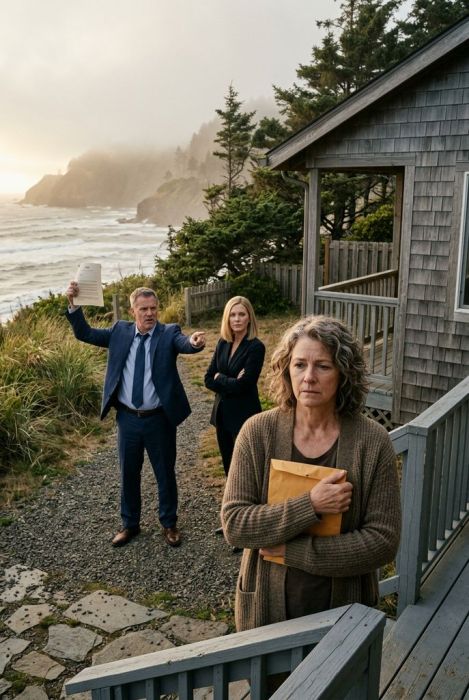
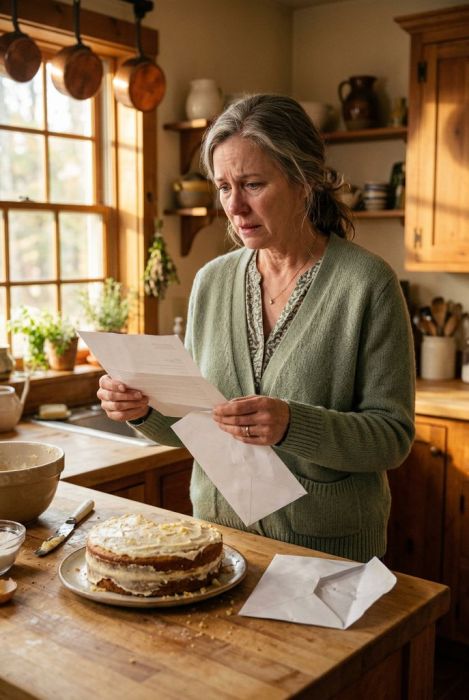
"Four thousand dollars," Diane repeated, and she pulled a crumpled piece of paper from her purse and held it up like a trophy. A receipt, she said. She'd gone to the shop on Route 30 herself and made them show it to her. There it was in black and white: one military footlocker, 1944, sold for four thousand dollars, signed with my initials.
"I thought you should all know," she said, and her voice dropped into something almost tender. "I thought you deserved the truth. She's been selling Grandpa's things to pay her bills, and she told you all she was just cleaning out the attic."
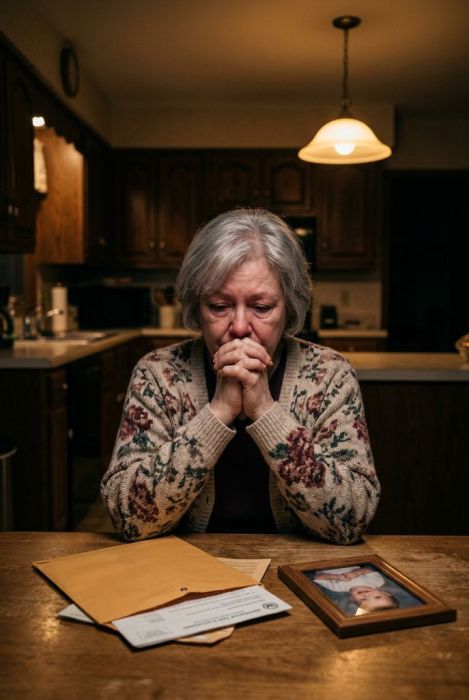
I couldn't speak. That was the worst part. I stood there in the kitchen of the house my parents had built, wearing the apron my mother wore for forty years, and I could not force a single word past my lips. Because on the surface, everything Diane said was possible. I had sold things. That part was true.
My husband Frank passed away three years ago last January. He was a good man, a careful man, and he left me the house and the mortgage and not much else besides. And somewhere in the long gray months after the funeral, I had done something I never thought I would do. I sold my mother-in-law's china cabinet, then the roll-top desk from the spare room, then a set of Roseville pottery that had belonged to Frank's grandmother.
Every piece I sold was mine, or Frank's, or someone on his side of the family. I never touched a single thing that belonged to Grandpa Mercer. I would have sold the roof over my head before I sold his footlocker.
But the family didn't know that, did they? All they knew was that Ellen Mercer had money trouble, because Ellen Mercer had never been good at pretending otherwise. And all they knew now was Diane's crumpled receipt and the initials E.M. scrawled at the bottom of it.
The footlocker had come to me on the afternoon of Grandpa's funeral, fourteen years ago. He was ninety-one when he went, and he had been the last of the great storytellers in our family, a man who could make a room of crying children sit still for an hour. He landed at Normandy on the sixth of June, 1944. He never talked about the beach. He talked about the letters, the boys, the cold, and a photograph of my grandmother that he carried over his heart in his breast pocket for eleven months.
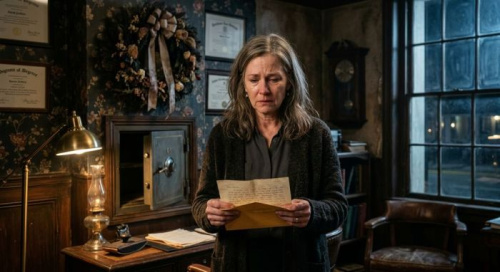
When the executor handed me the footlocker, he read me a line from Grandpa's will: The war box goes to Ellen. She's the only one who ever asked to see what was inside.
It was true. I was the one who asked. When I was eight years old, I sat on the floor of Grandpa's garage for a summer and watched him open that box, one item at a time, and tell me what every piece meant. The Purple Heart, which we all knew about. The letters he wrote to Grandma, which none of us knew about until he showed me. The photograph album with the name of every man in his squad written in pencil on the back of every page, because he said some things a man should not have to carry alone in his head.
He made me promise him something that summer, and I promised. He made me swear that if the day ever came when the family was fighting over his things, that box would go to the county historical society before it ever went to a pawn shop. "Promise me, Ellie," he said. And I promised.
I kept that promise for fourteen years. The footlocker sat in the corner of my garage in the same spot, under the same drop cloth, next to the same tangled pile of Frank's old fishing rods. And on the Tuesday after Easter, I walked out there to prove to myself that it was still fine, that Diane was lying, that everything would be okay.
The drop cloth was on the floor. The corner was empty.
I dropped to my knees in the middle of the garage and I did not get up for a long time. I did not call the police. I want you to understand why. I want you to know what it feels like to be sixty-two years old, to have your whole family look at you like you're a thief, and then to walk into your own garage and find the one thing you swore you'd protect is gone.
It wasn't about the money. It was never about the money. It was about the photograph album, the letters, and the name of every boy in Grandpa's squad written in pencil in a dead man's hand. And it was about the look on Diane's face at Easter, and the fact that she knew I couldn't prove where I had been on the night someone took my grandfather's memory out of my garage in the dark.
I called my cousin Rosemary, because Rosemary is the only other person in this family who ever cared about the box. I didn't tell her it was missing. I told her I wanted to update the catalog, and she drove over that same afternoon with the folder of photographs we had made together last winter, when I told her I wanted to make a scrapbook for Grandma's eighty-fifth birthday.
That's the part Diane didn't know. Last winter, Rosemary and I had gone through the footlocker together, piece by piece. We photographed every medal, every letter, every page of that album. We measured the box and I wrote down the words scratched into the inside of the lid, because I thought they were sweet.
Right under the handle, in careful block letters cut with a knife in 2009, it says: ELLEN'S BOX. GRANDPA SAID SO.
Grandpa had carved my name into the inside of the lid the week after my divorce, when I was picking up the pieces of my life, and he told me that a man in the war learns to label what matters. "You label your rifle, you label your boots, and you label your heart," he said. "Then everybody knows who it belongs to."
Nobody in my family knew it was there. Nobody except Rosemary, who helped me photograph it, and me.
The next morning, I called the pawn shops on Route 30. I called the ones in Lancaster. I described the footlocker a dozen times and got a dozen dead ends, and I was about to give up when the man at the last shop on my list — a little place called Keystone Collectibles on the edge of Lititz — said the oddest thing.
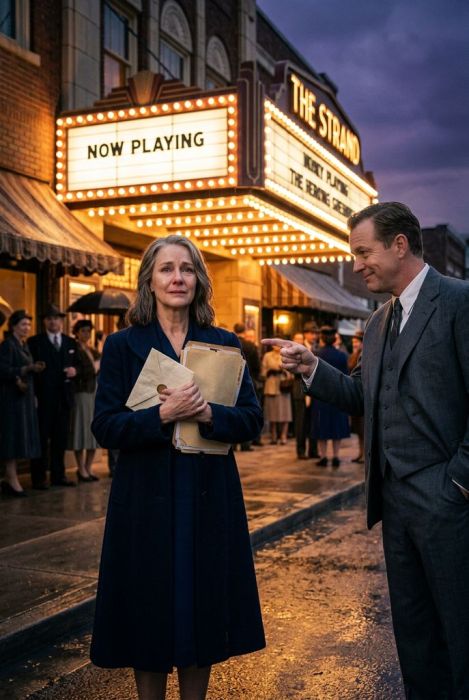
"Hold on," he said. "Are you Ellen Mercer? The history teacher from McCaskey?"
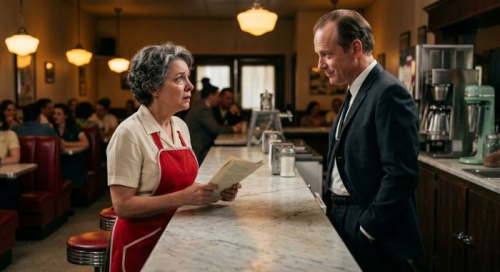
His name was Felix Alvarez. He had been in my sixth-period American history class in 1998, and for one entire semester, I had brought Grandpa's footlocker to school on Fridays and told the war stories Grandpa had told me. Felix remembered it. He said he had never forgotten the smell of the canvas, or the way I held up the photograph album and told them every man's name.
And then Felix said the words that turned my blood to ice.
"Mrs. Mercer, I bought it. Three days ago. A woman with short blond hair came in and said she'd found it in her mother's attic and wanted a fair price. I paid her forty-eight hundred dollars, and I put it in the back room because I planned to call you — I recognized the box, but I couldn't believe it was really yours."
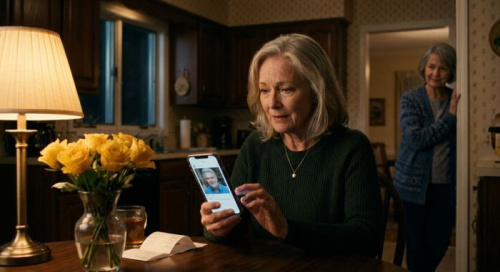
I did not scream. I did not cry. I sat down at my kitchen table, and I pulled out Frank's old laptop, the one he kept in the drawer under the microwave, and I opened the folder marked CAMERAS.
Frank had installed security cameras the year before he died, after a string of break-ins on our street. I had forgotten. Everyone had forgotten. Frank was the kind of man who set things up and never mentioned them again, and the only camera anyone in the family knew about was the one over the front door, because Diane had asked about it once and Frank had shown her.
Frank had also put one over the man-door in the garage. Diane knew about the front door, you see. She knew exactly which wire to clip.
On the night of the third of April, at 11:17 p.m., the garage camera caught a woman in a dark coat with a baseball cap pulled down low, backing Grandpa's footlocker out through the man-door on a dolly. The camera was mounted high, and the dolly tipped the box just enough that the handle swung toward the lens for a single frame.
I saw my sister's face. And under her arm, in the same frame, the corner of a manila folder with a faded green sticker — the same green sticker that had been on the fake receipt she waved around at Easter.
I did not confront her. I waited, because I had learned something in sixty-two years of being the overlooked Mercer sister, and it was this: Diane always swings too hard, and eventually she swings right into the one thing she never saw coming.
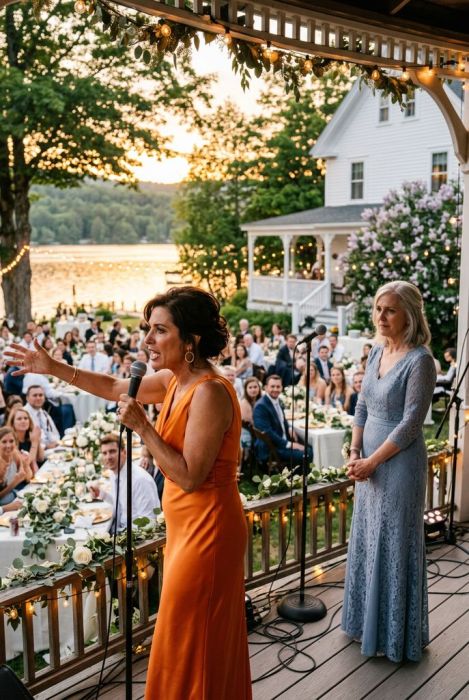
Grandma's eighty-fifth birthday was the last Saturday in May. My sister, the hero of the hour, had arranged it all at the American Legion hall. My brothers donated the money for the cake. My cousins drove in from three states. And the whole family was on its feet applauding when Diane stood up at the front of the room, all smiles, and unveiled her surprise.
"I found it," she announced. "I went all the way to Lititz, I tracked down the pawn shop, and I bought Grandpa's footlocker back with my own money so it could come home."
The room gasped. The room cheered. Grandma cried. Diane held the footlocker over her head like a champion, and for one shining moment she was the greatest sister who ever lived.
Then the door at the back of the hall opened, and I walked in.
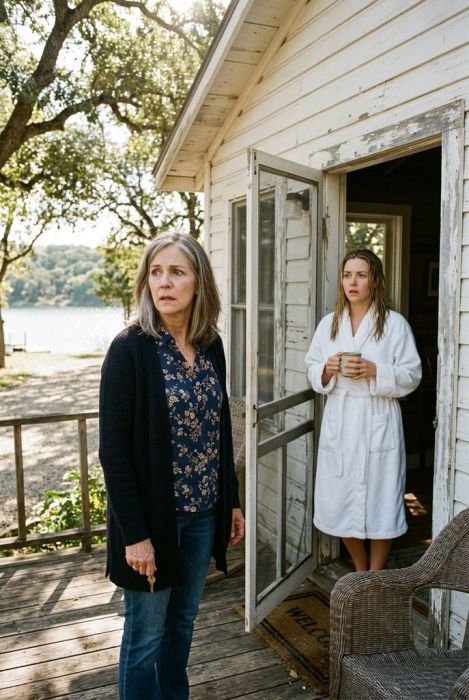
I was wearing my mother's pearl necklace and holding a folder, and behind me came Felix Alvarez and two officers from the East Lampeter Township Police. I will never forget the look on Diane's face. It happened in two parts. First there was confusion, because I was supposed to be home with a cold. Then there was fear, because she understood that I had not come alone.
"Diane," I said, and I said it the way she had said my name on Easter, "I want you to tell them what's really inside that box."
She laughed. She did it beautifully, the way she did everything. She said I was just bitter, just jealous, just trying to ruin her moment like I had tried to ruin everything else. She opened the lid with a flourish to show the whole room the medals and the letters.
And inside the lid, carved in block letters, every person in that hall from the front row to the back could read the words Grandpa had cut into the wood almost eighty years earlier: ELLEN'S BOX. GRANDPA SAID SO.
The room went silent. Then Felix Alvarez stood up and told them the truth. He told them a woman with short blond hair had brought the footlocker to his shop three days before Easter — the same day Diane produced her receipt out of thin air — and that he had paid her forty-eight hundred dollars in cash, and that he had her name on a bill of sale in his pocket. My brother Paul went white. My sister-in-law Marilee was crying before the officers even opened their mouths.
And then I played them the tape.
They watched my sister back a dead man's memory out of my garage on a dolly at 11:17 at night. They watched her clip the wire on the front camera first, on the night of April third, not knowing there was a second lens. And they watched her face swing toward the camera for the single frame that mattered.
The charges came the next week. Theft, filing a false police report against me — she filed it the day after Easter, did you know that? — and a misdemeanor fraud charge for the fake receipt. I learned later that Diane had eleven thousand dollars in credit card debt from the salon she'd lost, and that she had told herself a dozen ways the box was really the family's, that she was only borrowing it, that she would never really sell it. Except she did, to a man who recognized it from a history classroom and called his old teacher the moment he understood what he was holding.
The footlocker came home. Felix refused to take the money back; he said watching Diane's face when the officers read her rights was worth more than any antique in his shop. I gave him back his forty-eight hundred dollars, and he donated the whole amount to the American Legion post that had hosted Grandma's party, which felt like something Grandpa would have liked.
The family didn't know what to do with itself afterward. Paul brought me a coffee the next Sunday and couldn't look me in the eye. Marilee called and cried. Nick deleted his Facebook post, the one where he had called me a disgrace — I had screenshotted it first, but I let him think I hadn't.
As for me, I did what Grandpa told me to do. I called the county historical society, and I made a deal: I would keep the footlocker until I'm gone, and then it goes to them, with a note that it was opened, and loved, and never once sold for anything. It sits in my living room now, not in the garage, where I can see it every morning with my coffee. And last Veterans Day, I took it to the public library and set up a small display — the medals, the letters, the album, and a printed card that tells the story of the men whose names are written in pencil on the last page.
Diane got eighteen months, and it shamed the whole family, the way these things do. But I did not smile when they read the sentence, and I did not smile at the party afterward. It was never about her, you see. It was never about the money, or the victory, or the look on her face. It was about a promise I made to an old soldier in a garage when I was eight years old, and about the name he carved on the inside of his own heart, and about a little wooden box that somehow managed to hold our whole family's love for forty years without ever once holding a grudge.
Grandpa used to say that the war taught him one thing: label what matters. It took me sixty-two years and one Easter Sunday to fully understand it. And I do now. Right under the handle of that box, in the same careful hand that carved my name years ago, I have added four words in small, neat letters, in case anyone ever comes looking for it again.
ELLEN'S BOX. GRANDPA SAID SO. Still hers. Still safe.