The woman who walked away from her baby girl thirty years ago strolled into my wedding rehearsal like she owned the place. Because she already believed she did.
"Where does the mother of the bride sit?" Carla asked the wedding coordinator, tossing her dark hair over one shoulder, and the poor girl pointed to the front row without thinking. I did not mention that the front row had been saved for me. I did not mention that I was the one who had raised the bride — fed her through the chicken pox, sat through every science fair and poetry slam, and paid for every daisy on that arbor. I just stood at the edge of the lilac-draped gazebo with my clipboard in my hand and felt my chest close up like a fist.
"Nora? Are you okay?" Ashley called from the altar. She is thirty-two now, a family lawyer from Concord who reads people the way I read novels, and for one heartbeat she looked like the six-year-old who used to hide behind my kitchen table.
"I'm perfect, sweetheart," I said, because what else do you say in front of forty guests when the past walks in wearing a silk dress?
Let me introduce myself properly. I am Nora Whitfield, fifty-eight years old, and I own the Lilac House, a bed-and-breakfast on the shore of Lake Winnipesaukee in Meredith, New Hampshire. I bought it twenty years ago with my teacher's pension and the life insurance Daniel left me when he died too young. Daniel was a state fisheries biologist, a gentle man who smelled of lake water and pine, and he was the love of my life for twenty-four years. But long before he knew me, he had loved Carla. That was the one mistake he ever admitted to making.
They were married for less than a year. She was nineteen when Ashley was born and twenty when she decided the baby was too much. One Tuesday in April she packed a single suitcase, left the baby with a neighbor, and never came back. Daniel raised that little girl alone until I walked into the public library on a rainy Saturday and he asked me whether I liked lake trout. I told him I preferred to catch them. He laughed so hard he nearly dropped his armful of books, and that was that. When Ashley was six, Daniel put a ring on my finger. When she was seven, we adopted her together. Carla signed the surrender papers in a Merrimack County courtroom in 2001, signing away every right she had in exchange for the state dropping forty-seven thousand dollars in back child support. She has apparently spent the last twenty-five years forgetting that she signed anything at all.
The Lilac House was never a family inheritance. I bought it with money I saved, and Daniel and I built the garden gate with our own hands, and Ashley learned to ride her bicycle on the carriage path that runs down to the boat launch. She helped me hang every lace curtain. She knows the name of every lilac bush out back because she watched me plant them. So when Carla Russo sauntered up the gravel drive three days before the wedding, announcing herself as "the real mother of the bride," I should have turned her around. I should have handed back her car keys and closed the door. But Ashley was standing right there, and I have never been able to make Ashley watch me be cruel.
"Let her stay," Ashley said quietly that night as we folded napkins into swans on the dining room table. "She's my mother. She traveled a long way."
"She's the woman who gave birth to you," I said carefully. "She is not your mother."
Ashley's hands did not stop moving. "I know. That's why it doesn't hurt me anymore, Mom. That's why I can let her stay. She can't touch what we have."
That was Thursday. On Friday morning, Ben — Ashley's fiancé, a boat carpenter who knows every soul in the Lakes Region — found me on the porch with a look on his face I had never seen before. "Nora," he said, "who's the silver-haired man who came through the back gate with Carla last night?"
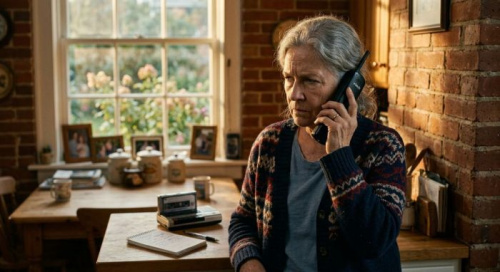
I told him I had not known anyone came through the back gate.
"He had a Boston plate and a folder under his arm," Ben said. "I watched them walk the whole property line. When they got to the water, she pointed at the boathouse, and he took pictures." He hesitated. "I've seen that guy before, at a town planning meeting. Ray Feld. He builds condos. Lakefront condos."
Something cold settled in my stomach. The Lilac House sits on two acres of prime lakefront, and I knew exactly what that view was worth. I also knew that Carla had spent the last decade "in luxury real estate" in Naples, although no one in the family had ever seen her hold a job for more than a season. I told myself I was being paranoid. Then Ben walked me to the garden gate, the one he had wired with a small security camera after a guest's car was broken into two summers ago, and he played back Thursday night's footage.
Ray Feld stood at my gate with a folder under his arm. Carla stood beside him in bright gold earrings, smiling. "The title's clean," she said. "She's elderly and sentimental. After the wedding, I'll have her out by fall. You'll get your permits before the frost."
"Fall? I need winter for demolition," Feld said.
"You'll have it," Carla said. "By blood, that property belongs to my daughter. And my daughter trusts me."
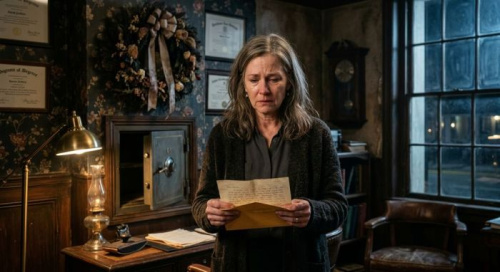
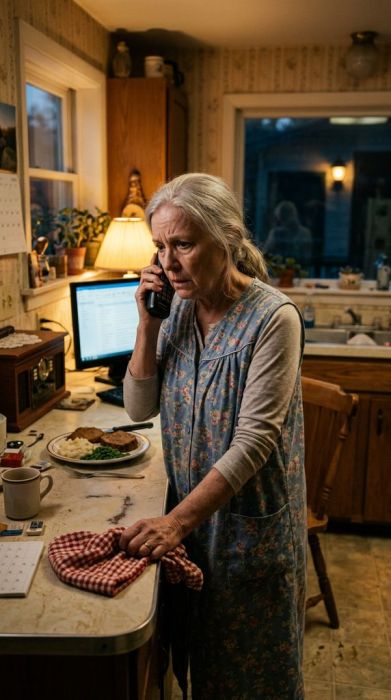
I watched that footage three times. Then I walked upstairs, set my phone on the dresser, and sat on the edge of the bed in the room Daniel and I used to share. I did not cry. I had done all my crying the year Daniel died, and something in me had gone still and practical afterward, the way a lake goes still before a storm. I pulled out the metal box where I keep Daniel's letters. Ashley had found her own copy of what was in that box years ago, when she was in law school, digging through her father's files for closure. She never told Carla. She had never told anyone but me.
I called my daughter that afternoon and asked her to come home early. She stood in the parlor in her jeans, watched the footage on my phone in silence, and when it ended she looked up at me with an expression I could not read.
"Mom," she said, "can I ask you for one strange favor?"
"Anything."
"Let her have her moment at the reception. Let her grab the microphone. I want the whole town to hear what she says with her own mouth. And then I want them to hear the truth."
I looked at her for a long time. Somewhere out back, the wedding tent was going up, and I could hear the caterers calling to one another in the warm August air. I thought about the mother who taught Ashley to ride a bike, and the mother who abandoned her, and I realized my little girl had become the kind of lawyer who wins a case before the judge clears her throat.
"All right," I said. "But if she comes after my lilacs, I'm not responsible for my actions."
Ashley laughed. It was the first real laugh I had heard out of her since Carla arrived. "Deal."
The day of the wedding was postcard-perfect. Lake Winnipesaukee glittered like hammered gold, and the Lilac House looked like something from a movie, all white clapboard and climbing roses under a blue New Hampshire sky. Eighty guests filled the white chairs I had rented, and the string quartet I had booked played under the big oak. Carla wore a dress the color of a traffic cone and positioned herself front and center, touching Ashley's veil, fussing with her train, whispering loudly about "my side of the family." The photographer followed her around like she was the bride. I watched from the porch with a glass of lemonade and let her have every single minute of it.
When Ashley walked down the aisle, she did not take anyone's arm — Daniel was gone, and Ashley had made her choice. She walked alone, holding my hand, and when she reached the arbor she kissed my cheek and whispered, "I love you, Mom." Carla applauded so hard I thought her bracelets would fly off. Neither of us looked at her.
The reception was everything Ashley deserved. The caterer's fried chicken and the lake trout wrapped in lemon, the band playing old Motown, the sun going down over the water in shades of pink and gold while the fairy lights came on. I watched my daughter dance with her new husband and thought how full my heart could be and still hurt at the edges.
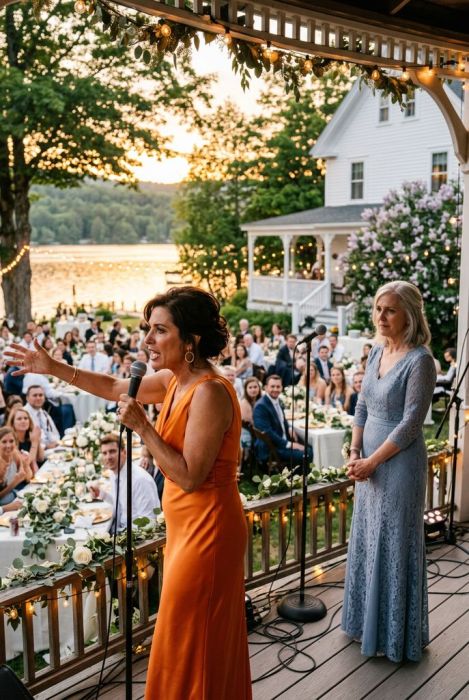
Then came the toasts. Ben's best man told a story about Ben rebuilding a 1962 Chris-Craft in his garage. Ashley's bridesmaid remembered the time Ashley defended a stray dog in front of the whole town council. And then, exactly on cue, Carla stood up and made her way toward the bandstand, and I saw Ashley set her champagne glass down very, very carefully.
"May I have the microphone?" Carla said to the DJ, and he handed it over before anyone could stop her. She turned to face the room, glowing. "As the mother of the bride — the real mother, by blood — I want to thank you all for coming to celebrate my beautiful daughter."
The guests applauded politely, the way you do for a stranger's toast. Carla let the moment hang, then went on. "And now, because family business must come before pleasure, I have a small announcement. This beautiful property, the Lilac House, came into our family through my late husband. And I have decided, as Ashley's mother and the custodian of her inheritance, that it is time to realize this family's true value. Wonderful things are coming. Trust me."
The silence was immediate. You could hear a pin drop onto the lawn. A few people glanced at me, sitting at the head table with my napkin in my lap, wearing Daniel's favorite shade of blue.
I stood up. "Actually, Carla, I think it's time everyone heard a few facts."
I should say this: the room paused on me for one second, but I gave it to my daughter, because it was her wedding and her moment and her victory. Ashley walked to the bandstand and took the microphone out of Carla's hand — gently, the way you take a toy from a child.
"Thank you, Carla," she said. She did not call her Mom. Everyone heard that. "Before you announce who owns what, I want to share a document with everyone here." She held up a piece of paper she had taken from her father's old files the night before — a certified copy of a Merrimack County Family Court decree, complete with the judge's seal.
"This is an adoption decree dated November 2001," Ashley said. "The court records show that Carla voluntarily surrendered her parental rights in exchange for the State's agreement not to pursue forty-seven thousand dollars in back child support. She signed it in front of Judge Harlow. She signed away every legal claim she had to me, to my father's estate, and to anything I might ever inherit." She turned to Carla. "You don't remember signing it, do you? You were in a hurry to get to Naples."
Carla's face went white. "That — that's a private matter, Ashley —"
"It's a public record," Ashley said calmly. "And so is the deed to this house, which has been in Nora Whitfield's name for twenty years. My father never owned the Lilac House. My mother saved her salary as a teacher and bought it herself. I watched her do it." She turned to the guests. "This house is my mother's. This wedding is my mother's gift to me. And this woman —" she turned back to Carla — "is the person who gave me away."
Somewhere at the back of the tent, I saw Ben quietly raise his phone. A moment later, the band's speakers crackled, and every guest heard a voice they did not expect: Ray Feld's, tinny and clear, recorded at my garden gate on Thursday night. "The title's clear." And Carla's voice answering: "After the wedding, I'll have her out by fall."
A wave of breath left the crowd.
"That's not what it sounds like," Carla started, but her voice had gone thin. "That's a neighbor's — that's doctored —"
"It's my camera," Ben said from the back. "I installed it myself. I'll swear to that in any court in New Hampshire." Carla looked wildly around the crowd, searching for the man from Boston, and found only an empty chair and a sweating glass of champagne. Something in her face crumbled — not shame, I think, but the collapse of a plan she had been building since the day she read Ashley's wedding announcement online and decided her daughter's property was worth more than her daughter.
Kurt, the caretaker who has shoveled my driveway for fifteen winters, stepped forward from beside the tent pole and took Carla's arm — not roughly, just firmly. "I'll walk you to your car, ma'am," he said. He did, past eighty guests who parted silently to let her through. Her high heels made small, lonely sounds on the gravel. Nobody said a word until the sound of her rental car faded down the drive. Then, from somewhere in the crowd, someone started clapping. It spread — first the bridesmaids, then Ben's family, then the whole tent, a warm wave of applause that had nothing to do with Carla and everything to do with my daughter, standing on the bandstand with the microphone hanging at her side and tears running down her face.
And then Ashley crossed the lawn in her wedding dress, with the lake sparkling behind her, and she put her arms around me and said the only thing I had ever needed to hear: "You were right, Mom. She can't touch what we have."
The band played until midnight. Ashley danced with Ben, and then she danced with me, and then, because she is her father's daughter and cannot resist a good turn, she danced with Kurt the caretaker, who turned red as a tomato and was the happiest man in New Hampshire. I walked down to the boathouse at midnight and stood at the end of the dock, watching the moon lay a silver road across the water, and I thought about Daniel. I told him his girl was married, that the house was safe, that his ex-wife had been escorted off the property in full view of eighty witnesses. I think he would have laughed.
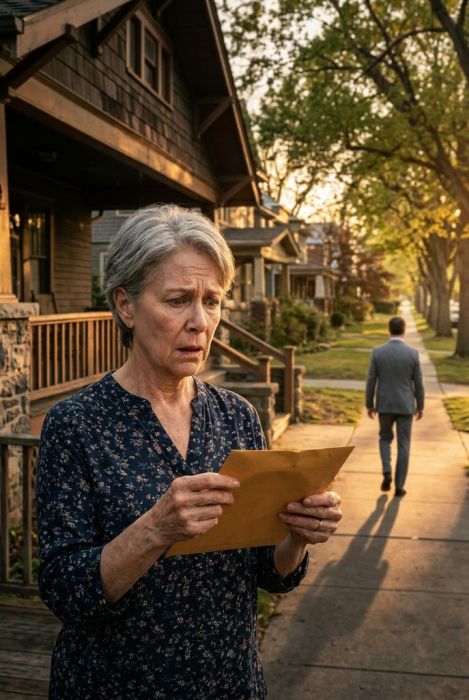
Carla tried to make trouble, of course. A week later a lawyer's letter arrived accusing me of defamation and demanding the deed to the Lilac House "in the interest of family harmony." My own lawyer, a heavyset woman from Laconia who has known me since I bought the place, laughed so hard she had to put the letter down. "Let her sue," she said. "I'll bring the adoption decree, the deed, the recording, and forty witnesses. It'll be the shortest trial in Merrimack County history." The lawsuit never came. Instead, a real estate agent from Boston called me in October, asking whether I'd be interested in selling my lakefront acreage to a developer named Ray Feld. I told her I'd rather plant more lilacs. I did, too. Forty of them, along the fence line, right where Carla and her developer had stood planning my eviction. They will bloom every spring for the rest of my life.
The Lilac House is full every season now. Ashley and Ben share the booking calendar with me, and we host at least one wedding a month from May through October. Ashley and Ben had a little girl last summer, and they named her June, after Daniel's mother, and when June is old enough she will learn to ride a bicycle on the carriage path, same as her mother did. She already calls the lilac bushes "Nora's flowers," which melts me every single time.
Sometimes, on quiet mornings, I pour two cups of coffee and sit on the porch with Daniel's old fishing hat hanging by the door, and I think about the difference between the mother who leaves and the mother who stays. I never set out to be a hero. I just wanted to be the person Ashley could count on, the way she could count on the sunrise over the lake. And in the end, that was enough. It was more than enough.
Because the woman who walked out on her baby girl thirty years ago lost everything she came back for — the house, the money, the daughter, even her place in the family photographs. And I kept every single thing that mattered. My lilacs. My lake. My daughter. My home.