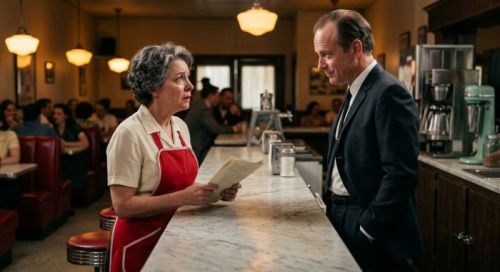
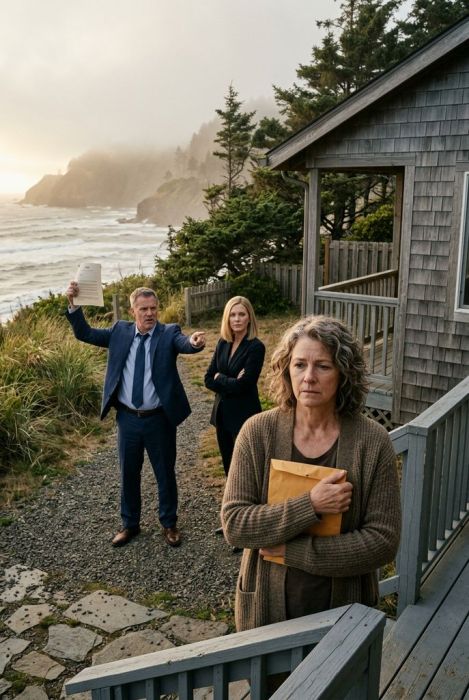
The judge said my name first, and for one foolish, hopeful second I let myself believe I'd won. Then he said Greg's, and the gavel came down like a lid snapping shut on a coffin. My brother straightened his tie and turned to me before the courtroom had even settled, wearing that smile he'd been practicing since we were children — the one that said he always won, and we both knew it. He buttoned his jacket, walked past my chair, and leaned down close enough for me to smell his cologne. "The house is mine, Beth. Dad would have wanted it that way."
I didn't answer him. I just watched the clerk slide a manila folder across the table toward his lawyer — the folder with the deed inside — and I thought about the second page. The one Greg would never bother to read.
We grew up at the water. Gull Harbor, Oregon, is the kind of town where the fog rolls in off the Pacific every morning and burns off by noon, where everyone knows everyone's truck and nobody locks their doors until hunting season. Dad bought the beach house in 1974, the year I was born, with money from thirty years at the lumber mill and a loan he swore he'd pay off early. He never did. But the house was never about money to him. It was about the gray shingles, the salt air, the front porch where he drank his coffee and watched the tide, the little room upstairs where he kept his fishing gear and his newspaper clippings. It was the place Mom hummed while she made chowder, the place where Greg and I learned to swim, the place where every summer of our lives had a beginning.
I was the one who stayed. After high school I went to the community college, got my teaching credential, and came right back to teach third grade in Gull Harbor. Greg couldn't wait to leave. He went to Portland, then to the city, sold cars and then houses, and married a woman named Danielle who wore the same perfume as our mother and laughed too loudly at everything he said. He came home for Thanksgiving and for the Fourth of July, called Dad "old man," and treated the beach house like a hotel he'd inherited by birthright. Whenever Dad handed me the extra key, Greg's eyes went dark. "That's my key, Beth. Don't get used to it."
Mom died five years ago. Cancer took her fast, the way it does when it decides to be cruel, and Dad was never the same. He stopped going to the mill on Fridays, stopped fixing the fence, stopped answering the phone. He told me once, sitting on the porch with his coffee gone cold, that the house was all he had left of her. "I'm not going anywhere, Beth. I made her a promise." So I did what I'd always done. I stayed. I brought him groceries, took him to his appointments, sorted his mail when his hands got unsteady, and paid the bills out of a little stack on his kitchen table while he napped in his chair.
I knew there were letters. I saw the return addresses — the bank, the title company, the roofing contractor — and I set them in a neat pile the way he asked me to. "Don't open those," he said, and I didn't. He was my father. I trusted him. I never imagined the pile was the size it was, or that he'd been carrying it alone for years, or that the weight of it was slowly breaking his heart.
Dad died in January, in his sleep, in the house he loved. I found him in the morning with the radio still playing and his coffee cup half full. Greg didn't make it for the funeral; he said his flight was delayed, but Danielle posted pictures of their new boat the same day. And then, six weeks after we buried Dad, Greg showed up at my door with a lawyer and a smile.
He'd found an old will. Not the one Dad kept in the safe-deposit box — no, a copy from 2005, the year before Mom got sick, when Dad had scribbled "everything to Ellen and Gregory" on a piece of paper and never had it witnessed properly. Greg's lawyer argued it was Dad's true wish. He brought a neighbor, old Mrs. Porter, who swore on a Bible that Dad had told her "the boy deserves the house." I sat in that courtroom and listened to my brother rewrite our family's history, and I said almost nothing. I didn't have a lawyer of my own. I had a teacher's pension and a savings account that was already thinner than I let anyone know, because I'd been quietly paying Dad's overdue property taxes for the past two years.
The judge ruled for Greg. He said the 2005 document, flawed as it was, reflected Dad's "apparent intent," and that my claim rested on nothing but "sentiment." He was sorry, he said. The law was the law. Greg pumped his lawyer's hand like he'd won the Super Bowl, then drove straight to the beach house and changed the locks. He posted a video of the ocean view with the caption: "Hard work pays off. The Gull's Nest is officially mine."
I didn't cry in front of him. I went back to my little house on Aspen Lane, and that night I sat in the dark and let myself grieve for the last piece of Dad I had left. And that's when I remembered the envelope.
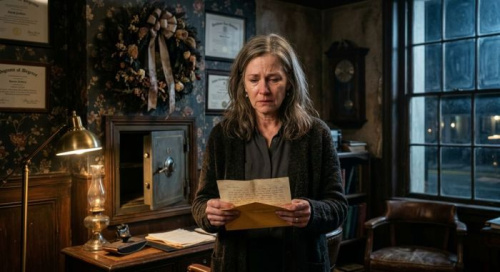
Mr. Ashworth, Dad's lawyer, had handed me a thick manila envelope at the funeral, the kind with the metal clasp. "Your father asked me to give this to you, Beth. He said to open it when you were alone." I'd tucked it into my coat pocket and forgotten it in the chaos of those weeks. Now I tore it open with shaking hands.
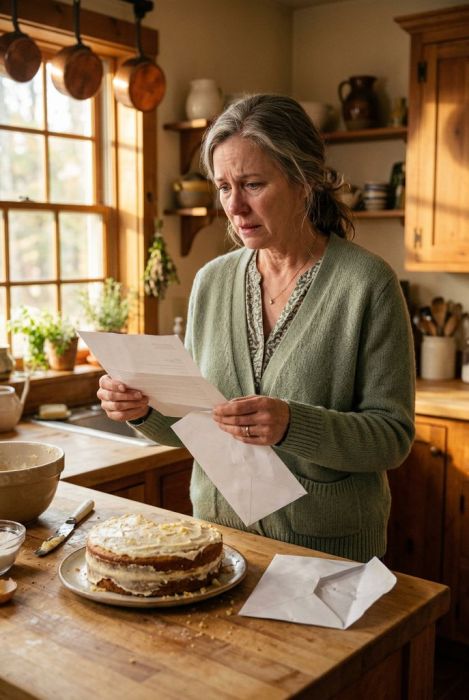
Inside was a letter in Dad's careful handwriting, and beneath it, copies of every document he'd been hiding for years. Three mortgages on the beach house — the first from 1974, then two more refinances, one for Mom's treatments, one for the roof. A mechanics lien from the roofing company for work they'd done after the big storm and never been paid for. A notice of unpaid property taxes for two years running. And a letter from the bank, dated three weeks before Dad died, warning of foreclosure.
I read Dad's words through a blur of tears. He wrote that Mom's illness had emptied everything, and that he'd borrowed against the house again and again because he couldn't stand the thought of losing it while she was still alive. "I know I'm leaving you a mess, Beth. I was too ashamed to tell you, and too stubborn to let it go. If Greg ever tries to take the house, let him. It isn't the treasure he thinks it is. You were the one who stayed, the one who was here. I put the cottage in your name years ago, and I don't want it back. It's yours, free and clear. I love you, girl. Don't be like me. Let it go."
I sat on my living room floor until the sun came up, the letter in my hands, and I felt something I hadn't felt in months: I wasn't the one who'd lost. Greg had just won a house that was sinking. All I had to do was let him keep it.
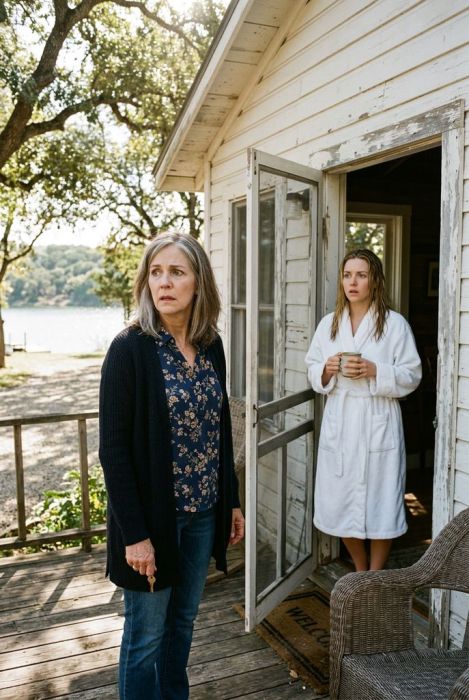
The cottage is a mile up the river from Gull Harbor, at Blackberry Bend — a little two-room place Dad and I built together when I was fourteen, with a tin roof, a wood stove, and a porch that looks out over the water. Dad had deeded it to me the summer before Mom got sick, "so you always have a place, Beth, no matter what happens." I hadn't thought of it in years. I'd been so busy being loyal to the beach house, I'd forgotten that Dad had given me something better. I packed a suitcase and moved out of Aspen Lane before spring. I planted tomatoes by the porch. I hung Dad's old license plate on the wall. And I waited.
Greg didn't disappoint. By summer he'd hired a real estate agent and listed the Gull's Nest for nearly a million dollars. "Prime oceanfront," he told me over the phone, in that voice he used when he wanted to rub salt in a wound. "I'll be taking the whole family to Mexico on this one, Beth. Maybe you can come if you behave." I said I was happy for him, and I meant it in a way he couldn't possibly understand.
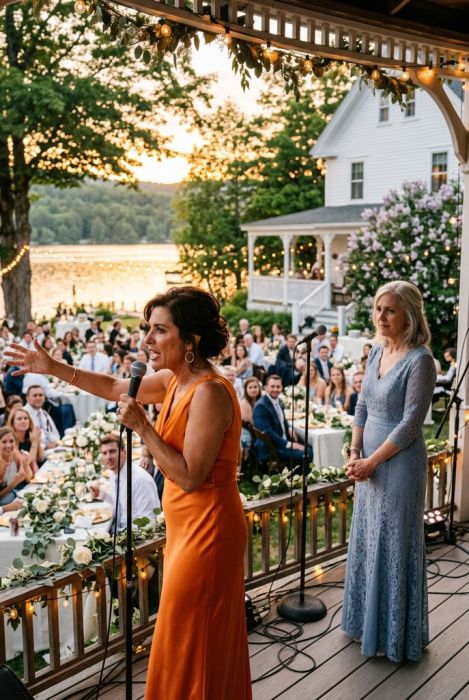
The developer's offer came in on a Thursday, and Greg threw a celebration dinner at the beach house that Friday to toast the sale. Danielle wore a white dress and took pictures of the sunset. Greg stood on the porch with a glass of champagne and announced that the Gull's Nest would be torn down to make room for four luxury condos. "This house has served its purpose," he said, raising his glass to the family and neighbors gathered on the lawn. "Time for the old girl to make way for something better."
That was the moment the phone rang.
I watched his face change. He held the phone to his ear, and the color drained out of him like water out of a sink. The buyer's attorney had run the title search. Three mortgages. A mechanics lien. Back taxes. The bank's foreclosure action, already filed, already public record. The deal was dead. Nobody was buying a house the bank was about to take.
Greg stood in the middle of his own celebration, the champagne going flat in his hand, and he didn't know what to do with his face. Danielle was still smiling for the camera. The neighbors were still clapping, waiting for him to finish his toast. And then Greg looked at me — I was standing at the edge of the lawn, the only one who wasn't surprised — and I watched the truth hit him like a wave. "You knew," he said, and his voice cracked. "You knew the whole time."
The room went quiet. Everyone turned to look at me. I reached into my bag and pulled out the envelope — Dad's letter, the mortgage papers, the lien, the tax notices — and held it up so Greg could see it. "Dad tried to tell you, Greg," I said. "He left this for the one who'd listen. He said the house wasn't the treasure you thought it was. I just let you find out for yourself."
Greg took a step toward me, and for a second I thought he might do something foolish. But there were too many people watching, and Danielle had started to cry, and the foreclosure notice was already waiting for him at the house in a bank envelope he'd been too busy to open. He didn't have a move left. He just stood there in his white shirt on the porch of a house that had never really been his, while the fog rolled in off the ocean, and everybody finally understood what Dad had known all along.
The bank took the beach house in the fall. Greg had spent his savings on celebratory dinners and listing fees and the new fence he'd put up in the spring, and he walked away with nothing but the story. Danielle filed for divorce before Christmas. I heard through a cousin that he'd moved back to Portland and was living in a studio apartment above a gym, and that he'd stopped answering the phone when family called. I didn't gloat. I'd spent too many years watching Dad carry things alone to enjoy watching Greg fall under the same weight.
I stayed at the cottage. I painted the porch and fixed the dock and planted a garden Dad would have loved — tomatoes and sunflowers and the blue morning glories Mom used to grow by the fence. My daughter Amy drives up from Sacramento every other weekend with my granddaughter Molly, and Molly likes to sit on my lap and watch the boats go by and ask me to tell her stories about the old house by the sea. I tell her about the summers, about the chowder, about the porch and the tide. I don't tell her about the deed. Some things are better left to the ones who lived them.
On calm nights, I sit on my porch at Blackberry Bend with a cup of coffee and Dad's letter in the drawer beside me, and I watch the water and think about how the best thing my father ever gave me wasn't the beach house at all. It was the courage to let it go.