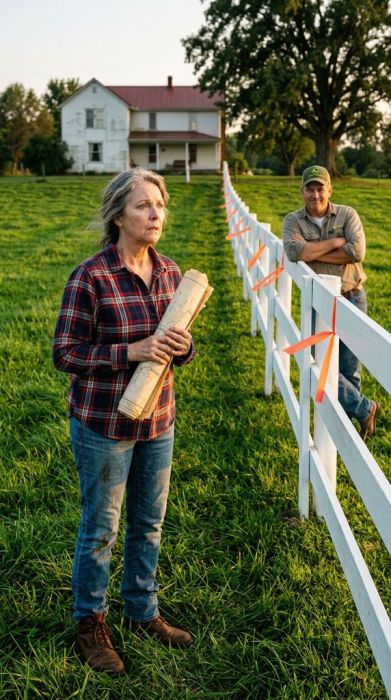
The morning I found the orange flags, I thought someone was marking utilities. Then I saw the fence — a brand-new line of white boards, so bright they practically hummed in the sun, marching straight across my pasture and slicing through the old split-rail line that Ray and I had kept for thirty years.
Dale Pruitt was standing beside it on his tractor, arms crossed, grinning like he had just won a prize. "Mornin', Maggie," he called out. "Finally got that property line surveyed. Turns out your old fence was never on the true line."
I stood there in my dead husband's barn coat and said nothing. Because three months earlier, I had buried Ray. And now his neighbor was telling me that part of our land — the creek frontage, the pasture, the old oak where we had hung the swing — had never really been ours at all.
Ray and I bought this farm from my parents in 1987, but the land had been in our family since 1962, when my granddaddy cleared it with a mule and a lot of cussing. Twelve acres of Ohio rolling pasture, a creek that ran clear after every rain, and that giant oak at the bend that had shaded four generations of Hollis children. When Ray died of a heart attack on the barn roof last April, the farm became the thing that kept me standing. I told myself I would keep it for our son Kevin and for the grandkids who came every summer to chase frogs in the creek.
Dale Pruitt had bought the twenty acres next door four years earlier. He was a semi-retired contractor with big plans to turn his land into a subdivision he called Pruitt Meadows. For a while he was neighborly enough — waved from his truck, helped me load feed at the co-op. Then, last fall, he came by with a bottle of whiskey and an offer. He wanted to buy the creek frontage. Said a lot with water access was worth triple, and he'd pay me "fair and then some."
Ray told him no before I could even open my mouth. "That creek's been Hollis land for sixty years," Ray said, calm as a Sunday breeze. "It's not for sale, Dale. Not now, not ever."
Dale's smile had gone thin and cold. He set the whiskey down, said, "We'll see," and walked out. We didn't think much of it then. We should have.
The new fence appeared on a Tuesday morning in July, three months to the day after Ray's funeral. I watched Dale's crew roll it out like they were building a runway, post by post, across ground that belonged to me. When I finally found my voice, I asked him what he thought he was doing.
"I told you I'd have it surveyed," he said, patting his chest like a man with a medal. "My cousin Todd runs a professional operation. He pulled the county records and found the original line. Sorry, Maggie. That old rail fence of yours was just in the wrong place. Can't build a subdivision on somebody else's land, you understand."
Two days later, his cousin Todd Pruitt walked up my driveway in polished boots and handed me a rolled document with a golden seal. "Certified survey," he said, smiling with a mouthful of teeth. "It's on file at the county recorder's office if you want to check."
I did check. The survey showed the true boundary line cut across my pasture one hundred and eighty-five feet onto my side. According to their paper, the creek, the oak, and a fat wedge of my best grazing land all belonged to Dale Pruitt. Kevin drove down from Columbus that weekend, looked at the document, and went pale. "Mom," he said carefully, "you need your own survey. It's eighteen hundred dollars, but without it, this is going to look like you gave up."
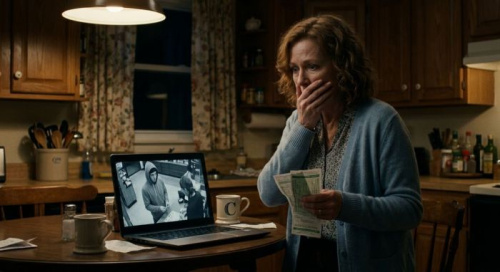
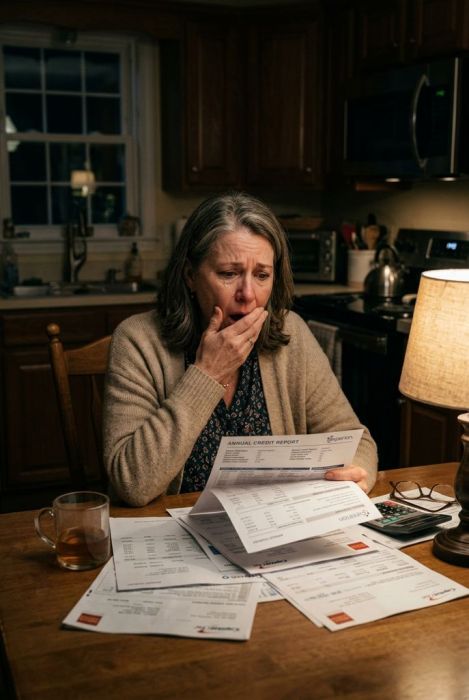
Eighteen hundred dollars. My pension check barely covered the property taxes and the propane. I sat at the kitchen table for three nights with Ray's old calculator and cried into his coffee mug until I couldn't cry anymore. Then I called every surveyor within fifty miles. Every single one of them called me back with the same news: they could do the work, but they'd need to see the surrounding monuments, and Todd Pruitt's filing had muddied the water. "Might take a month or two," one of them said. "Boundary disputes are slow, ma'am. Sorry."
Dale knew exactly how slow. He also knew I was a widow alone, and he counted on that.
That Saturday, I walked into Miller's Feed & Seed for chicken feed, and the whole place went quiet. Dale was at the counter, holding court. "I feel bad for her, I really do," he announced to no one and everyone. "Ray never did fix that fence line. Old man Hollis knew the truth — he just never wanted to admit he was squatting on my dirt."
The men in the store looked at their boots. The woman at the register — Sally Miller, who had brought me a casserole after the funeral — wouldn't meet my eyes. I paid for my feed with shaking hands and walked out. Nobody said a word to me, and that silence hurt worse than anything Dale could have said.
Two weeks later, Dale's crew cut down the two maples on my side of the old line. I stood at my kitchen window and watched the chain saws bite into trees my father had planted the year I was born. When I ran outside, Dale held up a hand like a traffic cop. "My side of the line, Maggie. I'm clearing for the road." He sold the lumber before the leaves turned brown.
He put a NO TRESPASSING sign on a post six feet inside what I knew, in my bones, was my ground. Then he looked at me, that thin cold smile back on his face. "You should think about that offer on the creek," he said. "It won't be on the table forever."
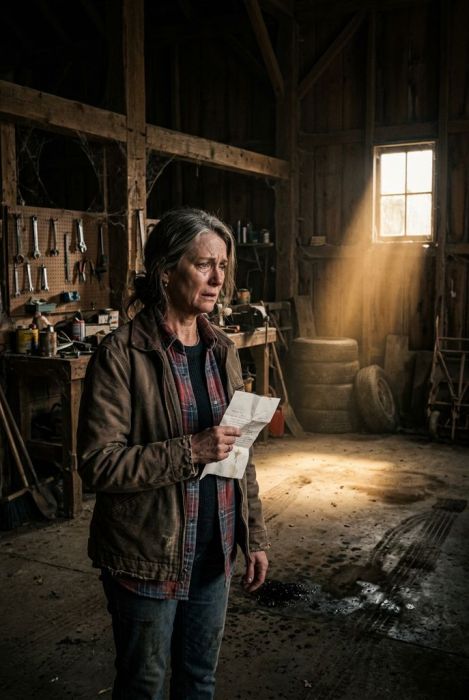
That night, I couldn't sleep. I got up at two in the morning, made tea, and wandered out to the barn the way I did when Ray first died. The office was a mess of old feed bags and Ray's tools, and I sat down in his chair, just to feel close to him. My hand landed on the green file cabinet he'd kept locked for as long as I'd known him. The key was still in his fishing vest, hanging on the nail where he always left it.
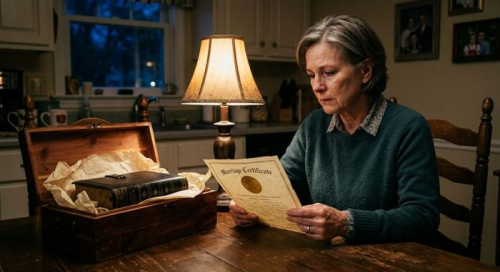
I opened it, expecting tax papers and receipts. Instead, on top of everything, was a manila envelope with Ray's handwriting across the front. One word, in his careful block letters: SURVEY. DO NOT LOSE.
Inside were three things. The original 1962 deed, brittle and beautiful, with Granddaddy's signature. The original 1962 survey, drawn by Harmon & Son Surveyors of Millbrook County — the file was stamped with a real county seal, not a golden sticker. And a hand-drawn map in Ray's own hand, with a sketch of the oak, the creek, the old split-rail fence, and a row of X marks. At the bottom, in small letters: PIN LOCATIONS. BURIED 18". UNDER FLAT STONE BY OAK. DADDY'S MAP. THEY'RE STILL THERE.
Under the map was a letter, dated the night Dale came by with the whiskey.
"Maggie, if anything happens to me, don't argue with that man and don't let him near the creek. He's already had Todd sniffing around the county clerk. Call Gil Harmon. Ask him about the pins. Ray."
I read that letter six times. Then I looked at the 1962 survey and noticed the name at the bottom for the first time. Harmon & Son. The surveyor who had drawn the original lines of our land was the same family as Gil Harmon — the retired county surveyor who had replaced Ray's hip at last year's Founders' Day barbecue? No. The Gil Harmon who had been county surveyor for thirty years and was my husband's oldest friend.
I called him at seven the next morning, and he answered on the first ring. "Maggie Hollis," he said, like he'd been waiting for my call. "Ray told me, if it ever came to this, to expect you."
Gil drove out that evening at dusk, a retired man of sixty-eight with a metal detector in his trunk and a folding shovel older than my son. We walked to the oak holding the hand-drawn map between us. He swept the metal detector over the ground at the base of the flat stone, and it sang like a church bell.
Eighteen inches down, under a layer of river rock and hard red clay, we found the original county iron pin. Cast in 1962, stamped with the county seal, still as true as the day Granddaddy drove it in. Gil measured from the pin to Dale's new fence and let out a long, low whistle. "Maggie," he said, "that fence is six feet inside your line. And the creek? All yours. The whole bend."
I sat down hard on the grass and cried. Gil waited, patient as a stone wall, until I was done. Then he told me the rest.
He had seen Todd Pruitt's "certified survey" the week it was filed. He'd pulled the original records and compared the signatures, the seals, the monument references. "That document is a forgery, Maggie," he said. "Todd lost his license five years ago for falsifying a boundary up in Knox County. He's been dead in the water ever since, doing favors for his cousin under the table. The survey on file at the recorder's office has a stamp that belongs to a man who retired in 1999 — and that man is in a nursing home in Cincinnati with advanced dementia. He hasn't stamped anything in fifteen years."
Gil had already filed a formal complaint with the county prosecutor, a man named Walt Brennan who had hunted with Ray for twenty years. "Walt's been waiting for the right moment," Gil said. "We just needed to catch them in the act. Pardon my language, Maggie, but Ray would want this done right."
The trap came together in a week. Walt, playing the part of a county engineer, sent Dale a letter about a "routine drainage easement review" on the boundary between our properties. Dale showed up on Saturday morning with a folder under his arm and a smile on his face, and for good measure, his potential buyers were due at ten o'clock to walk the "waterfront lot" he had listed off the creek — my creek — at a hundred and ninety thousand dollars.
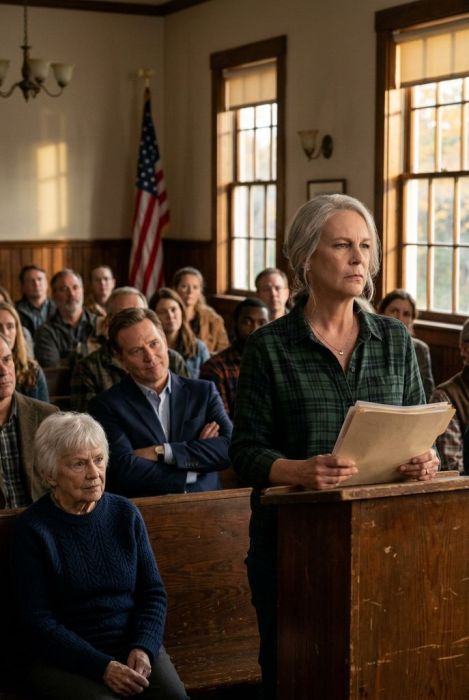
I watched from my porch as the county truck pulled up. Three men got out: Walt Brennan in a hard hat and safety vest, a deputy, and Gil Harmon in his old work clothes, carrying a canvas bag. Dale came striding out with his cousin Todd, both of them grinning like they were about to close the deal of the century.
"Welcome to Pruitt Meadows," Dale said, spreading his arms wide. "Best dirt in Millbrook County, and I can prove it."
Walt nodded, all business. "Mr. Pruitt, we're just verifying the boundary monuments for the county record. That survey you filed — I need to confirm its authenticity. Can you affirm, under penalty of perjury, that this survey is genuine and accurate?"
"Absolutely," Dale said. "My cousin here is the best in the business. Ain't that right, Todd?"
Todd puffed up his chest. "Thirty years of experience. That line's been surveyed to a T."
Gil stepped forward then, and the smile on Dale's face went stiff. "Gentlemen," Gil said quietly, "I'm going to ask you to walk with me."
He led them to the flat stone by the oak. He dug, easy and slow, until the shovel rang against iron. Then he knelt, brushed the clay away with his bare hands, and lifted the original pin out of the ground like it was a holy relic. "County monument, 1962," he said, holding it up so everyone could see the stamp. "Original survey by Harmon & Son. Still exactly where my grandfather set it."
He pulled out the map Ray had drawn, and the 1962 deed, and laid them on the grass side by side. "Now, Mr. Pruitt," Gil said, "I'm going to ask you to explain how your cousin's survey moved this line one hundred and eighty-five feet, when the monument is sitting right here, six feet on the other side of your fence."
The deputy stepped forward. The buyers' SUV pulled into the driveway at that exact moment — two couples in polo shirts, ready to see their waterfront dream home. They saw the sheriff's badge, the open hole, the white-faced man with the golden-seal folder, and they got back in their car without a word. I watched them leave, and I felt something loosen in my chest for the first time in four months.
Dale started yelling. He called Todd every name in the book, then turned on me, face red, finger shaking. "This is my land! I bought it fair and square —"
"You bought twenty acres," Gil said calmly. "The creek was never part of it, and you knew it. That's why you had Todd forge the survey. That's why you cut down her maples. That's grand theft, Mr. Pruitt. Theft of timber, theft of real property, and forgery of a public record."
Walt Brennan read them their rights right there on my grass, in front of God, the oak, and my dead husband's map. Todd went white as paper and started talking before they even finished the second charge. He gave up everything — the phony surveys, the fake stamp, the plan to file a fraudulent deed once the "dispute" dragged on long enough for me to run out of money. He said Dale had promised him a lot in the subdivision for his trouble.
The charges were filed that afternoon. Forgery, filing false instruments, and theft — three felonies each, plus a fourth count for the timber Dale had sold. The county revoked the recorded survey. The subdivision approval for Pruitt Meadows collapsed overnight when the bank found out the boundary documentation was a fraud. Within ninety days, the bank called Dale's loans, and the twenty acres he had bragged about went into foreclosure. He lost everything he had schemed for, and he lost it in public, the way he had tried to humiliate me in public at the feed store.
I got the maples' value back in restitution — forty-seven hundred dollars, which is what Ray's old calculator said it would take to replant the trees my father had planted. I spent part of it on a proper fence, built by Gil's nephew, a licensed surveyor who set the new line exactly where the 1962 pins said it belonged. I spent the rest on a new screen door for the porch, the one Ray always said he'd get around to.
The swing went back on the oak that fall. Kevin came home with the grandkids, and I pushed them on it until my arms ached, listening to them shriek with joy over the frogs in the creek. Sally Miller from the feed store drove out with a pie and tears in her eyes, and I forgave her, because fear makes people do strange things. Dale moved away in the spring, quiet as a shadow, and the town forgot him faster than he'd ever been remembered.
Gil still comes by on Sunday afternoons. We sit on the porch with coffee and talk about Ray — the good years, the fishing trips, the time the tractor sank in the mud and Ray blamed the ground for a week. Last Sunday he handed me a small tin box. Inside was Ray's original map, and a new one Gil had drawn himself, with my name written at the top in neat letters. "Property of Margaret Hollis," it said. "Boundaries verified. Pins intact. Amen."
I keep both maps in the green file cabinet now, in the envelope Ray labeled SURVEY. DO NOT LOSE. The farm is still mine, still twelve acres, still the creek and the oak and the ghosts of four generations of Hollis children. Somewhere in the ground, under a flat stone, the iron pins hold the truth like a promise kept.
Ray always said the land would take care of us if we took care of it. He was right. It just needed a little help from a metal detector, a good friend, and a man who thought a widow alone would be too tired to dig.