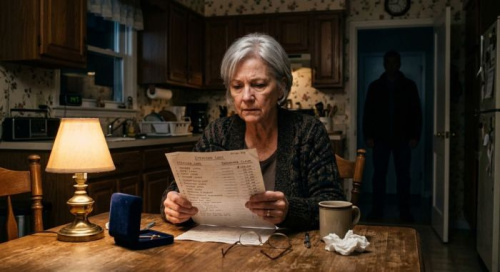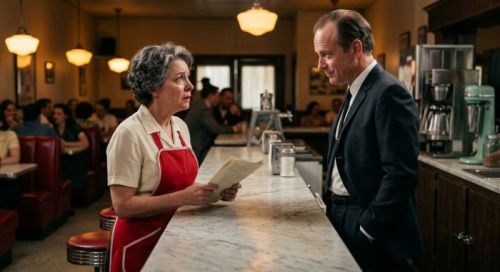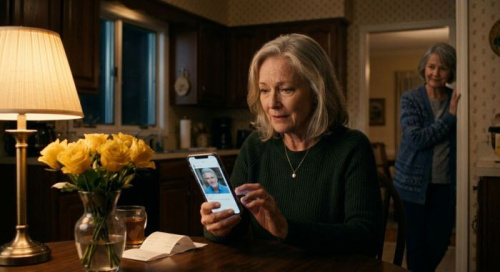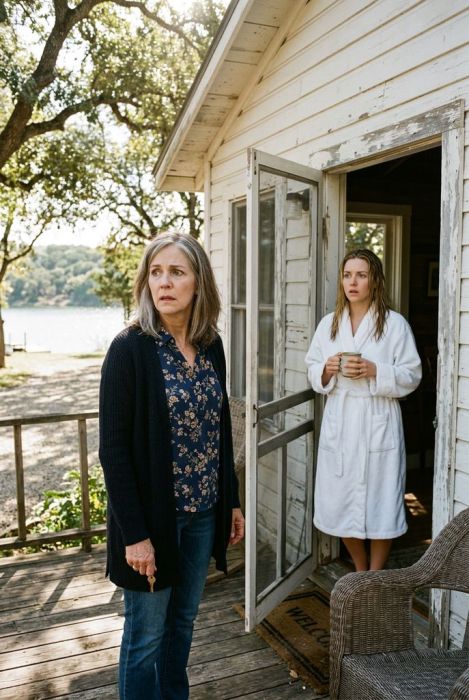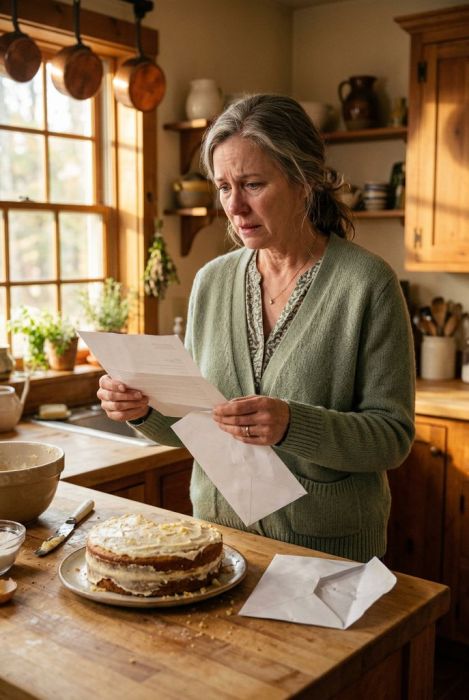
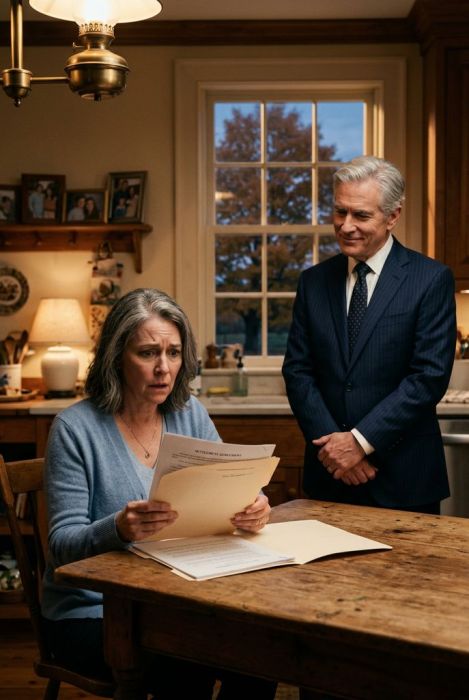
Preston Ashford set the manila folder on my kitchen table the way a man sets down something he doesn't want to hold — carefully, but with relief. "Hattie," he said, "there's something in Joe's paperwork I need you to see."
I had known Preston for thirty-two years. I had typed his letters, his contracts, and more than two hundred wills in that time. I knew the exact sound of him when he was about to do something he considered very clever. That evening, he sounded almost giddy.
The will inside the folder was dated June 14, 2023. "Joe revised everything after his diagnosis," Preston said, folding his hands on the table. "He wanted me to have this house. He said you'd be taken care of better if I managed things." He let that hang in the air, then added, in the soft voice he always saved for the part he enjoyed most, "I'm sorry, Hattie. But the estate belongs to me now. You have ninety days to vacate."
I didn't cry. That surprised us both, I think. I looked at the signature at the bottom of the page — a shaky, careful "Joseph Crane" — and I thought about how Joe had signed his name after his first round of chemo, when his hands shook so badly he had to lean on the counter just to write a check for the lawn boy.
"May I keep this?" I asked. Preston blinked. "Of course." He left thinking he had won. He left thinking I was just a grieving widow who didn't know her own husband's signature, her own husband's words, her own husband's everything.
Joe and I bought this house in 1998, the year he got tenure at the high school and I got promoted to senior secretary at Ashford & Gray. It was a plain four-bedroom colonial on Maple Street with a maple tree out front that Joe babied like a fourth child. We raised our garden in the back — tomatoes against the fence, zinnias for me, rhubarb for his mother's pie recipe. We talked about Ireland for twenty years, the two of us, about the little cottage in County Clare where his grandmother was born. We never made it. He got the diagnosis first.
Joe was a shop teacher for thirty-five years. He could fix anything with a wrench and a piece of stubbornness. When the bank tried to tell us our mortgage documents weren't valid in 2009, Joe walked in with a folder of every piece of paper we'd ever signed and stood there until a manager found the error. "Paper is power, Hattie," he used to say. "Not because it's paper. Because it's proof." I typed wills for a living, and he never once let me forget that the words someone signs are the last words that get to stand up and speak for them.
I typed Joe's will myself in February of 2015, at his kitchen-table request, on the firm's old template before Preston made everyone switch to the new one. I remember every clause. The house, the savings, the pension, the old canoe — all to Hattie Crane, his wife of thirty-five years. His brother Sam got fifty thousand dollars and the canoe. I remember because I typed it, and because Joe read it out loud to me twice, the second time just to make me laugh with his terrible Irish accent. "To my bonnie lass," he said in that ridiculous voice, "everything I own, God love her."
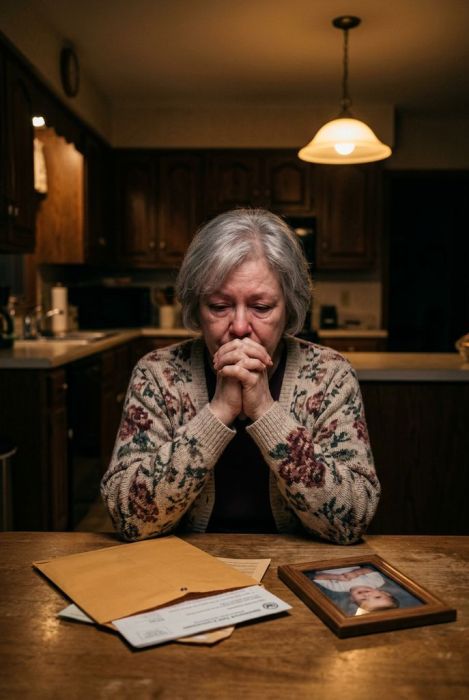
Eighteen months ago, Joe died. He went the way he wanted to go — at home, in his own bed, me holding his hand, Sam in the chair by the window. The funeral was small and warm, the way he'd wanted that too. Preston came. He stood at the grave with his hands folded and said all the right things. He offered to handle the estate, "pro bono, as a friend." I thanked him. I had just buried my husband, and I trusted the man who had been my boss for three decades and my family's lawyer for two.
The week after he handed me that folder, Preston moved fast. He called about the "new will" every single day. He told me it would be "simpler and kinder" if I let his office manage the sale of the house — he'd already spoken to a Realtor, a nice woman who could get top dollar, and he'd arranged for a moving company to come by and give me a quote, "just so you have options, Hattie." He mentioned, twice, that a smaller apartment would be "easier on a woman my age." I was fifty-eight.
I played along. I smiled and nodded and said "thank you, Preston" until my face ached, and I did what Joe taught me. I kept every piece of paper. I made copies of everything Preston sent me. I wrote down the dates and times of every call, in the same careful hand I'd used for thirty-two years of filing.
Then Sam showed up on my porch with his cap in his hands and a hard look on his face. "Hattie," he said, "Joe told Preston everything those last weeks. I know it's hard, but you gotta accept it. If Joe wanted you to have the house, the will would say so." I wanted to scream that Joe had told me everything too, that we'd spent his last good week talking about the garden, not about lawyers. But I saw how pale Sam was, how he gripped that cap like a life raft. Preston had gotten to him. "Okay, Sam," I said. "Okay." He left believing he'd done his duty.
Preston filed the will for probate at the end of the month. He called to tell me the court date, his voice light, almost chatty. "And Hattie, since you know the templates better than anyone on earth," he said, "I need you to type up a clean draft of some estate documents for me. Just the standard stuff. You'd be doing me a favor." Thirty-two years of yes, Mr. Ashford came out of my mouth before my brain caught up. Then I realized what he was really asking.
He wanted me to type the papers that would take my home.
So I typed them. I typed every page of the document he dictated, using the firm's current template, and I did not faint and I did not cry. I made two copies and I saved the file. I watched him sign the transmittal email with his own hand. And when he said, "Beautiful work, Hattie, as always," I smiled my widow smile and said, "Thank you, Mr. Ashford."
The first crack appeared three days later, in the form of a twenty-seven-year-old paralegal named Renee Baylor, who cornered me in the firm's parking garage. Renee had no filter and no loyalty to anything but the truth. "Mrs. Crane," she whispered, "Preston cleaned out Joe's file. Every paper copy, gone. He told IT to delete the folder on the server." She looked at me like she expected me to shatter. Instead, something in my chest went very still. "But he forgot the offsite backup," she said. "They're stored for seven years. And you know how he is with computers. He can't even change his own password."
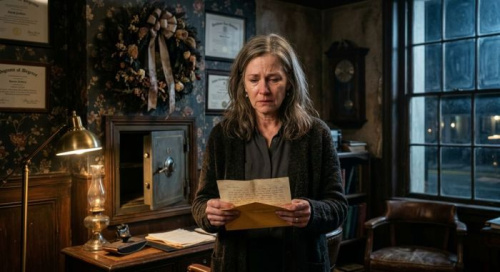
That night, I sat at Joe's desk and pulled out the old sewing box where I kept my grandmother's thimbles. Under the felt lining, wrapped in a dish towel, was a flash drive no bigger than my thumb. After the office fire scare of 2008, I had backed up every will I typed. Every single one. Including the original February 2015 will, the one with Joe's real signature scanned onto the second page.
I didn't sleep that night. I made coffee and I read the fake will Preston had dictated to me, line by line, until my eyes burned. The signature was a forgery, clearly traced from the 2015 copy — shaky the way Joe was shaky after chemo, but wrong, all wrong, the wrong rhythm, the wrong pressure. And then I got to the witness page.
"Signed and witnessed in the presence of Beatrice Kowalski, 214 Maple Street, Omaha."
Beatrice Kowalski. Our neighbor for thirty years. The woman who brought Joe her husband's old fishing books when he was too weak to garden. The woman whose funeral I had attended in February of 2022 — sixteen months before that will was supposedly signed, on a Tuesday in June when Beatrice had been resting under a headstone in Forest Lawn Cemetery.
I went cold all over. I didn't scream. I just sat there in the dark kitchen with the coffee going bitter in my cup, and I thought about Joe's voice saying paper is power. Then I picked up the phone and called the only lawyer in Omaha I trusted more than Preston Ashford — a young probate attorney named Marisol Reyes, who had clerked at my firm for a summer and had never once let Preston charm her.
Marisol listened to the whole thing without interrupting. When I finished, she said, "Hattie, do you still have the emails where he dictated the document to you?" I told her I had everything. "Then we're not just defending you," she said. "We're going to bury him."
The hearing was held on a gray Tuesday in October. I wore Joe's favorite color, a blue cardigan he'd bought me in Galway on the trip we never took, and I sat in the front row like I'd done at a hundred firm meetings, only this time I wasn't taking notes. Preston stood at the petitioner's table with his co-counsel, a younger partner named Bain who kept checking his watch. He read the "new will" aloud in his courtroom voice, the one he used when he wanted everyone to know how reasonable he was. He spoke of my husband's "final wishes." He mentioned, kindly, that he'd offered to help me move.
Then Marisol stood up. "Your Honor," she said, "we'd like to call our first witness." She called Renee Baylor, who testified about the deleted folder and the offsite backup, and about how Mr. Ashford had asked her to witness him emailing a document to Mrs. Crane in June of 2023 — a document, she said, whose content she later learned matched the purported will. Then she called me.
The courtroom went very quiet. "Mrs. Crane," Marisol said, "do you recognize this document?" I looked at Preston, and for the first time in thirty-two years, I saw real fear move behind his eyes. "Yes," I said. "I typed it. He dictated it to me on the afternoon of June 9, 2023, in his office, using the firm's current template. I saved the file. I kept the emails."
Preston laughed, a dry, brittle sound. "Your Honor, my former secretary has clearly confused—" But Marisol was already holding up the printout of the 2015 will. "Your Honor," she said, "the original will, executed February 2015, leaves the entire estate to Mrs. Crane. The petitioner's 'new will' is dated June 14, 2023, and was typed by Mrs. Crane herself at the petitioner's direction."
And then she delivered the line I had been waiting for, the one I had rehearsed in my head a hundred times in the dark. "Your Honor, the witness named on that document — Beatrice Kowalski — died on February 9, 2022. The will she supposedly witnessed is dated sixteen months after her funeral. We have her death certificate, her obituary, and two signed affidavits from her daughters."
You could have heard a pin drop. The judge looked over her glasses at Preston for a long moment. Preston's face had gone the color of old paper. "There's been a mistake," he said. "A clerical error. Bea — she was a neighbor, I must have written the wrong name—" But he had stopped believing his own voice, and everyone in that room knew it. The bailiff came forward. Two officers stepped in from the back. I watched the man who had been my boss for three decades, who had tried to take my home and my husband's last words, get handcuffed in front of the judge and everyone he'd ever impressed.
It turned out Preston had more to lose than a house. The bank records surfaced during discovery — he'd mortgaged his own home twice, lost a fortune in a land deal in Texas, and had been quietly borrowing against every estate he administered for years. Three more families came forward after the Omaha paper ran the story. He'd done it to them too. The bar association moved fast. Preston Ashford was disbarred, the firm dissolved, and the state charged him with forgery, attempted fraud, and perjury. He pleaded guilty to avoid a longer trial. I heard he got eight years.
Sam came to my door three weeks after the hearing, the same cap in his hands, but this time his eyes were wet. "Hattie," he said, "I believed him. I should have listened to you." I made him sit down and drink Joe's last jar of rhubarb wine, and we talked about Joe for two hours — about the canoe, about the shop, about the time Joe welded a raccoon trap to the wrong tree and caught the mailman's hat. "You're still family," I told him. "Joe would clobber us both if we let that change." He took the canoe and the fifty thousand dollars, like the real will said, and he cried like a kid.
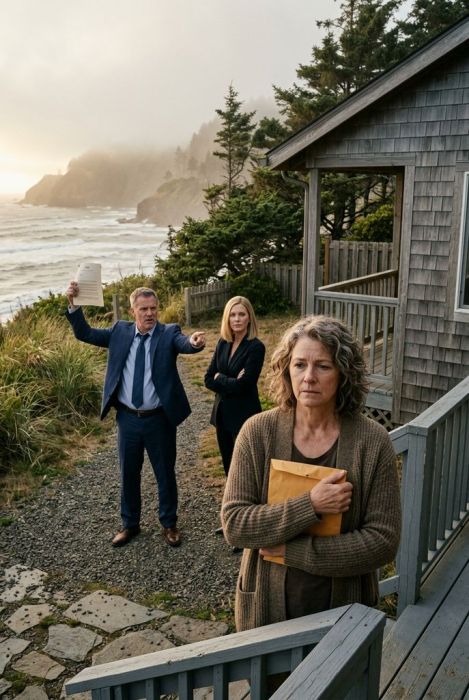
I live in my house, in my garden, with my maple tree and my zinnias. The deed is in the drawer where Joe kept his good screwdrivers. Last spring, I booked the trip to Ireland — just me, a carry-on bag, and his photograph in my pocket. I stood on the cliffs of County Clare in the rain and told him we finally made it.
People ask me why I didn't scream, why I didn't fight sooner, why I sat through those weeks of kindness from a man who was robbing me. The answer is simple. I was a widow who had just lost her best friend, and I was tired. But I was also raised on paper, on proof, on the truth that words outlive the people who lie about them. Everyone else in that courtroom learned something that Tuesday. I had known it for thirty-two years.
The zinnias still grow tall against the fence, the way Joe liked them. And every time I pour my coffee and sit on the porch, I look at that maple tree and I thank him — not for the house, and not for the money. For the lesson. Paper is power, Hattie. Not because it's paper. Because it's proof.