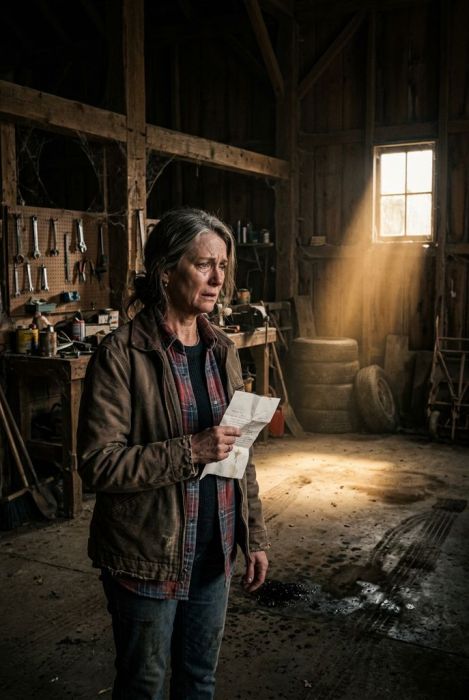
The day of the reading of Mother's will, I learned I had been written out of everything.
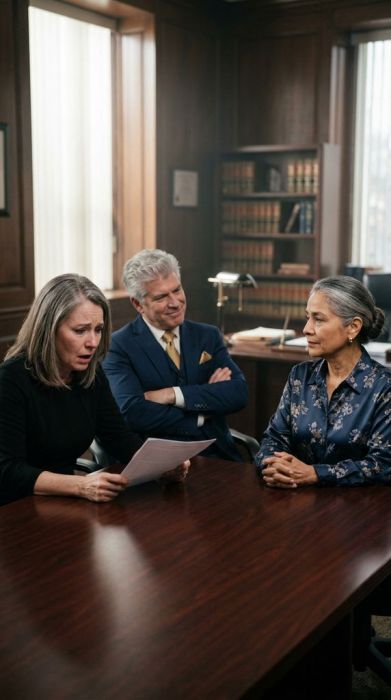
Mr. Eckhart, our family lawyer for thirty years, read the words in the same quiet voice he used for parking tickets, and the room seemed to tilt around me. The house on Maple Avenue, where I had learned to ride a bike and buried my first cat under the lilac bush. The savings accounts Mother had scraped together from thirty years of teaching third grade. Her cameo brooch, her wedding china, even the little brass bell she rang from her chair by the window when she wanted her tea warmed up. All of it went to Rosa Delgado — the woman who had cleaned our house, cooked our dinners, and held Mother's hand through every long night for twenty-five years.
My brother Bennett slammed his palm on the conference table before Mr. Eckhart finished reading. "This is a joke. That woman poisoned her mind. She got to her when she was weak." He turned to me, his face red. "Say it, Ellen. You know it's true."
And that was the moment I realized I didn't know what I believed anymore.
Mother was eighty-four when she died. Margaret Hollis, third-grade teacher, widow of thirty-eight years, woman of a hundred small kindnesses and one stubborn rule: family first. She had said it at every birthday and every funeral and every Sunday dinner where Bennett and I sat across from each other and pretended the old resentments were not still simmering between us.
I am Ellen. Fifty-eight years old, school librarian in the same district where Mother taught, divorced for fifteen years, no children, and — until the will — reasonably sure of my place in the world. I had been the one who visited every weekend without fail. I bathed Mother when she got too weak to climb the stairs. I changed her sheets, read to her from the same dog-eared novels she loved, and slept on the pull-out couch in her study when she was frightened of the dark.
Bennett was the golden child. He always had been. And Bennett, in our mother's eyes, could do no wrong.
He lived in Atlanta and visited twice a year, Christmas and the Fourth of July, arriving with expensive gifts and leaving early, his phone always ringing with "business." He called Mother every Sunday evening, though, and I could hear her laughing on those calls, telling him about the garden, the weather, the neighbors. He had sold real estate, then insurance, then something with investments that nobody in the family quite understood. Mother was proud of him. She loved to tell people her son was a big deal in Atlanta.
What she never said aloud — what I only understood later — was that she knew exactly what kind of big deal he was.
Rosa Delgado came to us when I was thirty-three and she was thirty-eight, newly arrived from Guadalajara with a ten-year-old son named Miguel and a work ethic I have never seen equaled. She cleaned our house twice a week at first, then three times, then five. She cooked Mother's favorite dishes — the tamales at Christmas, the arroz con pollo that Bennett pretended was too spicy — and she learned to make Mother's own recipes so perfectly that Mother finally admitted Rosa's pot roast was better than hers.
Rosa was not an employee for twenty-five years. She was family. She was at my father's funeral, holding Mother up when her legs gave out. She was at my divorce, driving two hours to bring me a casserole and sit with me in silence. She was at every Thanksgiving and every Easter, and when Miguel married, Mother insisted the reception be held in the backyard on Maple Avenue.
So when the will was read and Rosa's name was in every blank, the betrayal felt like it came from two people I had loved my whole life, not one.
Bennett filed the lawsuit within a week. Undue influence, he called it. Elder abuse. He told anyone who would listen that Rosa had charmed an old, sick woman out of her entire estate, and he hired a lawyer from Atlanta who sent pages of demands to Rosa's address — the same address as Mother's house, because Rosa had moved in during the last year to care for her around the clock.
The church ladies gossiped. The local paper printed a story with a photograph of the house and the headline "Family Home Goes to Longtime Housekeeper." I stopped answering my phone because Bennett called eleven times a day, and every call ended the same way: "Join me, Ellen. We'll bury her in legal fees until she gives it back. It's what Mother would want."
I never told him what I was actually thinking. Because the truth was, I didn't know if it was what Mother would want. I had read Mother's letters to me over the last years — the ones where she wrote about how tired she was, how she felt Bennett slipping away, how she worried about money — and I had missed the warning signs in every single one.
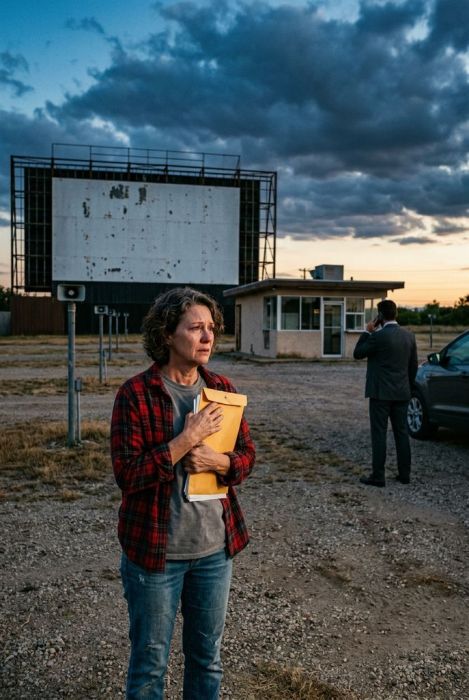
I did not visit Rosa for six weeks. I drove past the house on Maple Avenue and saw her watering the lilacs, saw her sitting in the old porch swing alone, and I hated myself for not stopping. But I couldn't. Because if Rosa had stolen Mother's love, then Mother had never really trusted me, and that was a wound I could not open.
The pastor called me in the third week. Reverend Hammond had known our family for forty years, had buried my father and baptized my niece and married me in a dress that still smelled of my mother's rose garden.
"Ellen," he said, "your mother gave me something before she passed. She made me promise to hold it until her brother started making noise." He paused. "I think now is the time."
He handed me a thick envelope, unsealed, in Mother's cramped handwriting. There was a letter inside, two pages, and a key taped to the second page with yellowed Scotch tape.
The letter began the way all her letters began: "Ellen, my darling girl."
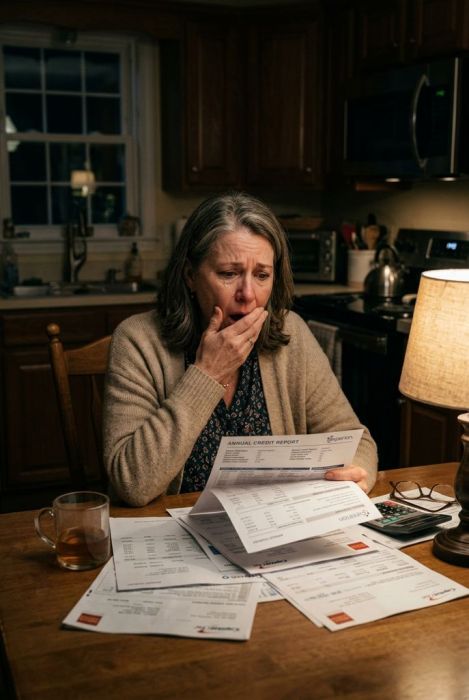
Then it said the thing I had been afraid to believe: "Your brother has been stealing from me for four years. He forged my name on a power of attorney in the spring of 2019, and he has taken one hundred and eighty thousand dollars from my accounts to pay his debts. I found out when I tried to pay the roofer and the bank said there was no money."
I read the sentence twice, then three times, while the pastor waited in silence.
"Bennett does not know I know," the letter continued. "I have played his game. Pretended to be confused. Let him believe he won. But I have been keeping my eyes open, and I have been keeping receipts. Rosa knows. Rosa has everything. When you are ready, ask her for the shoebox."
The key taped to the paper, she wrote, opened the lockbox in her closet. And in that box was a copy of the real date — the one with the truth in it.
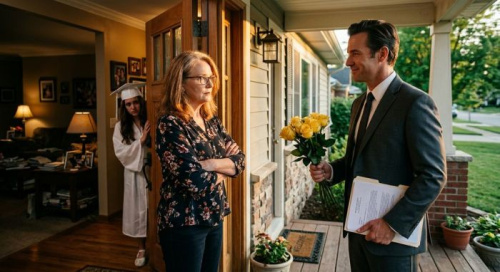
I sat in the pastor's office for a long time. And then I did what I should have done six weeks earlier: I drove to Maple Avenue and knocked on the door of the house that no longer felt like mine.
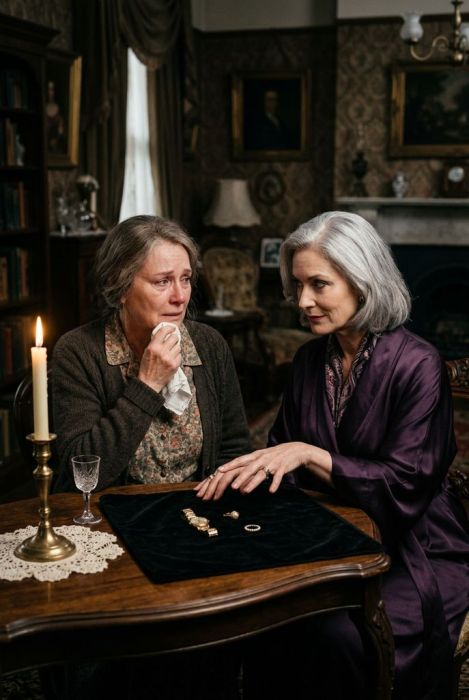
Rosa opened the door wearing her gardening apron, and when she saw my face, she began to cry. She didn't say a word. She just stepped aside and pointed to the kitchen table, where a shoebox sat like it had been waiting for me — a plain white shoebox from a store that had closed in 2004, so worn at the corners the cardboard was soft as cloth.
We sat down at the table where I had eaten ten thousand meals, and Rosa opened the box.
Inside was a paper trail that would have made a forensic accountant weep with joy. Bank statements stamped with dates, going back four years. A copy of the power of attorney Bennett had forged, the signature so clearly different from Mother's that even I could see it. Canceled checks made out to casinos, to bookmakers, to a name in Miami that appeared seventeen times. Letters Mother had written to herself, documenting every conversation, every missing dollar, every lie.
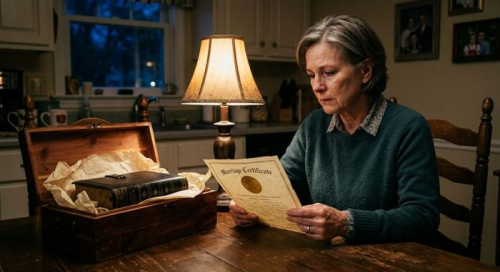
And at the bottom, wrapped in a linen napkin, the second will — the real one — signed and notarized a year after the first, dated exactly one week after Mother discovered the theft.
That will left the house to me.
And it left a note to Rosa, in Mother's handwriting, that made me weep at the kitchen table like a child: "You were more my daughter than blood ever made me, and I will make sure you live in a home with a garden until the day you join me."
Bennett's lawsuit moved forward, of course. He was too arrogant to stop it. His lawyer demanded Rosa produce all documents, confident that a housekeeper with a ninth-grade education would never have kept records. And that gave them exactly what Rosa had been waiting for her whole life: the chance to hand over the shoebox.
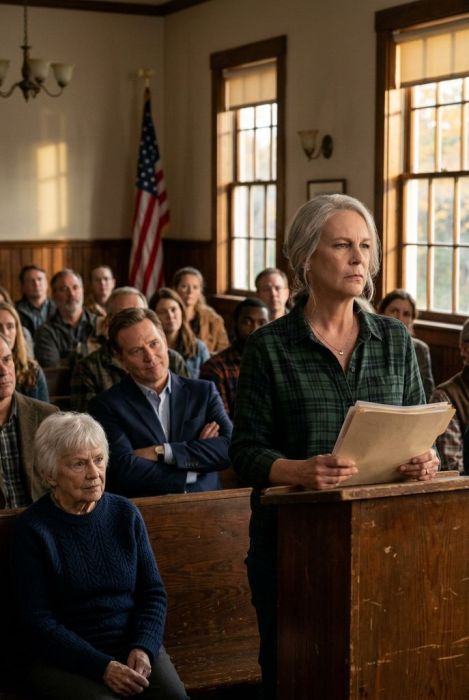
The deposition was scheduled for a Tuesday morning. Bennett walked in wearing a suit that cost more than Rosa's car, all smiles and handshakes. He sat down across the table and answered the first questions easily. "I just want my mother's wishes honored," he said. "That woman took advantage of a vulnerable old lady. It's a tragedy."
Then Rosa's attorney opened a white cardboard box and set it on the table.
I have never seen my brother go pale. His lawyer asked for a recess. The notary who had "witnessed" the forged power of attorney was called in, and it took her forty-five seconds to confirm she had never met my brother or my mother, and that the signature on the document was not hers either.
By the end of the afternoon, Bennett was not smiling. He was being read his rights by a sheriff's deputy who had arrived with a warrant, quietly, the way these things happen in polite towns, while Rosa sat in the hallway with her hands folded and her eyes dry.
Charges were filed: elder abuse, forgery, financial exploitation of a vulnerable adult. The district attorney's office found a pattern going back further than even we knew — a second forged document, a retirement account Bennett had drained in 2017, a car loan taken out in Mother's name.
Bennett lost everything. His license. His reputation. The Atlanta deals that had made him the big deal — it turned out they were built on other people's trust and other people's money, and once the bank statements came out, the investors came out of the woodwork too. He pleaded guilty to a reduced charge and was sentenced to four years. I have not spoken to him since the day of the deposition, and I do not know if I ever will.
The house on Maple Avenue is mine now, under the real will, and the court ordered restitution that repaid every cent Bennett took. But the truer inheritance was sitting at the kitchen table the whole time.
Rosa lives in the back cottage now — the garage apartment Mother converted into a little home with a kitchen window that looks out over the garden, with lilacs, roses, and the tomato plants Rosa treats like grandchildren. Mother arranged it, of course. In the real will, Rosa received a small trust — enough to live on, enough to garden, enough to never clean another stranger's house.
This Thanksgiving will be the first one at Maple Avenue since Mother died. I am making the pot roast — Mother's recipe, the one Rosa improved. Miguel and his children are coming. Rosa will carve the turkey, and the whole house will smell like Sunday dinners and arroz con pollo, and I will sit at the head of the table in Mother's chair and finally understand what she was trying to tell me all along.
The people we overlook are often the ones holding everything together. And sometimes the quietest woman in the room is the one protecting you from the very person you trusted most.
I kept the shoebox. It sits on my dresser now, wrapped in the linen napkin, with Mother's letter on top.
It is the only inheritance I will ever need.