The first thing I noticed at my mother's eightieth birthday was that there was no place setting for me at the dining room table. Twelve chairs, twelve china plates, and my name card tucked under the bread basket like an afterthought. I told myself I was being silly. Dorothy Owens had never been a cruel woman — just a distracted one — and I had spent fifty-seven years learning that distraction looks exactly like neglect when you are the one on the receiving end.
The house was full of people I had cooked for, cleaned up after, and driven to appointments for the past twelve years. I made the lemon cake from Dad's recipe, the one with the lavender drizzle she loved. I hung the bunting myself that morning because Dale had promised to come early and help and, as usual, hadn't.
Dale arrived at quarter to one in a golf shirt and handed our mother a velvet box; inside was a gold locket with a photograph of himself, his wife Tina, and their boys. She put it on immediately, the way she put on every gift Dale ever gave her — including the toaster he took back to the store four days after Dad's funeral.
"I gave her the quilt I sewed from Dad's old flannel shirts," I wanted to say. Instead I watched her set it on the buffet beside the fruit basket from the church, then go back to holding Dale's arm. The locket stayed around her neck all afternoon. The quilt stayed on the buffet.
I tried very hard not to count how many times she said his name. Dale, come sit here. Dale, tell them about the promotion. There had never been a promotion. I knew because I had co-signed his car loan after his last company let him go. But it was easier to let my mother believe in the version of Dale that lived in her head. The real Dale called when he wanted something, and last month he had called twice about "the old house" and "what are we going to do when Mom can't do stairs anymore."
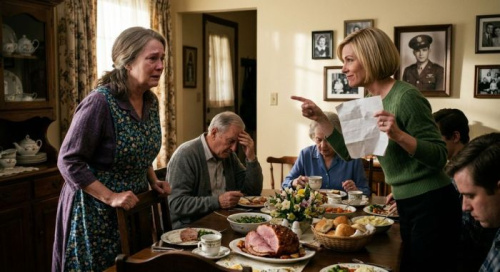
At the head of the table, my mother tapped her water glass with a spoon.
"I have an announcement," she said, and her eyes went straight to Dale, the way they always had. "This house has been in the Owens family for sixty-three years. And now," she said, reaching for his hand across the tablecloth, "I'm giving it to my son."
You could hear the room inhale.
"Dale is going to take care of everything," my mother went on, bright and certain. "And I want to say —" she turned to me then, and my heart did a strange little skip because she was finally looking at me — "Margaret has been a good daughter in her own way. But Dale has always been the one who truly understood what family means."
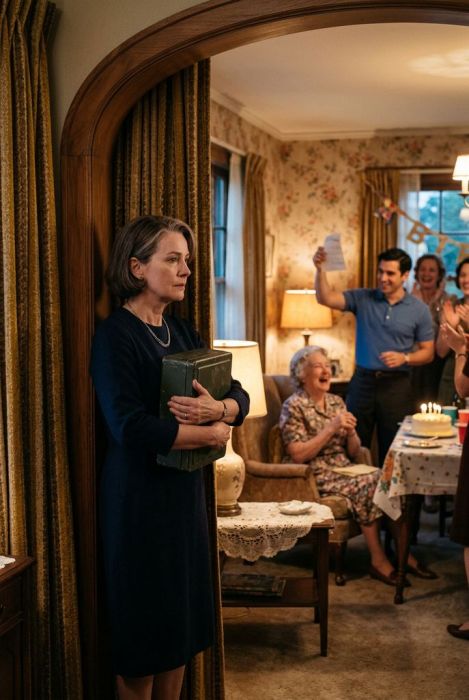
I did not say anything. I could not have said anything without my voice breaking. So I smiled the way I had been smiling since I was nine, and I watched my brother accept the deed to my parents' house like a boy accepting a trophy. He unfolded it, looked at his name above the notary's stamp, and raised it over his head like he had won a race. Tina clapped. The cousins clapped. My mother laughed and clapped longest of all.
No one asked where I would live.
I want to make something clear, because it matters. I never hated Dale. It would have been easier if I had. But he was my brother, the one who taught me to ride a bike and then pushed me into the hedge, the one who cried at Dad's funeral harder than anyone. I pitied him a little. He had spent his whole life being told he was the sun, and somewhere along the way he started believing the family orbited around him.
But the house was different. The house was Dad.
Frank Owens was a meticulous man, the kind who balanced the checkbook on Sunday mornings and filed every receipt in labeled folders. When he got sick, I moved home from Charlotte to help, and I stayed. For three years I drove him to chemo on Tuesdays and took him fishing on the dock at Shem Creek on Saturdays. Dale came for one weekend. He left a check on the counter that I found later in the trash, torn in half, with the word "sorry" written in the margin in Dad's shaking hand.
In the last month of his life, Dad asked me to bring him the old green fireproof box from the back of his closet. I brought it to his bed, and he opened it slowly, the way other men open Bibles.
"Everything important lives in this box, Margaret," he said. "Birth certificates, the deed to the house, the car titles. And this." He pulled out a thick document with a blue cover and a gold seal. "This is a trust. It's been recorded at the county for twelve years. The house lives in the trust. Your mother can live here as long as she wants, and when she goes, the house goes to you and Dale, fifty-fifty — but neither one of you can sell it or borrow against it or sign it away without the other one signing too."
He looked at me with those tired, exacting eyes. "Your mother doesn't know. She would take it as an insult, and it isn't. It's just that I know Dale. And I've watched you, Margaret. You're the one who does the hard, quiet thing. Don't ever let him talk you out of your own name."
I promised. I put the trust back in the green box and hid it in the back of my closet, and twelve years went by.
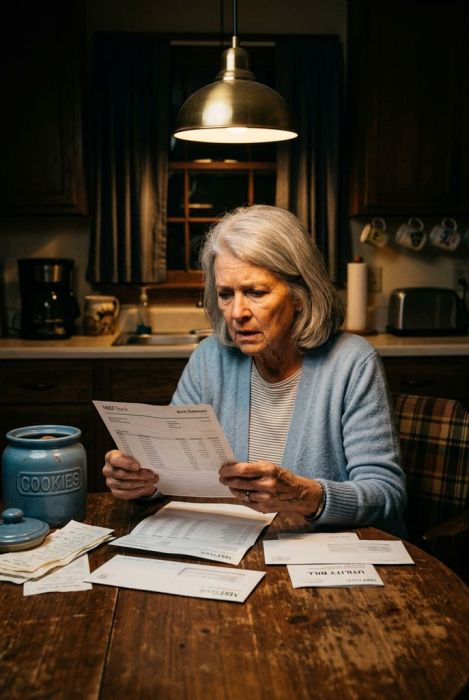
Twelve years of property taxes — forty-three hundred dollars a year, then forty-eight, then fifty-one. Twelve years of flood insurance and a new water heater and a roof patch after Hurricane Matthew. Dorothy thought Dale's checking account paid for all of it. The truth was that Dale's account had been overdrawn for most of that decade, and I had quietly sold Dad's old fishing boat and my own little Honda and dipped into my retirement savings to keep a roof over my mother's head. I kept every receipt, a stack of paper as high as my wrist in the bottom dresser drawer, every one of them in my name.
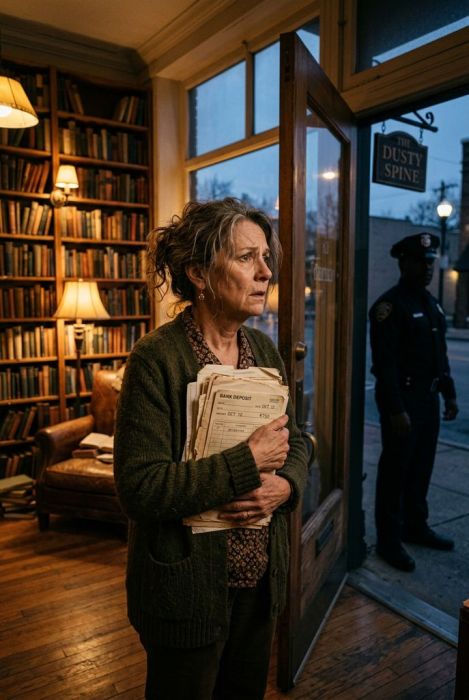
The party ended at six. I washed the good china and took the trash out back, and that's when I saw the folder on the passenger seat of Dale's truck — a real estate agency's folder with the words "LISTING AGREEMENT" printed across the top.
I stood there in the dark, reading the asking price. Six hundred and fifty thousand dollars. The house on Rutledge Avenue that had survived wars and hurricanes and sixty-three Christmases, priced to sell by the end of the month, with a note in Dale's handwriting in the margin: "Move fast. Old lady goes to Atlanta cottages next week."
I walked back inside. I didn't say anything. For the first time in twelve years, I opened the green box.
The trust was still there, the gold seal unbroken. And tucked beside it was a letter I had never seen before — Dad's handwriting, written the week he died.
"Margaret — if you're reading this, Dale has done something foolish with the house. You already know what to do. You've always known. Remember the dock at Shem Creek — you're the one who held the pole while I rested. You were always the one holding something steady. Love, Dad."
I don't know how long I sat on my bedroom floor. Long enough to understand, completely, what Dad had been building toward his entire careful life. He hadn't left me the house to punish Dale. He had left it to me to protect all of us — my mother from the truth about her favorite child, and Dale from the worst version of himself.
The next morning I went to the county recorder's office and asked for the transaction history on the property on Rutledge Avenue. The clerk pulled the records and went very quiet. There, in the file for the previous week, was the quitclaim deed my mother had signed at her birthday party, transferring the house to Dale Owens. And there was a home equity line of credit, opened two days later, for a hundred and forty thousand dollars, secured against the same house.
I asked for a copy of the bank's signed original. The signature looked exactly like my mother's tired handwriting. It was her handwriting.
Dale had not forged anything. That was the worst part. He hadn't needed to. My mother had signed her home away twice, in good faith, because her son told her it was "just paperwork." And somewhere in Atlanta, a bank had handed him a hundred and forty thousand dollars against a house he had already listed for six hundred and fifty.
That afternoon I found Rosa, my mother's home health aide, in the kitchen, drying a plate.
"You know where she's going?" Rosa asked softly. "The cottage? It's a two-bedroom unit outside Augusta. He showed her a brochure. She cried, Miss Margaret. She said, 'It looks so lovely,' and she cried, because she's not stupid. She knows. She just can't say it out loud, because then she'd have to admit she chose wrong for sixty years."
That was the moment I understood this wasn't about the house at all. It was about a mother who had built her entire world around a son who sold the world for pocket change, and a daughter who had built her entire world around not being seen.
Three days later, Dale brought a young family from North Carolina by the house. I watched from the upstairs window while he shook their hands in the driveway with the confidence of a man who believed he had already won.
When they drove away, I met him on the porch and handed him a single page: the trust, first page, recorded, gold seal.
"What is this?" he said, and his smile flickered the way a bulb flickers before it dies.
"It's Dad's trust," I said. "The house has been in it since before he got sick. He recorded it at the county in 2002. That means the house isn't yours to sell. It isn't even Mom's to give away. The trust says it can't be transferred or borrowed against unless you and I both sign — and, well," I smiled, the way I had been smiling since I was nine, "I don't sign."
"You can't do this," he said, but his voice was already smaller. "Mom signed the deed. It's legal."
"The quitclaim is void, Dale. The record was there before you finished high school. Any title company in Charleston will tell you the trust has priority. And that equity line you opened? The bank will be very interested to learn the collateral was never yours."
I held his eyes. "You were going to sell our mother's house for six hundred and fifty thousand dollars and park her in a cottage outside Augusta. You were going to do it the week she turned eighty. I was here for twelve years, Dale, and you never once asked me how Mom was. You only asked when you had something to sell."
He said terrible things to me then, the way people do when they've been caught. He said he'd get a lawyer. He said he'd sue me.
"Please do," I said. "I have a box full of receipts that says I've been paying the taxes on this house for twelve years. I have Dad's trust. And I have Rosa, who heard you tell our mother the equity line was 'just refinancing to fix the roof.' Rosa's already written a statement. She'll like telling the truth even more."
He left with the listing folder still in his hand. He threw the velvet box photograph of himself into the azaleas, and I picked it up after he was gone, because it had a picture of my nephews in it, and the boys didn't deserve to be thrown into the bushes by their own father.
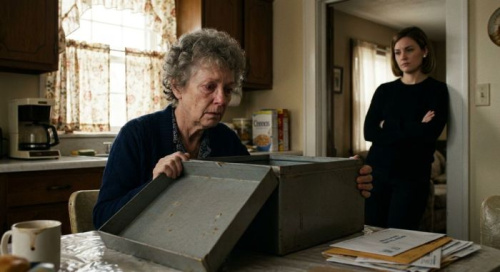
My mother found out two days later, and it was not the way I planned. She never came to my room, but that day she did, and she found the green box open on the bed, and the trust, and Dad's letter. She sat on the edge of my bed with the letter in her hands, her mouth moving silently over the words.
"When did he write this?" she asked.
"The week he died."
She was quiet for a long time. Then she said, "He knew. All those years, he knew about Dale." Her hands trembled, folding and unfolding the letter.
"He knew you would take care of me," I said, "and he knew Dale couldn't be trusted not to take everything. So he built a fence. That's all a trust is, Mom. It's love with paperwork."
She looked at me then, really looked, the way she hadn't in years. "The taxes," she said. "The water heater. The roof. Dale said he paid."
"Dale said a lot of things," I said gently. "I didn't want you to worry. You never liked worrying."
She started to cry then, finally, and I held her, and I understood that sometimes the karma a family needs is not an arrest and not a courtroom. Sometimes it is nothing more than the truth, arriving at last, wearing a tired face and holding a box of receipts.
It was Dale who got the arrest. He'd already spent twenty thousand dollars of the equity line, and when the bank discovered the collateral had never been his to borrow against, they called the Sheriff's Office. The notary on the quitclaim — a high school friend who'd stamped a document for a property he'd never seen — folded under questioning in about nine minutes. Forgery of a public record. Financial exploitation of a vulnerable adult. They booked Dale on a Thursday, and Tina took the boys to her sister's in Savannah. I did not feel glad, exactly. I felt what I imagine Dad would have felt: tired, and sad, and at peace.
My mother went to the arraignment. I sat beside her, and she held my hand the whole time. When the judge read the charges, she leaned over and whispered, "I should have seen you, Margaret. All this time. I should have seen you."
I squeezed her hand. "You see me now. That's the only part that ever mattered."
The house is still on Rutledge Avenue. The trust did what Dad built it to do: it bent around the wreck and held. I took the for-sale sign down from the yard myself the morning after the arrest, and I planted lavender along the fence line where the sign had stood.
Rosa still comes three days a week, though mostly now she comes to drink coffee and admire the reading room I made out of the old parlor — Dad's chair, my mother's china, shelves of books I finally have time to read. My mother sits in the window and watches the street, and sometimes she says, "You know, your father would have loved this," and I believe she has started saying it to me on purpose, the way she used to say Dale's name on purpose. And it is enough. It is more than enough.
I never wanted her to love me best. I only wanted her to see me. And in the end, that's what Dad's quiet fence gave us both: a mother who finally looked, and a daughter who finally stopped hiding, and a house that remembered, all the way down to its bones, which of us held the pole steady while the other one rested.