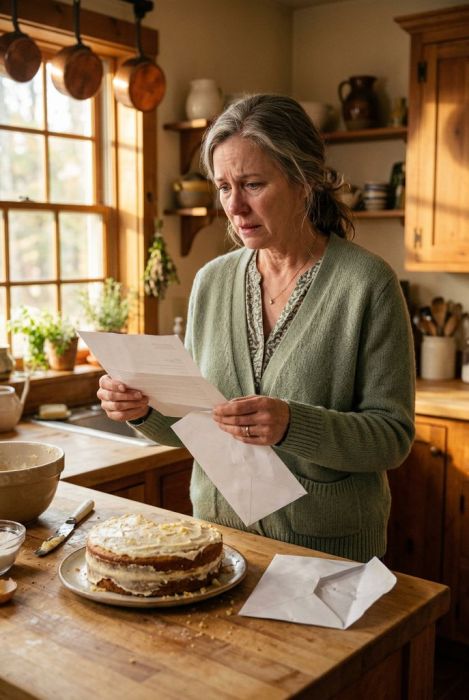
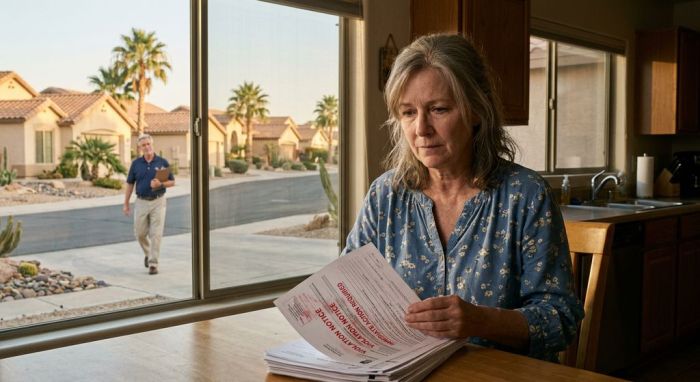
The first fine arrived on a Tuesday, folded inside the glossy community newsletter like it belonged there. "Violation 8841: Front lawn exceeds acceptable dandelion count." Six hundred dollars. I read it three times, standing at my own mailbox with the Arizona sun pressing down on the back of my neck, and I laughed out loud — because nobody on this earth writes a fine for dandelions. Then I saw the signature at the bottom. Harold Pemberton, President. And I stopped laughing.
I could tell you exactly how many dandelions were on my lawn that morning. Four. I had stepped over them on my way to the mailbox, the same way I had stepped over them every spring for forty years. My mother used to say that dandelions were the only flowers that planted themselves for free, and she appreciated a free flower. The house on the corner of Primrose Court and Sunridge Drive had been hers since 1962, when my father built it himself out of a secondhand Studebaker full of lumber and sheer stubbornness. She died holding my hand at ninety, in the room my father built for her, with her daisies still blooming in the front bed.
Everything was not peaceful after that. But you never understand that until the envelopes start arriving.
Harold Pemberton moved into the community nine years ago, after cashing out an insurance career somewhere in Ohio. He was the kind of man who tells you the price of his watch in the first five minutes of conversation. He ran for the board unopposed, because nobody else wanted the job, and within two years he had made himself president. Under Harold, the meetings became lectures, the newsletter became his personal trumpet, and the fine schedule — once a polite little list of suggestions — became a weapon.
The dandelion fine was only the beginning. Ten days later: "Violation 9912: Inoperable vehicle visible from street." I don't own an inoperable vehicle. I own a twelve-year-old sedan with a dented bumper and an engine that starts every single time, and I sent them a photograph of it starting. The response arrived by return mail: "Photograph noted. Fine stands. Payable within fourteen days." Two hundred dollars.
Then came the fence. Then the mailbox. Then the rosebush my mother planted in 1971, which they said "obstructs line of sight" for a corner lot that has never once had an accident at its curve. Every fine had the same formula: a grainy photograph, a paragraph of regulations, and Harold's signature. And every fine was a lie. The fence photograph wasn't even my fence. It was the Johnson place, number nine, two streets over — same style, wrong number on the gate, clear as day if you looked. Whoever took those photographs had never once stood on my property.
I appealed, of course. That was the trap.
The appeal hearing was held in Harold's living room, on a Tuesday evening in June, because Harold had decided the clubhouse was "under renovation." He sat in his recliner with a glass of iced tea and a legal pad, and on the sofa sat two board members he had personally appointed, both of them nodding at everything he said. I brought my evidence — my photographs, my timestamps, the receipt for the rosebush, the county records showing the fence belonged to the Johnsons. Harold didn't look at any of it. He looked at me the way you look at a stain on the carpet, and he said, "Diane, we're not here to litigate. We're here to help you bring your property into compliance."
My name is Ruth. He had known my name for nine years. He had known my mother's name. He had known my husband's name, and he had signed the sympathy card when Frank died. He sat there in his recliner, two years after Frank's funeral, and called me Diane, and the two nodding men on the sofa did not even blink.
The fine stood. And then the late fees started multiplying like weeds.
Frank. God, I miss Frank. He was a quiet man, a high school woodshop teacher for thirty-four years, and he loved this house like a third child. He used to say the corner lot was the only piece of land in the whole community that was worth more than the house on it, because someday somebody would want to build something there. He joked about it once at a board meeting, about a year before he died. I didn't think anything of the way Harold Pemberton's eyes went flat when Frank said it.
Frank died on a cold Tuesday in February, two years ago. Heart attack, in his workshop, with sawdust still on his hands. The paramedics said it would have been quick, and I held onto that. His study was exactly the way he left it: wood samples in neat stacks, a coffee mug ring on the desk, and a filing cabinet that I never opened, because opening it felt like opening a door he had closed on his way out.
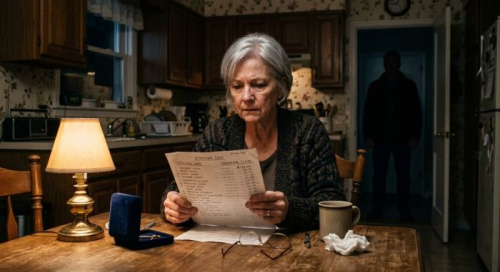
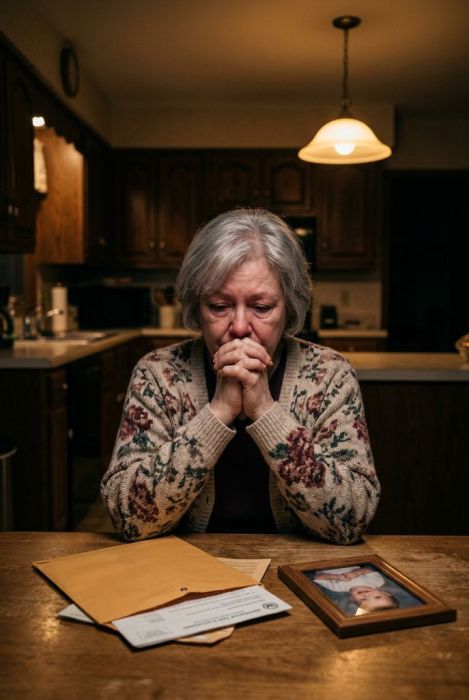
The sheriff's sale notice came in August. Certified mail, thick envelope, the kind you sign for with a sinking heart. The HOA had placed a lien on my house for the full amount — eleven thousand, four hundred, and thirty-two dollars — and if I did not pay, the house would be auctioned on the courthouse steps in ninety days. Ninety days. My mother's house. My children's summer home. Frank's workshop. The daisies. Ninety days, because of dandelions.
I called my daughter Jessica that night, and I did not tell her about the notice. I asked her how Portland was, and she said great, and then she asked me the question she always asks: "Mom, are you okay?" And I said I was fine, because what mother doesn't? I sat in the dark kitchen afterward and stared at the certified letter and cried until I had no tears left. And then I got angry. Anger, it turns out, is a much better fuel than grief.
I started with the records. I went to the county assessor's office in person, with a box of doughnuts for the clerks. I pulled the HOA's registered documents, their amendments, their annual filings. And I found something odd: Harold Pemberton had quietly changed the HOA's registered agent three times in two years, each time to a different address, none of them his. Curious, I thought. But not damning. Not yet.
I went to the neighbors. Not the ones who stopped waving — there were plenty of those, because Harold ran the social committee and controlled the barbecue invitations. But the older ones, the ones who remembered my father hammering the frame of this house, remembered Frank too. Beatrice from next door, who had known me since I was a child, finally confessed over the fence one evening that Harold had come to her house asking about me. "He wanted to know if you were planning to sell," she said, looking at her shoes. "He wanted to know what the house was worth. He said it was for the community records."
The community records. I thanked her and went inside.
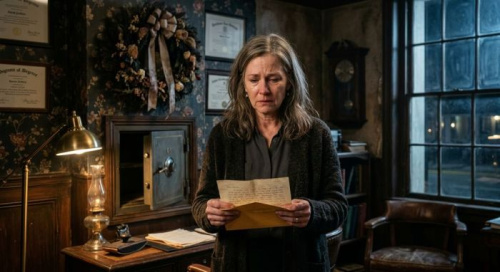
The attic was Frank's territory, always had been. If I needed a Christmas ornament or a box of tax returns, Frank went up and came back with it. The Sunday after Beatrice's confession, I went up there myself for the first time, with a flashlight and a heart that would not stop pounding. Boxes and boxes: my mother's china, my father's tools, yearbooks, lampshades, snow globes. And there, in the corner, under a layer of dust — a cardboard box labeled in Frank's tidy handwriting: CHRISTMAS LIGHTS.
I opened it because it was Christmas lights, and we had not put up lights since he died, and I wanted to see them.
It was not Christmas lights. It was Frank's digital voice recorder — the one he swore he lost — and a gray three-ring binder stuffed so full it had to be tied shut with twine. I sat down on the attic floor, in the dust, opened the binder, and read page after page of my husband's neat handwriting.
Frank had been watching Harold Pemberton for a year and a half.
The binder had everything. Photographs of every board meeting, with timestamps. A handwritten log of every fine Harold had ever issued, and Frank's notes on which ones were fabricated. The fence photo from the Johnson place — Frank had already found it. Receipts for cash payments from a company called Silverstone Development to a post office box in Scottsdale. And a draft letter to the county attorney's office, dated three weeks before Frank died, never sent. His last note, in the margins, was the one that broke me: "Show this to Ruth if I don't make it back from this."
I played the recorded meetings that night, lying on the floor of the study with Frank's old headphones on, and I heard my quiet husband ask the kind of polite, devastating questions that made Harold fumble. And then I got to the recording from the parking lot after the February board meeting — the last board meeting Frank ever attended. There was Harold, unmistakable, laughing with a man I later learned was Alan Reyes of Silverstone Development. And Harold said, clear as a bell: "The window widow's got no idea. Eleven grand by Christmas, and the corner's ours. Title company's already running my paperwork."
The window widow. That was me. That was my mother's house. That was my husband's workshop and my father's hammer marks in the frame — a punch line in a parking lot.
I did not go to Harold with the recordings. I learned that much from Frank's notebook: you never show your hand until the table is set. Instead, I went to Leo Gutierrez, the lawyer who had handled my mother's estate, a man who had known my father. I played him exactly one minute of the tape. Leo listened with his glasses off, his face going through about nine colors, and then he said, very quietly: "Ruth. Do you know what you have here?"
I told him I was beginning to.
Leo made two calls. The first was to a friend at the county attorney's office, who went very quiet on the other end and then said the words I will never forget: "Silverstone Development is already under investigation in two other counties." The second call was to the real estate fraud unit. And then Leo told me to do the hardest thing of all: go to the annual meeting, smile, and let Harold walk right into the trap he had spent the year building.
The annual meeting was scheduled for the following Tuesday. Harold had placed a special resolution on the agenda — Resolution 7 — authorizing the board to "execute all legal remedies necessary to recover delinquent assessments," which was a polite way of saying: sell Ruth Whitfield's house on the courthouse steps. He expected sixty seconds of applause and the deed by Christmas.
What Harold did not know was that I had spoken to seventy-two of my neighbors, that Beatrice had been telling the whole bridge club about the fence photograph for a week, and that Leo held a full copy of Frank's binder while two county investigators were planning dinner at the clubhouse that night.
I walked into that meeting in my mother's best dress — the blue one she wore to my wedding — and I sat in the second row, right in Harold's line of sight, and I smiled at him. He smiled back, the way you smile at a dog that's about to be put down.
Resolution 7 passed the agenda. Harold read the fine schedule aloud, his voice dripping with wounded patience, page after page of my supposed crimes. The dandelions. The fence. The rosebush. The neighbors shifted in their chairs, and I could feel the room wanting to believe him, because he was so good at it. Then he opened the floor for questions, and I stood up.
"Mr. Pemberton," I said — my voice steady, thank God — "before you take the vote, I'd like to correct the minutes." I held up the little gray recorder, and I pressed play. The room was very, very quiet. Harold's smile began to melt around the word "widow," and by the time his own voice said "title company's already running my paperwork," he was standing, shouting, demanding that somebody call security, that this was private property, that I was trespassing. And then the two men at the back of the room stood up, and one of them held up a badge, and he said: "Harold Pemberton, please come with us."
The vote on Resolution 7 never happened.
The rest of it happened the way those things always do, in increments. Alan Reyes of Silverstone Development was arrested five days later. The county's investigation turned into a grand jury, and the grand jury turned into an indictment, and the indictment named Harold Pemberton as a co-conspirator — for the cash envelopes, the forged minutes, the fabricated fines, and the attempted theft of my home. The homeowners' association, desperate to distance itself, voted Harold off the board the very next week by acclamation. Every fine they had ever issued me — every dollar — was voided, in writing, with a written apology.
Beatrice came over the day after the meeting with a casserole and a face full of tears, and she told me she was sorry she had stopped waving, and I hugged her, because shame does strange things to good people, and I had known her since the fifth grade. The bridge club started meeting at my house. The new board — including a retired librarian who kept minutes like a notary — rewrote the fine policy so that every single violation now required an on-site inspection and a photograph taken at the actual address. They mailed the new policy to every home, and the monthly newsletter ran an editor's note about transparency and trust.
The sheriff released the lien. The corner lot stayed mine, and my mother's daisies came back the next spring, exactly the way she always said they would.
I never sold the house. The developer's offer, when it eventually came through a different, legitimate channel, was generous — enough to have tempted almost anyone. Jessica called me from Portland, nervous, and asked me what I was going to do. "I'm going to stay," I told her. "I'm going to plant rosebushes where the daisies are, because your grandmother would have liked that, and I'm going to sit on the porch and drink my coffee and watch the sun come up over the house my father built with his own two hands."
There was a long pause on the line. Then Jessica said, very softly, "Frank would be so proud of you, Mom."
I think about Frank every day. I think about him in his workshop, and I think about the notebook in the attic, and I think about how he knew, a year before I did, what was standing in the shadows of our little corner of the world. He didn't get to see it finished. But he set the table for me, and I — finally, at sixty-one years old, with my mother's dress and my husband's recordings and a backbone I didn't know I had — sat down and ate the meal he had prepared.
The fine envelopes stopped coming. And my house — my mother's house, my father's hammer marks, my own two feet planted in the Arizona sun — is still standing on the corner of Primrose Court, exactly where it has stood since 1962.
Some people read that ending and think it's about real estate. It's not. It's about the quietest kind of victory there is: the one where you don't have to shout, because the truth turns out to be louder.