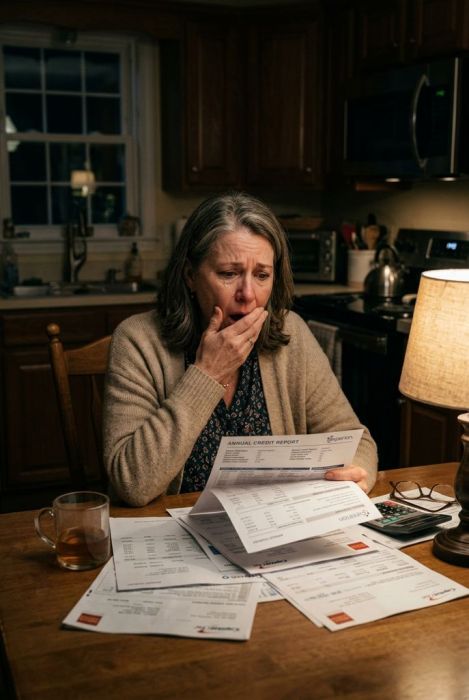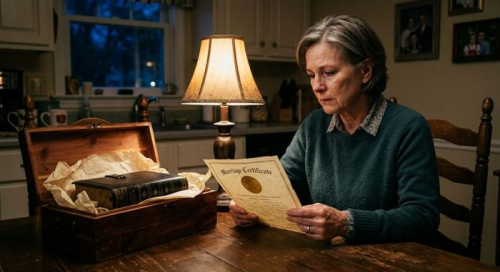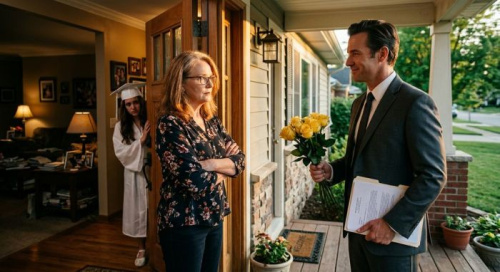
The mansion on Vendue Row had been in our family for one hundred and twelve years, and I had spent twenty-five of them inside its walls, keeping it alive.
My grandmother, Margaret Barrow, built her whole life around that house. She raised me there after my parents died, taught me to dust the crown moldings without a ladder, to polish the mahogany banister until it glowed, to read the history of Charleston in every scratched floorboard and faded portrait. When I turned thirty, I put aside my dreams of becoming an archivist in some faraway city. I chose to stay. I chose her.
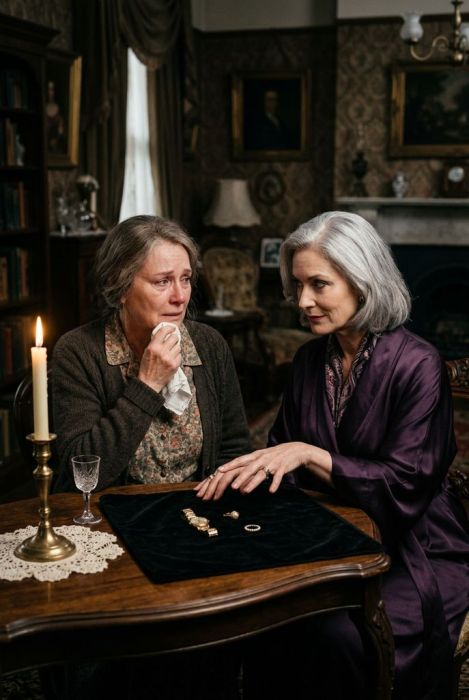
For two and a half decades I was the one who held her hand through appointments, who made her tea exactly the way she liked it, who sat with her through the long Charleston afternoons when her memory began to fray like an old hem.
My cousin Warren visited exactly four times in those twenty-five years. He sent postcards from his beach trips, called on holidays when it suited him, and once, at a funeral, introduced me to someone as "the live-in nurse," a label that stung more than I let on.
Warren was a property developer with a sharp suit and a sharper smile. He made his money tearing down old things and building new ones that all looked the same. He had no love for Vendue Row, no feeling for the peeling wallpaper or the creaking stairs. All he saw was the land beneath it, worth millions at the water's edge.
When Grandmother passed, on a soft October morning with the curtains moving in the breeze, I did what I had always done. I arranged everything. I chose the hymns, ordered the flowers, held her funeral together. Warren arrived an hour late, kissed the coffin, and shook hands with every attorney in the room like he was running for office.
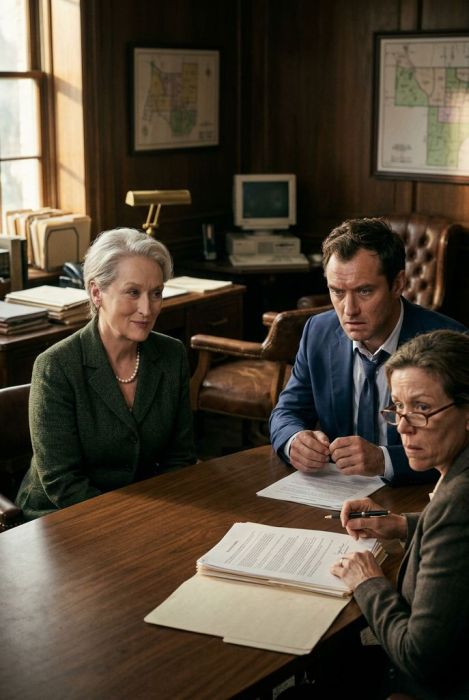
The reading of the will was held eleven days later in the offices of a lawyer I had never met, a man named Crane who Warren introduced with a too-easy grin. I expected to hear myself walk away with the house and a modest trust, the way Grandmother had promised me a hundred times in her calm, certain voice.
Instead, Mr. Crane cleared his throat and read a document I had never seen. It was dated only six weeks before she died. It left the mansion, the grounds, and the entire estate to Warren, describing him as "her only remaining blood heir of sound mind and loyal devotion."
I sat very still. Around me, the room seemed to tilt. Warren did not look surprised. He folded his hands on the table like a man who had already won, and I understood in that moment that my grandmother's signature, however it looked, had not truly been hers alone in those final weeks when strangers began to visit her room.
The terms were brutal. I was given thirty days to vacate the house I had lived in for my entire adult life. Warren planned to sell it within the year to a developer who wanted to clear the lot for condominiums facing the harbor.
"You've had a good run, cousin," Warren said as we left the office, clapping me on the shoulder with a warmth that made my skin crawl. "Time to let the family name mean something again."
I said nothing. I went home to Vendue Row, walked up the stairs that had held me for so long, and sat on the edge of my grandmother's bed, staring at the dust motes in the evening light.
The last thing Grandmother ever said to me, three days before she died, had made no sense at the time. She had gripped my wrist with surprising strength and whispered, "The second safe, Delia. Behind my mother's portrait. Promise me you'll open it alone, after the vultures gather."
I had assumed it was the confusion of her illness, a fleeting memory of some family legend she had told me as a child. But now, with Warren's cheap triumph still ringing in my ears, the words came back to me like a cold hand on my shoulder.
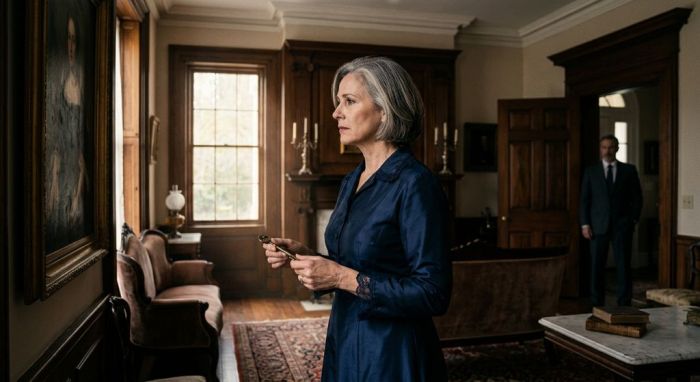
I waited until dark. Then I went to the portrait of her mother, Rebecca Barrow, the one with the severe face and the lace collar, and I lifted it from the wall as carefully as I would lift a sleeping child.
Behind it, hidden in a hollow space cut into the brick, sat a small green fireproof safe I had never known existed. It had been there the whole time, behind a woman's painted eyes, through every renovation and every stranger's visit.
My hands shook as I turned the dial, using my birthday as Grandmother once did for everything, and the lock gave with a soft, final click.
Inside I found three things, and each one changed everything.
The first was the true will, dated seven years earlier, properly witnessed by two attorneys who had since retired, leaving the mansion and the estate entirely to me. There was a note tucked inside in Grandmother's steady, pre-illness handwriting: "My real will. Signed the year I still knew my own mind. Keep it somewhere Warren will never think to look, and open it only when you must."
The second thing was the original deed to the property, along with a preservation covenant Grandmother had signed decades ago with the city of Charleston, binding the house to the Historic District forever. The land could never be cleared for condominiums. It could not be demolished, rezoned, or built upon. Whoever owned Vendue Row was bound, by law, to keep it exactly as it was.
The third thing was a small voice recorder, the old-fashioned kind, and a folded letter.
The letter explained everything. In her final months, Grandmother wrote, Warren had descended on her with a nurse he had hired, a woman who smiled too much and asked too many questions. They had brought documents for her to sign, framed as paperwork for her care. They had isolated her from me, told her I was too busy with the garden to visit, and filled her head with doubts about my loyalty.
She had signed, not because she wanted to, but because she was afraid, and alone, and no longer certain which of us truly loved her.
But the recorder was the crown. On it, in a voice I recognized instantly, was Warren himself. He had come to her room one rainy afternoon when he thought no one was listening, coaxing and wheedling and finally threatening her to sign a new will. Her weak, trembling refusal played back in heartbreaking detail, followed by his anger, his cruel words about how she had "wasted" the family fortune on a woman who was "barely family."
I sat on the floor of that dusty room and listened to it twice. Then I held the real will against my chest and cried, because I finally understood that my grandmother had not abandoned me. She had seen the vultures coming, and she had laid a trap I was meant to spring.
I did not go to the police that night. I did not confront Warren with fire and fury. I had learned, in twenty-five years, that the patient hand wins more often than the angry one.
Instead I made four quiet telephone calls. One to the retired attorney whose name was on the true will. One to a preservation lawyer who knew the covenant by heart. One to the city's Historic District office. And one to a detective I had known since high school, a slow, careful man named Deputy Marshall Boyd who had watched Warren strut around town for years with open suspicion.
For the next four weeks, I let Warren believe he had won. I packed boxes with elaborate, sad drama, loading photographs and china into them so he could watch me from his car. He came by more than once to "check on my progress," and each time I made my shoulders slump and my voice waver.
It cost me more than I can say, acting so broken to a man who had earned none of my softness. But it bought me time. And time is what the vultures always forget they are spending.
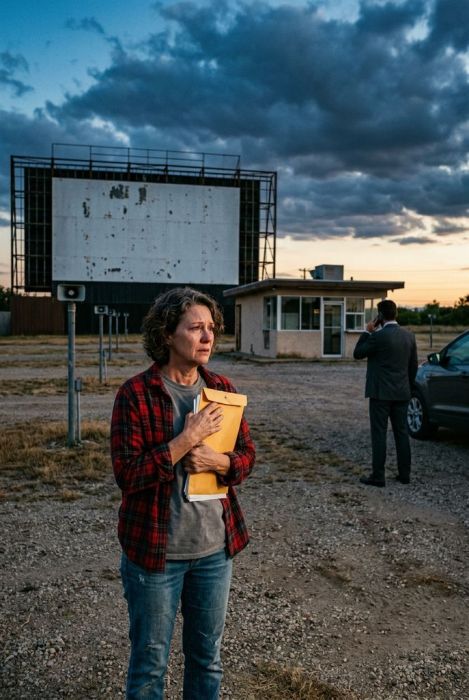
On the day of the closing, Warren stood in the bank's conference room wearing his most expensive suit, a fountain pen in his hand, ready to sign the mansion over to the developer for a sum that would have made his eyes water with greed. The developer's lawyer was there, and the title company, and a notary who had already begun to smile.
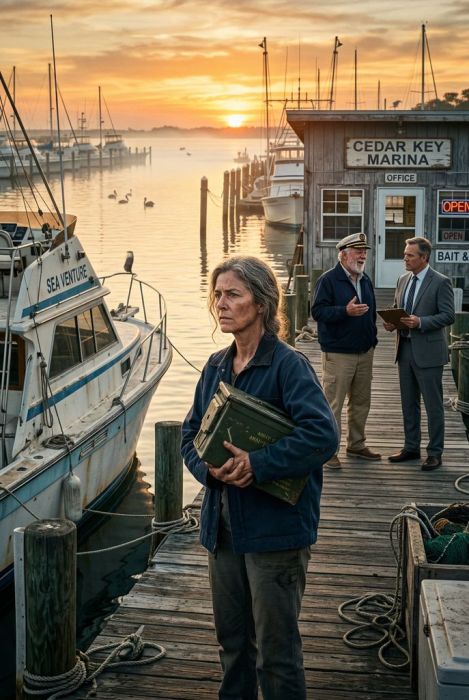
I walked in and set my grandmother's green safe on the long oak table.
"Before anyone signs anything," I said, "I think we should all hear what my grandmother actually had to say."
Warren laughed, that sharp, confident laugh. "Delia, darling, don't embarrass yourself. The will is final. Signed, witnessed, filed."
"This one," I said, sliding the real will across the table, "was signed seven years ago, witnessed by two attorneys who are still alive and willing to swear to it. You might want to read the date, cousin."
He read it. His face went through a fascinating journey, from amusement to confusion to a gray, sunken horror, and I watched it the way I had watched the dust settle in Grandmother's room for twenty-five years: with patience, and with knowing.
Then I pressed play on the recorder. His own voice filled the silent room, coaxing and threatening his dying grandmother, and the notary stopped smiling. The developer's lawyer quietly closed his briefcase. The title company agent went very, very still.
Warren's mouth opened and closed like a fish. "That's—that's taken out of context—"
"It's not taken out of context," I said gently. "It's the context."
Deputy Marshall Boyd chose that moment to step in through the door, badge already out, flanked by two officers. Fraud, elder abuse, coercion, and attempted land theft. They read him his rights right there at the closing table, in front of the men whose money he had been counting.
And because Grandmother had been clever, the preservation covenant meant there was nothing left for anyone to buy anyway. The land beneath her house belonged to history, as sacred as it had always been.
The forged will was never enforced. Warren's arrest made the local paper, and then the state paper, and then the regional news, a cautionary tale about the cost of greed. He lost everything his scheme had promised him. The developer walked away. The condo project vanished.
As for me, I kept the mansion, exactly as my grandmother always intended. I had her true will framed in the study, next to her portrait, a quiet monument to the patience of love.
It took me a year, but I opened the house to the public as a historic home, the Barrow House Museum, sharing Vendue Row's hundred years of stories with the visitors who came to walk its floors. I hired a young preservationist named Annabel, a girl with the same dream I had once given up, and I taught her to dust the crown moldings without a ladder.
I never stopped missing Grandmother. I never will. But I learned something those twenty-five years taught me, in the quiet way that house had always whispered its lessons: the love you give without counting the cost is never wasted, and the greedy always forget that they are not the only ones who have been watching.
Warren is serving a long sentence now. I visit his name only in the news, and I feel nothing but the quiet, certain peace of a woman who kept her promise.
Some nights, when the house is still and the light slants through the windows just so, I walk to Rebecca's portrait, lift it from the wall, and look at the empty hollow, warm and safe behind her painted eyes. And I thank my grandmother for trusting me with the only thing that mattered.
She knew, the whole time. That is the part that lets me sleep at night. She knew I would open it alone, after the vultures gathered, and that I would hold what she gave me close enough to save it.
The mansion on Vendue Row is still standing, just as she left it. And so am I.