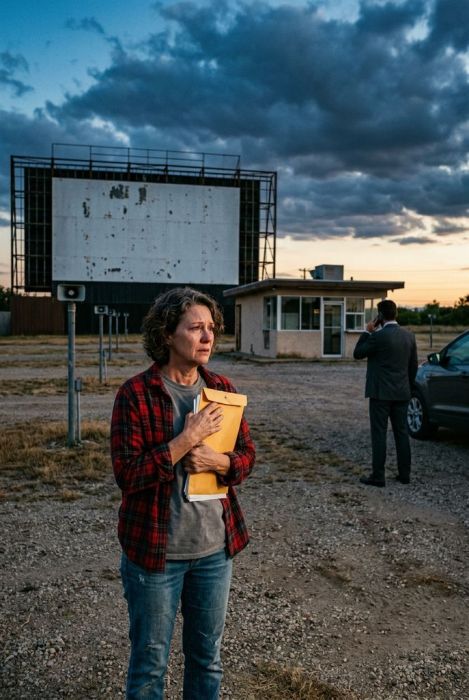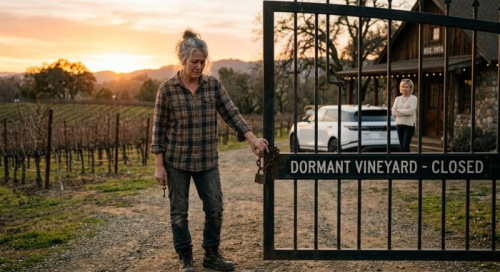
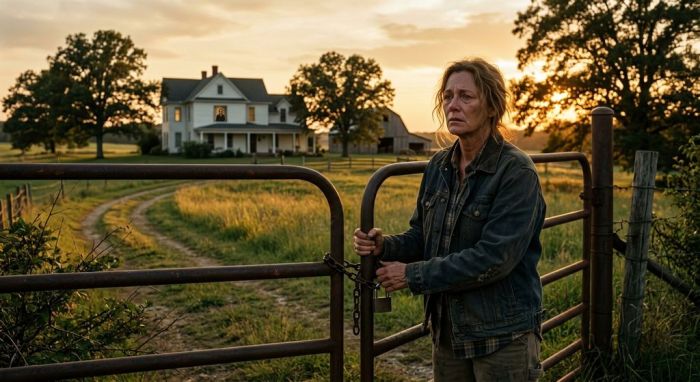
I was peeling potatoes at the kitchen sink when I heard the locks change. Not the subtle sound of a sticky door, but the heavy, deliberate grinding of a locksmith's drill biting into the brass deadbolt my mother had helped my father install forty years ago.
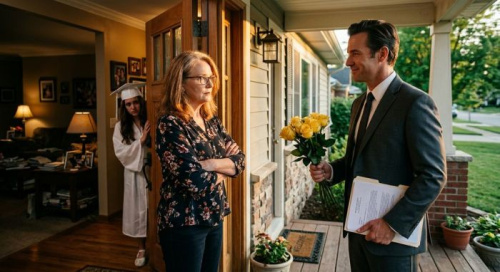
I set the peeler down and wiped my hands on my apron, telling myself I had heard wrong. But when I walked into the mudroom, there she was — Vivian, my father's new wife — holding a handful of new brass keys and smiling at me like I was a stray cat that had wandered onto her porch.
"You'll want to pack tonight," she said, her voice sweet and light, as if she were suggesting I try a new recipe. "The realtor is coming to photograph the farm in the morning, and it won't do to have your things in the photos."
I stared at her. The farm had been in my mother's family for three generations. My father had lived here with my mother for forty-two years, until the cancer had taken her just seven months ago. And now, six months after her funeral, he had married a woman we had met at a grief support group.
I want to tell you I stood up for myself that day. That I told Vivian she had no right. That I called my father and demanded he fix this. But the truth is, I didn't. I was so broken by losing my mother, so desperate to believe my father could find some happiness again, that I had convinced myself Vivian was a blessing. I had even welcomed her.
I had made her casseroles. I had let her rearrange my mother's china cabinet. I had smiled through every one of her small cruelties, telling myself I was being unfair.
But standing there in the mudroom, watching her spin those new keys on her finger like a trophy, I finally understood. I had been a fool. And I had let a wolf into the house my mother had built.
My name is Ruth Callahan. I am fifty-five years old. For most of my life, I thought the greatest threat to my family would be something dramatic — a drought, a bad harvest, a sudden illness. I never imagined it would wear a lavender cardigan and call me "dear."
The morning after the locks changed, Vivian pulled my father aside before breakfast. I watched from the porch as she spoke to him in that low, soothing voice she used when she wanted something. My father nodded, his silver head bowed, looking smaller than I had ever seen him. He had been a giant of a man once, all broad shoulders and booming laugh. Now he seemed to have shrunk inside his own skin.
When they came back inside, he wouldn't meet my eyes.
"Vivian thinks it's best," he mumbled, shuffling his feet like a schoolboy caught in a lie. "She thinks you should move into town for a while. Give us some space to settle in as a married couple."
I felt the ground shift under me. "Dad, this farm is my home. This is Mom's home. I've been here my whole life."
"I know, sweetheart." He wouldn't look at me. "But Vivian says..."
"Dad, when did you stop making your own decisions?"
The words came out sharper than I intended, and I saw the hurt flash across his face before Vivian glided in and took his arm.
"Now, Ruth, let's not be difficult," she said, her voice dripping with false patience. "Douglas needs peace. He's been through so much. Can't you see you're upsetting him?"
She was good at that, I realized. She always made my concern sound like cruelty. She always made her own manipulations sound like tenderness. And every time I pushed back, she would grab my father's hand and pull him a little further away from me.
I packed that afternoon. I told myself I was doing it to keep the peace. I told myself it was temporary. But Vivian was standing on the porch as I drove away, one hand raised in a wave that was really a farewell, and I had the sickening feeling that I would never be allowed back.
For three months, I lived in a rented apartment above the feed store in town. I visited my father every week, but each time it got harder. Vivian was always there, hovering, steering the conversation, finding reasons to send me home early. I'd try to talk to him alone, to ask if he was all right, and she'd suddenly need him for something — a consultation with the accountant, a meeting with the realtor, a "surprise" she had planned.
Then one afternoon, I stopped by without calling first.
I found my father sitting alone in the sunroom, staring out at the fields. His hands were trembling, and there was a glass of water beside him that he hadn't touched. He looked so tired, so thin.
"Dad?" I whispered.
He turned to look at me, and for a moment, his eyes were clear. "Ruthie," he said, and my heart cracked. He hadn't called me that in years.
"Dad, are you all right? Does Vivian know I'm here?"
His face clouded. "Vivian," he repeated, like the name tasted wrong. "She's been... helping with my affairs."
"What affairs, Dad?"
He reached into his pocket and pulled out a folded piece of paper, pressing it into my hand. "Take this," he said, his voice urgent and low. "Don't let her see. Promise me, Ruthie."
Before I could ask what it was, I heard Vivian's footsteps on the stairs. My father shoved the paper into my coat pocket and composed his face, and by the time Vivian walked in, he was his usual quiet, obedient self.
I left quickly, my heart pounding. In my truck, I unfolded the paper.
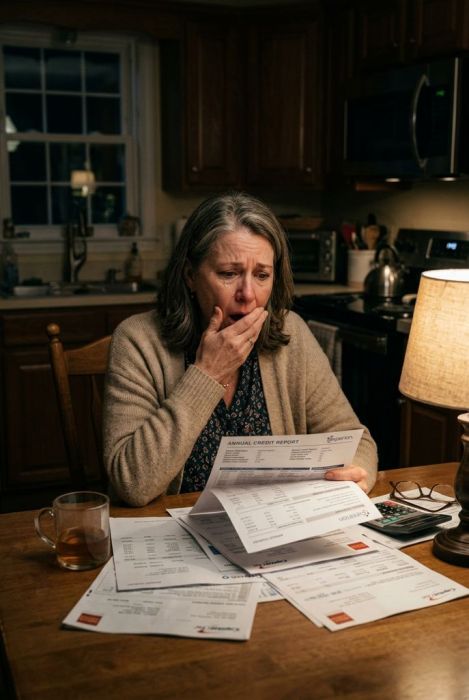
It took me a moment to understand what I was reading. It was a copy of a new deed. A deed that transferred ownership of the entire family farm to Vivian Callahan — my father's signature at the bottom, notarized three weeks ago.
But it was the second paragraph that made my blood run cold. It listed my father's "donation" of three hundred thousand dollars from his savings account to Vivian, described as payment for "caregiving services."
My father had never been sick a day in his life until Vivian arrived.
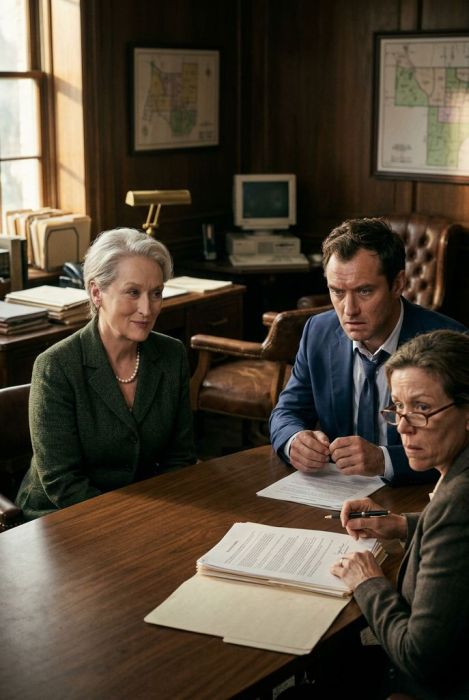
I drove straight to the office of Harlow & Finch, the law firm that had handled my mother's family's affairs for sixty years. Old Mr. Harlow had been retired for a decade, but his son, Peter, ran the practice now. Peter had known me since I was a girl, and he knew this farm as well as I did.
He listened quietly as I told him everything, his face growing graver with each sentence.
"So she convinced him to sign it," Peter said slowly, "while he was... how would you describe his mental state?"
"Confused. Docile. Like he wasn't really there half the time." I swallowed. "Peter, I think she's been drugging him, or at least wearing him down until he'd sign anything."
Peter nodded, then walked to a tall safe in the corner of his office and began turning the dial. "Ruth, your mother did something wise before she passed, and I need you to hear me out."
"I don't understand."
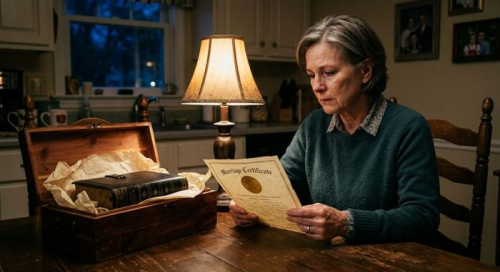
He opened the safe and pulled out a thick manila folder, worn at the edges. "Forty years ago, your grandparents set up a living trust for this farm. It was never meant to be owned outright by any one person. Your mother updated it before she died, and she made a specific provision — one that Vivian, for all her cleverness, has never seen."
He slid a single page across the desk toward me. It was the second document, the one locked in the lawyer's vault. And as I read it, the anger and grief I had been carrying for months slowly began to melt into something else.
Something like hope.
The document was clear. The family farm was held in a trust with specific terms: it could never be transferred, sold, or gifted to anyone outside the direct bloodline of the Callahan family without the signature of the designated trustee — a role my mother had left to me, and me alone, to hold for my father's lifetime.
Vivian's "deed" was about as valid as a note written on a napkin.
I sat back in the chair, tears streaming down my face. My mother had known. Somewhere, before the pain took her, she had known that a vulture might come circling, and she had built a wall around the farm to keep me safe.
Peter patted my hand. "The good news, Ruth, is that she can't take the farm. But three hundred thousand dollars is a lot of money, and if your father signed it while incapacitated, we have grounds to recover it. We just need to prove he wasn't in his right mind."
I thought about my father, small and trembling in the sunroom, her voice coaxing him to sign. "We'll prove it," I said. "And I know exactly how."
For the next two weeks, I played my part. I stayed away, just as Vivian wanted. I sent sweet, innocent texts to my father that I knew she would read, never once hinting that anything was wrong. I let her believe I had given up, that I had accepted my exile, that the quiet daughter she had pushed aside would simply fade away.
Meanwhile, I worked. I pulled my father's medical records. I found receipts for medications he had never taken. I talked to the visiting nurse Vivian had hired — a gentle woman named Delores who had grown uncomfortable with the way Vivian hovered and the confusion she saw in Douglas's eyes.
And I waited for the day Vivian would overreach.
It came three weeks later, when my father took a sudden turn for the worse. Vivian called me herself, her voice trembling with what I almost mistook for concern.
"Ruth, come quickly," she said. "Your father has collapsed. I've taken him to the hospital. You should say your goodbyes."
There was something in her voice — a thin, eager edge — that made my stomach turn. She wanted me to come and see him weak and diminished. She wanted me to believe he was slipping away so she could finish her scheme without interference.
I didn't hesitate. I drove to the hospital with the manila folder on the seat beside me.
When I got to his room, my father was pale but awake. Vivian stood beside his bed, dabbing his forehead with a cloth, playing the devoted wife. She looked up as I entered and smiled.
"Ruth, I'm glad you came," she said. "Your father has been asking to settle a few things. I thought it would be best for everyone if we got his affairs in order while he still..." She trailed off meaningfully.
I walked closer, and I saw the paper in my father's hand. Another deed. Another signature waiting to be made.
"There's no need," I said, my voice steady. "Dad's affairs are already in order."
Vivian's smile faltered. "What do you mean?"
I reached into my bag and pulled out the manila folder. My father's eyes widened when he recognized it, and I could have sworn I saw a spark of the old man he used to be.
"This farm was put in trust forty years before you ever met my father, Vivian," I said, my voice clear and calm. "It can't be signed away. Not by Douglas, not by you, not by anyone. My mother made sure of that before she died."
Vivian's face went white. "That's nonsense. Douglas signed the deed weeks ago. It's done."
"And that deed is worthless." I held up my mother's document. "The only signature that matters is mine. I'm the trustee. And I'm not signing anything."
The room went very quiet. My father let out a long breath, and for the first time in months, I saw color return to his cheeks. He looked at me, and his eyes were clear and proud.
"You knew," he whispered. "You knew the whole time."
"Mom made sure I would, Dad. She built a wall around us before she left."
Vivian took a step back, her composure crumbling. "You can't do this. I gave up everything for him. I quit my job. I took care of him. I'm owed—"
"You're owed nothing," I said. "You married a grieving man six months after he buried his wife, isolated him from his family, and talked him into signing over his life's work. That's not love, Vivian. That's theft."
She opened her mouth to argue, but at that moment the hospital room door opened and two visitors walked in — Delores, the visiting nurse, and a detective in a plain suit. Vivian's eyes went wide as she recognized them.
"Vivian May Callahan," the detective said, "we need you to come with us to discuss some irregularities with Mr. Callahan's medication and bank records."
She looked at me, at my father, at the folder in my hands, and I watched the realization sink in. She had been so clever, so careful, so certain she had won. She had never even thought to look for a second document in an old lawyer's vault.
The farm was never hers. And now, neither was her freedom.
It turned out Vivian had a history I hadn't known about — two previous husbands in other states, both elderly, both of whom had signed over their assets before their "sudden confusions" and "unexpected declines." The detective's office had been building a case for months. My evidence finally gave them what they needed.
My father spent two weeks in the hospital recovering, and every day he got a little stronger. When he finally came home, it was to a house with new locks and old memories, and no trace of Vivian anywhere.
We threw away the lavender cardigan she had left behind. We rearranged my mother's china back where it belonged. And we sat on the porch together, the two of us, watching the sun set over the fields that had been in our family for three generations.
"Ruthie," my father said quietly one evening, "I'm so sorry. I let her take me away from you."
"You didn't let her, Dad. She was very good at what she did."
"But you saw through it. Even when I couldn't." He squeezed my hand. "Your mother would be proud of you. So proud."
I thought about my mother, and I realized she had known exactly what she was doing when she set up that trust. She hadn't just protected the farm. She had protected me — from the very thing that took her, the thing she knew would come looking for her heartbroken family the moment she was gone.
The meadow at the edge of the farm has never looked more beautiful than it does this year. My father and I restored the old barn together, him guiding, me lifting. We're planning to open the farm to school groups in the spring, teaching city kids where their food comes from.
Vivian sits in a county jail now, facing charges for fraud, elder abuse, and grand larceny across two states. Her name is never spoken in our house. She is nothing more than a cautionary tale that my father and I, healed and whole, share with no one.
Some people think karma is slow. They think it forgets. But I learned something different. I learned that sometimes, long before the trouble ever comes, a good woman builds a wall, signs a document, and hides it in a safe where no schemer will ever think to look.
My mother built me a shield. And I use it every single day, out here on the farm, watching the seasons turn and knowing — truly knowing — that some things are too precious to ever be stolen.