The first time my daughter-in-law announced my retirement, I was standing in the wings of the Red Oak Community Center behind a velvet curtain that smelled like forty-five years of sweat and hairspray. In my hands I held a bouquet of carnations from the parents, and underneath it, the program for our annual recital. The program that said, in big gold letters, Vanessa's Dance Academy presents.
"Good evening, Red Oak!" Vanessa's voice rang out, and the crowd clapped. I watched her glide to center stage in a dress that cost more than my first car, wearing the smile she had been practicing on me for eight years. "You may have heard rumors about Ruthie," she said, and a few heads turned my way. "I'm here to tell you, from the bottom of my heart, that Ruthie is fine. She just needed a good, long rest. And I am so honored to carry her beautiful legacy forward."
The applause was warm and generous. Mothers wiped their eyes. Somebody shouted, "We love you, Ruthie!" and I felt my own eyes sting. Because forty-five years earlier, I had danced on that same stage in a borrowed leotard while my father played the piano, and I had promised myself that someday I would give every child in Red Oak that same moment of magic.
What Vanessa did not know, what she could not have known, was that I was not there to watch. I was there to take back what was mine. And standing behind her, just out of the stage lights, was the man who held the final word on all of it.
Tom and I opened Ruthie's School of Dance in 1978, in a one-room space above the old hardware store on Main Street. We painted the walls ourselves, bolted the barres to the studs, and argued about the color of the floor until the neighbors complained. He was an accountant who loved jazz; I was a dancer who loved order. Somehow we fit.
When Tom passed away four years ago, the studio became the thing that kept me standing. The creak of the floorboards, the smell of rosin and lemon polish, the parade of little girls in pink leotards who grew into women who brought me their own daughters. I had three hundred students at the height of it, and their recitals were the biggest night of the year in this town.
Vanessa walked into that world ten years ago as a single mother who wanted her daughter Sadie to dance. She sat in the waiting room every single evening, learning my system, asking questions, making herself useful. By the time she married my son Danny three years later, she had become my assistant, my right hand, the person I trusted to lock up at night.
She was clever, I will give her that. She never once raised her voice at me. She praised me in public and whispered doubts in private, until slowly, gently, she had everyone in that studio believing she was the heart of the place and I was just the old woman who came with it.
Last November, I slipped on the ice outside the studio and broke my wrist in two places. Simple fracture, nothing dramatic, but the doctor loaded me up with painkillers, and for six weeks I was slower, softer, easier to move around. Easier to rearrange.
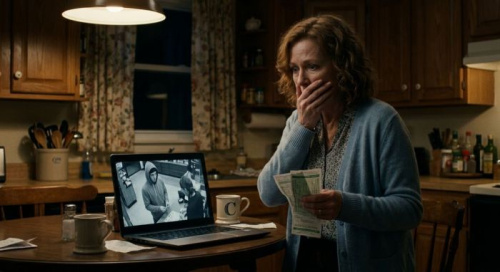
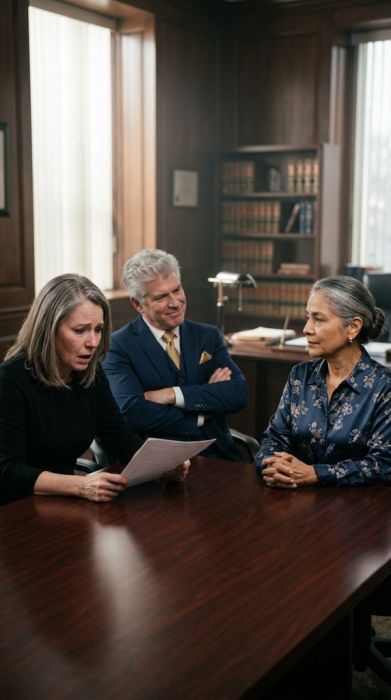
Vanessa came to my kitchen every day with soup and sympathy. "Ruthie, just sign these," she'd say, sliding a stack of papers across the table. "It's just the insurance forms for the studio. The bank needs them updated. Your signature here, and here." So I signed. I signed because I trusted her. I signed because my wrist throbbed and my head was full of cotton, and because my own son was sitting beside her nodding, saying, "Come on, Mom, just get it done."
The only person who raised an eyebrow was Mara Delgado, my studio manager for nineteen years, who had been one of my very first students. "Ruthie," she said one afternoon, holding up her phone, "I took pictures of every page she gave you. Just in case." I kissed her cheek and told her she was a worrier. I have never been more grateful for a worrier in my life.
The locks were changed the week before Christmas. I drove to the studio with a plate of cookies, and my key did not fit. I stood there in the cold, jiggling the handle, and through the window I saw a brand-new sign being hung by a man on a ladder. The sign said Vanessa's Dance Academy, and underneath, in smaller letters, something about continuing Ruthie's legacy.
By the time I got home, every parent in Red Oak had received an email from Vanessa's Dance Academy explaining that Ruthie had decided to retire, that she was struggling with her memory, and that the studio was in excellent hands. That was the part that hurt worse than the broken wrist. I have been doing taxes in my head since 1965, and suddenly I was confused.
Danny stopped returning my calls. Vanessa answered the ones that came to the studio and told people I was resting. When I showed up at their house, she opened the door with a sympathetic smile and said, "Ruthie, you seem upset. Maybe you should talk to your doctor about those memory concerns." In front of our Lily, my nine-year-old granddaughter, she said it. And Lily looked at me with those big worried eyes, and I saw my own little girl, the one I used to braid and take to the ballet, and I thought my heart would crack.
Mara brought me the papers in a manila envelope on a Tuesday afternoon. Bill of Sale of Membership Interest, it said. It transferred one hundred percent of Ruthie's School of Dance, LLC, to Vanessa Callahan, for the sum of fifteen thousand dollars. I had never received a penny. I had signed while my head was full of pain pills, in a fog of trust, and I would have sworn on my life that I was signing insurance forms.
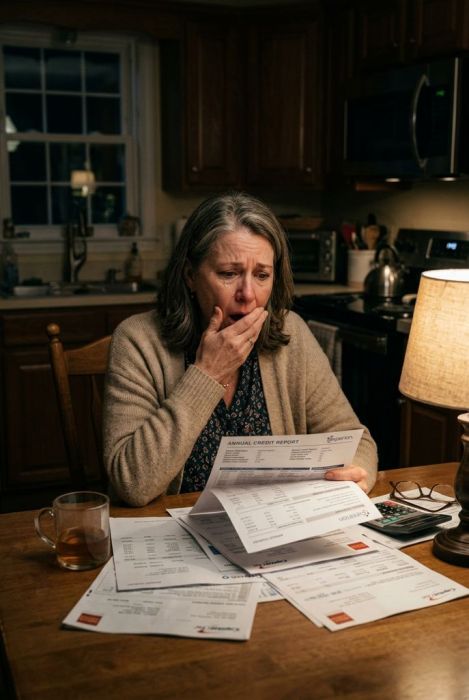
Greg Hastings, the accountant who took over the studio books after Tom died, went through the receipts for me. When he came back, his voice was shaking. "Ruthie, that fifteen thousand dollars came out of the studio's own operating account." He slid a ledger across the table. "She paid herself with your own money. Your money, and the money of every family who paid tuition in September."
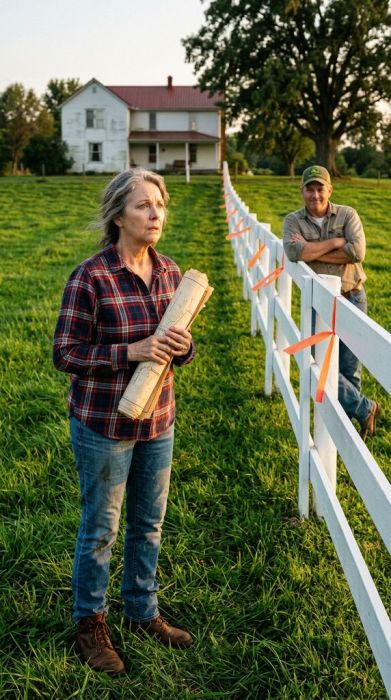
That was the moment I stopped crying. I sat up straighter, pulled my cardigan around me like armor, and thanked Greg. Then I drove to see Ed Kowalski, who owns the building on Main Street where the studio has lived for thirty years, and who was Tom's best friend since they were boys.
Ed poured me coffee and listened to the whole story without interrupting. Then he opened a drawer and pulled out a lease as thick as a phone book, yellowed at the edges, with my name typed across the top. "Ruthie," he said softly, "that building has been in my family for sixty years. Your lease runs until 2030, and it is in your name. Not the studio's. Yours. And line seven says no one can take over that lease without my written consent." He tapped the page. "She never asked. She never could."
That was when Greg told me about Dazzle Dance. A national franchise that paid small-town studio owners top dollar for what they called turnkey operations. The offer on the table for Vanessa was three hundred and fifty thousand dollars, if she could deliver full ownership of a clean, debt-free studio. She had leased a new car. She had put a deposit on a condo in the next county. She had already told her sister she was about to become rich.
The franchise sent a lawyer to verify the purchase. He called the studio, and Mara answered, and then Ed answered, and then Greg sent over the records. The due diligence did not survive the first afternoon. No landlord consent, no deed, no clean title, and no actual money exchanged hands. The deal collapsed like a house of cards in a rainstorm.
Greg filed a report with the county sheriff about the diverted studio funds. He did not tell me until after. He said he wanted me to have the choice to back down if I wanted to. I looked at him and said, "Greg, I have been pointing little girls' toes for forty-five years. Backing down is not in my choreography."
So we came to the recital. Vanessa had planned it for months: the biggest stage Red Oak had to offer, four hundred seats, a photographer, and a speech she had rehearsed in front of her mirror. She got her moment, exactly as she had dreamed it. She stood in the center of that stage in her expensive dress and announced, with tears in her eyes, that she was honored to carry Ruthie's legacy into a new era.
And then I stepped out from the wings.
The room went quiet. Somebody dropped a program. Vanessa's smile froze on her face, and for the first time in eight years, I watched the color drain out of her. "Ruthie," she said into the microphone, too bright, too loud, "we didn't expect you to travel tonight."
"Hello, Red Oak," I said, and my voice carried the way it always did, the voice that had called a thousand battements across forty-five years. "I didn't travel far. My studio is a mile from here."
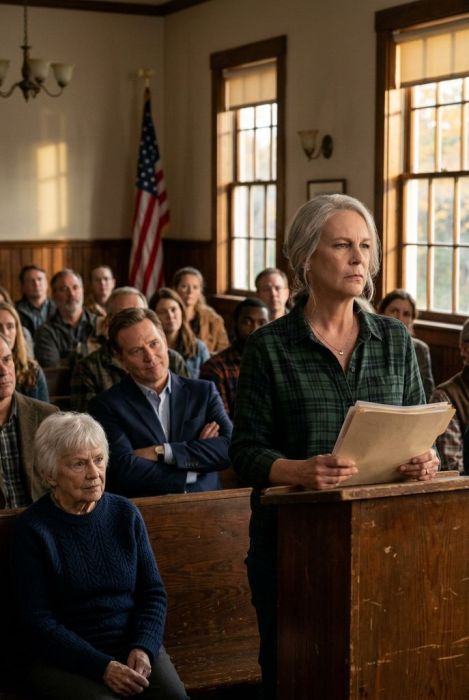
Ed Kowalski walked up the steps to the stage in his Sunday shoes. He was not a man of many words, and he did not waste them now. He took the microphone, looked out at four hundred people, and said, "The building on Main Street belongs to my family. It always has. And my lease has been with Ruth Callahan for forty-five years. There is no new owner. There never was."
The sheriff's deputy stepped forward then, holding an envelope. "Vanessa Callahan," he said, loud enough for the back row, "I have a notice regarding a civil complaint, and a referral to the district attorney regarding the misappropriation of studio funds."
Vanessa said my name like it was a curse. She said a lot of things after that, but nobody was listening anymore, because Sadie, her own daughter, had burst into tears in the front row, and the sound of it cut through everything. Somebody started to clap. It spread like wildfire, that applause, until the whole hall was on its feet.
The recital went on. It had to. Those children had rehearsed for months, and I had a rule about that since 1978: the show always goes on. Lily, my granddaughter, danced the solo I had taught her in my living room while my wrist was still in a cast. She pointed her toes and she smiled right at me, and I cried like a baby, and I did not care who saw.
By spring, Vanessa had quietly left town. The charges were real, and the restitution was real, and so was the silence of the people who had believed her. Danny came home and sat on my porch for two hours before he found the words. "I'm sorry, Mom," he whispered. "I wanted to believe her. I wanted it to be true that somebody was taking care of you." I let him cry on my shoulder. That is what mothers do.
Ed sold me the building that summer, at a price he called the family rate, because he said Tom would have wanted it that way. He was right. Tom would have loved every minute of it, especially the part where I made Vanessa's lawyer eat his own paperwork.
The sign on Main Street says Ruthie's School of Dance again. We held our forty-sixth annual recital last month, and Lily performed a solo she choreographed herself. She wants to teach someday, she tells me. She wants to carry the legacy forward.
I am sixty-eight years old, and I am not confused. I never was. I teach little girls to point their toes and hold their heads high, and every year I add one more name to the wall of champions. The name on the door is mine again. And the hand that holds mine when the lights come up belongs to my granddaughter.