The day my son Marcus hired Carol, I remember thinking how kind her eyes looked. She was twenty-nine, soft-spoken, with a warm smile and a way of touching my arm that felt almost daughterly. After my hip replacement, I couldn't manage the big house on Cedar Lane the way I used to, and my son worried himself sick over me living alone. So he found me a caregiver, someone who could cook, clean, and keep me company.
"You'll love her, Mom," Marcus promised, standing in my kitchen with Carol's file in his hand. "She came highly recommended."
I trusted Marcus. I trusted nearly everyone, honestly, which was probably my whole problem in the end.
The first few weeks were lovely. Carol made my favorite lemon cake, fluffed my pillows, and read to me from the novels stacked by my chair. She called me "Mrs. Hartwell," never "sweetie" or "dear," which I appreciated. I told her all about my husband Richard—how he'd run the hardware store on Main for forty years, how he'd bought this house the week we got engaged, how he'd passed three winters ago and left me with nothing but memories and a house full of things we'd collected together.
What I didn't tell her was that Richard had also left me a standing rule: never trust a stranger who asks too many questions about what you own.
And Carol asked a lot of questions. About the silver. About Grandma's brooch in the rosewood box. About the little painting above the fireplace that Richard had loved.
"Oh, that old thing," I'd say, waving a hand. "Richard picked it up at a flea market for thirty dollars."
Carol's eyes would linger on it a moment too long, and I'd change the subject.
It started small. A missing teaspoon from the silver set—but I thought maybe it was just misplaced. Then my late mother's cameo pin vanished from the vanity. I searched everywhere, then told myself I was just getting older and forgetting where I put things.
That was the thing Carol planted in my head early. "Oh, Mrs. Hartwell," she'd say with that patient smile, "you probably just misplaced it. You know how our memories get at your age."
At my age. She said it so gently, so sweetly, that I almost believed I was the one losing my mind.
And the cruelty wasn't only about my things. Carol began to treat me like a child in my own home. She'd lag my coffee until it was cold, "forget" to remind me about my medicine, and talk about me in the third person when neighborhood ladies came by, as if I weren't sitting right there in my own parlor. "Mrs. Hartwell gets so confused," she'd say with a bright smile, and somehow nobody questioned it. That was the cleverest, cruelest part of her game—she was building a story, room by room, that I was losing my mind. If I ever did speak up, she'd have witnesses ready to nod and agree that I was just a forgetful old woman.
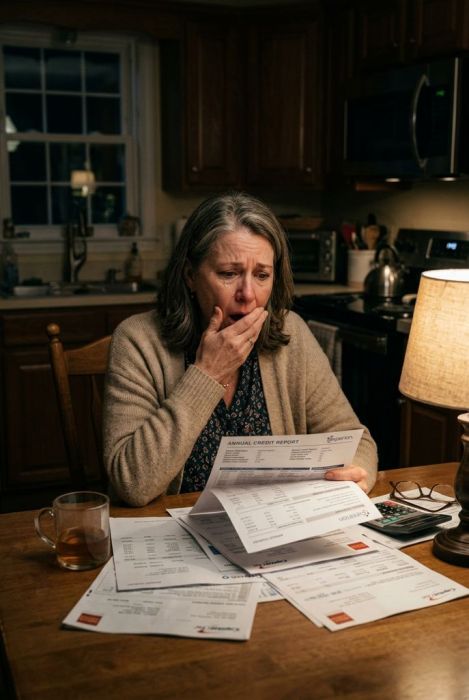
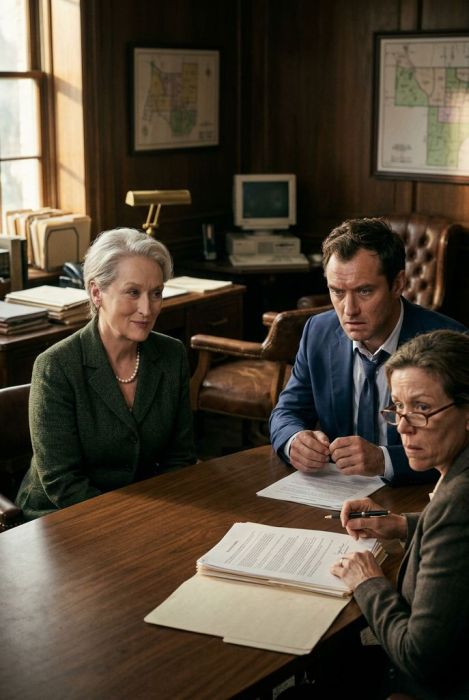
Then one Tuesday, I had a doctor's appointment and came home an hour early. Carol wasn't expecting me. She came out of my bedroom looking startled, clutching her apron, and I saw the corner of something dark peeking from her pocket. She laughed it off, said she was just tidying my jewelry box.
I waited until she'd gone to the store, then opened the rosewood box where Grandma's brooch should have been. The velvet cushion where it had rested for sixty years was empty.
My hands shook as I closed the lid. Not from anger. From clarity.
That night I didn't sleep. I lay awake thinking about Richard, about the rule he'd always drummed into me whenever anyone praised us for being comfortable. Don't ever let them see everything you have, Rosie. People will tell you what they want, but their hands will tell you the truth.
The next morning, I called the only people I still trusted completely: Richard's old partner, Sam Whitfield, and my lawyer, Dana Cruz. I didn't tell Marcus. Marcus loved Carol, thought she was an angel, and I didn't want to drag my son into a war until I was sure of what I was fighting.
Dana came to the house that afternoon under the pretense of catching up on old times. I told her everything: the missing spoon, the cameo, Grandma's brooch. She listened, then gave a knowing laugh.
"Rosie, let's do a little test," she said, pulling out her phone. "Indulge an old friend."
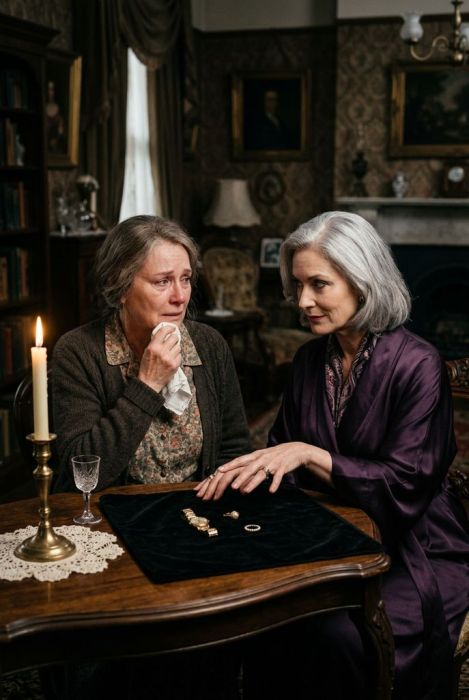
We went to the bank that very afternoon. Richard had kept a safety deposit box for years—one of those quiet habits of his, "in case the house burns down," he used to joke. Inside it, wrapped in tissue, was everything that really mattered: the good jewelry, the coin collection, the deeds I'd never unglued from my heart. The brooch I'd shown Carol was beautiful, yes, but it was a copy Richard had bought me on our anniversary, a lovely knockoff that fooled everyone who saw it.
The real heirloom—my grandmother's actual brooch, passed down four generations—had never once sat in that rosewood box. Richard had hidden it in the bank the year a contractor had eyed it a little too hungrily.
So when Carol came home that evening, I smiled and asked her to help me polish the silver. She didn't know that the silver I set out for her was real, while the pieces she'd been slipping into her apron for weeks were the same beautiful fakes Richard had taught me to scatter like breadcrumbs.
I set my trap the way Richard would have wanted: quietly, patiently, leaving a paper trail a mile long.
First, I began leaving things out on purpose—a diamond bracelet on the dresser, my mother's emerald ring in the bathroom. And every single time, I'd come back to find it gone, and Carol would shake her head and cluck about my forgetfulness.
I never confronted her. Not once. I just whispered the words into the recorder I kept in my pocket, then typed them into the notes app on the old phone Richard's grandson had set up for me.
"You probably just misplaced it, Mrs. Hartwell. You know how our memories get."
She said it so often I could have recited it along with her.
The bigger piece came from a pawnshop two towns over. Dana found the trail—not from Carol's credit cards, but from the sales she thought she'd covered. She'd been selling my valuables for weeks, timing her outings to when I napped. The shopkeeper remembered a young woman with kind eyes and a ready smile.
I kept the receipts. Every single one. And I kept the camera.
Oh, the camera—that was Richard's true gift to me. Hidden in the base of the little walnut clock on my dresser, a gift from my grandson for security, though Carol thought it was just an old-fashioned clock. It had been recording ever since Carol's second week, catching every trip of her slender fingers into my things.
For six weeks I played the sweet, confused old woman. I praised Carol to Marcus, told him what a blessing she was. And when she moved from small things to the big one—when she finally unhooked that flea-market painting from above the fireplace and tried to carry it to her car—I knew it was time.
The family gathering was Marcus's idea. A Sunday dinner, he said, to cheer me up. Carol would cook. I agreed, and I smiled, and I set the table with my best china.
That Sunday, as Carol served the roast, I stood up so slowly that every fork paused mid-air.
"I want to show you all something Richard taught me," I said.
And I pressed play on the phone beside Grandma's brooch—the fake one, the copy, sitting right where the real one had never been.
The footage played on the big television in the parlor. Carol, frozen, dropping her serving spoon. There she was, on screen, sliding silver into her apron. There she was, pocketing the cameo. There she was, my kind-eyed caregiver, loading Grandma's copy into her car, smiling like it was a gift.
Marcus's face went pale. Carol opened her mouth, but nothing came out.
"Mrs. Hartwell," she finally whispered, "I—you're confused. That's not—"
"The receipts are in the kitchen, Carol," I said gently. "Along with the pawnshop's records. And the police will be here any minute."
They arrived before the coffee was cold. Carol tried to run, tried to claim I'd given her those things as gifts, but I had the recordings from the day I came home early, the day I caught her rummaging through my jewelry. The officers found real stolen pieces in her trunk—not the fakes, but a handful of genuinely precious things she'd taken before I thought to swap them.
What she never knew, what made her face crumble, was that the things she'd sold so proudly to the pawnshop were replicas worth next to nothing. The real heirlooms—Grandma's actual brooch, my mother's true ring—had been safe in the bank the entire time.
They took her out in handcuffs, still insisting I was just a confused old woman. But I stood at my door, straight-backed, watching, and I did not feel confused at all.
Marcus was beside himself. He'd hired her. He'd told me I'd love her. He hugged me tight, apologizing over and over, tears in his eyes.
"Mom, why didn't you tell me?"
"Because I wanted proof," I said. "And because Richard taught me that the truth is only as strong as the evidence behind it."
I didn't lose anything that mattered. Carol went to trial, was convicted of theft from an elderly person—a charge the district attorney took seriously—and the judge sentenced her to several years plus restitution. The pawnshop records showed a pattern, and other families came forward with similar stories about the same sweet-voiced caregiver.
In the months that followed, my story spread quietly through town, the way good news does among neighbors. Two other families reached out to say they believed Carol had done the same to their aging parents, and that they finally felt brave enough to speak. What Carol had counted on most—that no one would ever believe an old woman over a sweet young caregiver—turned out to be exactly what destroyed her. People believed me because I had the evidence, the patience, and the love of a man who'd taught me to keep the truth close and the receipts closer.
As for me? I kept my house, my heirlooms, and my dignity. Marcus insisted on replacing the caregiver himself this time, vetting her with a background check and several visits, and the young woman who came to help me was everything Carol only pretended to be.
Some months later, I sat with my mother's real brooch pinned to my blouse, watching the sunset from my porch on Cedar Lane. Richard had always said a house can be a trap for the greedy. I used to think he meant the burglar, the thief, the stranger at the door.
But he was right about something bigger. For the ones who underestimate you, who mistake your kindness for weakness, who think your years make you easy to fool—the house, and the quiet old woman in it, can be the most dangerous trap of all.
I smiled, patted the brooch at my heart, and thought of Richard's voice.
"Good girl, Rosie," he'd have said. "You kept the receipts."