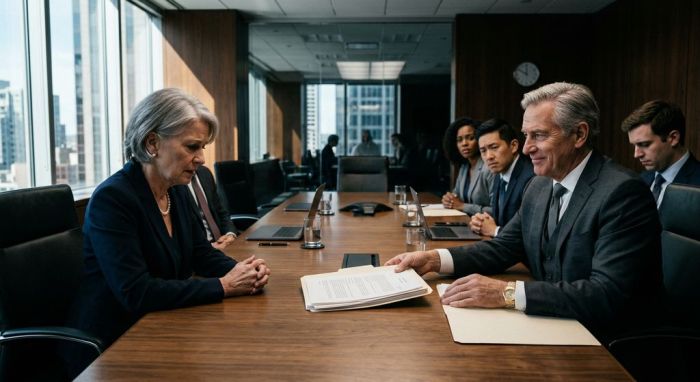
The first time I saw the papers, I thought it was a mistake. Gerald Cole, my business partner of thirty years, slid a manila folder across the conference table and told me, in front of our entire leadership team, that I was being removed from the company we had built from a single rusted van. The silence in that room lasted a full ten seconds before anyone even dared to breathe.
I sat there in my good blazer, the one I saved for meetings, and felt the whole room tilt. Outside the window, I could see the parking lot where Gerald and I had once parked our only delivery truck. Now it held forty glossy company vehicles. I had sold the floors, the cabinets, and the promise of Harper & Cole to every one of those customers. Gerald had handled the books.
It started in 1993, when my late husband Harold cosigned a nine-thousand-dollar loan so Gerald and I could buy that van and a truckload of rolled linoleum. Harold worked double shifts at the mill to keep us afloat for the first two years. He never once complained, and he never once asked for a share. He just said, "Diane, you go build something worth leaving behind."
I built it. I was the one who knocked on doors in the rain. I was the one who stood in strangers' kitchens and measured their lives into square footage. I talked a local church into a whole new gym floor, and from that one job, the referrals multiplied like wild mint. Gerald handled the numbers, the taxes, and the paperwork. He set up the corporation, signed the documents, and told me not to worry my head about the fine print.
For years, I believed him. I trusted him the way you trust a man who has watched your children grow up, who was there at Harold's funeral, who wept real tears when they lowered my husband into the ground. Gerald was family. That is what made what happened next so hard to accept.
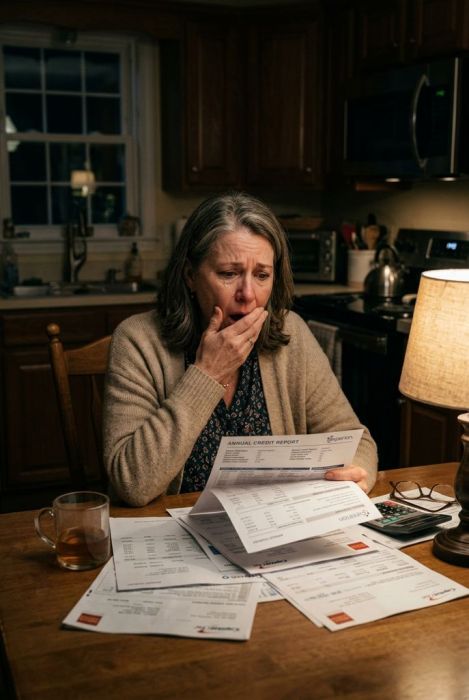
The folder contained a single page of what looked like legal nonsense at first. Then I saw the number, four hundred and twelve thousand dollars, and my name beside a signature I did not remember making. Gerald explained it coolly, the way he explained everything, as if I were a slow student. Years ago, he said, the company had needed capital, so he had taken out loans from a supplier called Crestline Holdings. He had used my shares as collateral. When the loans came due, the shares transferred. I no longer owned anything.
"Nothing personal, Diane," he said, straightening his tie. "Business is business."
I had signed papers over the years without reading every word. I was a floor-and-tile woman, not a lawyer, and Gerald had always assured me the documents were routine. A refinancing here, an equipment lease there. He would put a pen in my hand, point to the X, and say, "Just there, Diane, like always." I had signed my own undoing without ever once looking at what I was giving away.
For two weeks after that meeting, I did not leave my house. My daughter Maggie brought me soup and sat with me while I stared at the television without seeing it. Gerald's lawyer sent a check for thirty-one thousand dollars, the final payment for my interest, and a note that said I should consider myself lucky. I wanted to tear it up. I wanted to scream. But I had no lawyer of my own, and the company's attorneys, the ones I had paid for thirty years, now belonged to Gerald.
I spent whole nights staring at the ceiling, replaying thirty years in my head. I remembered every handshake, every holiday dinner at Gerald's house, every time he called me "the heart of the business." And I remembered Harold, too, and the strange calm on his face whenever Gerald brought out another stack of documents. At the time I had thought my husband was just tired of the details. Now I wondered if he had been watching something I was too trusting to see.
Then something happened that changed everything. A young clerk from our old bank called me out of the blue and said, almost apologetically, that a storage company had been paying rent on a small unit in my name for years. "I don't understand it, Mrs. Harper. It was set up decades ago. Routing says it's still active."
I drove over there that same afternoon, not knowing what I expected to find. The unit was the size of a walk-in closet, crammed with old boxes of faded invoices and dusty catalogs. I almost closed the door and left. But at the very back, tucked behind a stack of sagging cartons, sat a battered aluminum lockbox with my late husband's initials scratched into the metal.
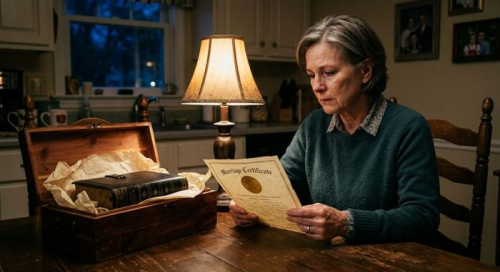
Harold had died five years before Gerald's betrayal. I had no memory of this lockbox. But my hands remembered it, the way a mother's hands remember the weight of a sleeping child. Inside, wrapped in oilcloth, was a second set of books. A leather ledger in Harold's careful handwriting, and a stack of banker's boxes marked DO NOT OPEN UNTIL.
I sat on the cold concrete floor and read that ledger until dark. Harold had been a number man himself, quiet and sharp, and he had never fully trusted Gerald. Over the years, he had quietly photocopied every document Gerald gave me to sign. He had kept his own record of every loan, every shell payment, and every company that seemed to exist only on paper. Crestline Holdings was there, and so were a dozen others, all funneling money to the same address: a post office box in Gerald's name.
In the last box, I found something even more precious. A recorded phone call from years ago, when Harold, pretending to be an auditor, had gotten Gerald to laugh and boast about how he was "hiding the flow so deep the accountants would never find it." My husband had never once told me what he was doing. He had simply left it all in a safe-deposit box, waiting for the day I would need it.
I did not go to bed that night. I went to work. I found a real lawyer, a fierce woman named Patricia Grange who specialized in exactly the kind of fraud Gerald had perfected in plain sight. She looked at Harold's ledger and whistled. "Diane," she said, "you don't have a problem. You have a gold mine."
What Patricia discovered next made the whole town talk for a year. The loans Gerald claimed were secured against my shares had never actually come from Crestline Holdings at all. Crestline was Gerald's own shell company, a name he had invented to move money from one pocket to the other. The debt that had cost me my company was not debt at all. It was a theft, laundered through four fake entities that all traced back to a single post office box.
And Harold, in the years before his death, had been wiser than both of us. He had made sure the original partnership agreement contained a clause Gerald had long forgotten. No transfer of controlling interest, the clause read, shall be valid without the written, witnessed consent of both partners. Every signature Gerald had forged or manipulated was void on its face.
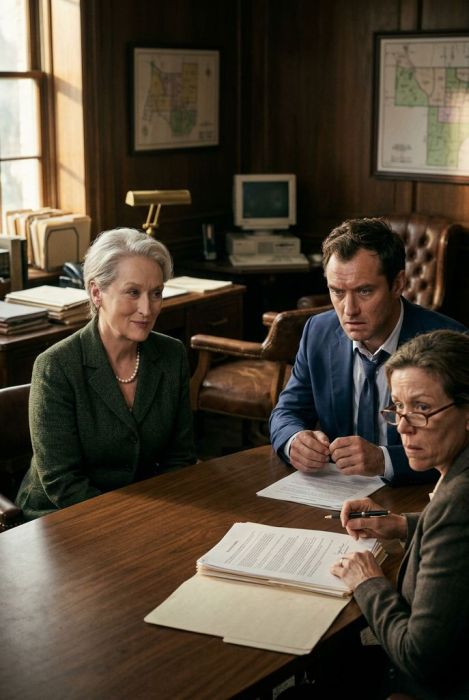
The confrontation came in the same conference room where Gerald had handed me the folder. Only this time, the room was full. My lawyer. His lawyer. A state investigator. And the entire leadership team, every one of them watching Gerald go pale as Patricia laid out the ledger, the box of documents, and the recording of his own voice bragging about how clever he was.
Gerald tried to laugh it off at first. Then he tried to threaten. The investigator simply read him his rights, and I watched the color drain from a face I had trusted for thirty years. The police arrived within the hour, and Gerald was led out in handcuffs, shouting that I would regret this, that he had made me, that I owed him everything.
I did not shout back. I did not need to. The company, every share of it, legally belonged to me now. The bank froze Gerald's accounts the moment the fraud was filed, and the checks he had written to his family, his boats, and his gambling debts bounced like rubber balls. The man who had tried to steal my life had stolen from himself instead, and the law was not gentle with him.
Crestline was dissolved. The shell companies were unwound. And in a courtroom that felt more like a church, a jury looked at thirty years of evidence and found Gerald guilty of fraud, forgery, and grand larceny. He was sentenced to prison, and the company we had built together became mine alone, free and clear.
I could have sold it. I could have let the whole thing go and retired to some quiet cottage. But I did not. I stood in the same parking lot one morning, thirty years after that first rusted van, and I looked at the company that bore my name. Harper & Cole. It was mine now, all of it, the way it always should have been.
The first thing I did was put Harold's leather ledger in a glass case in the front office, right where customers could see it. A new sign went up beneath it, in letters small enough to be humble and bold enough to be true. "Founded on trust. Proven by evidence." It stayed there until the day I finally retired, and every person who worked for me over those years knew exactly whose name was on the contract.
Gerald wrote me letters from prison at first, begging, then angry, then pathetic. I read the first one and burned the rest. Maggie asked me once if I felt sorry for him. I thought about it for a long time, standing at the window of the house Harold and I had bought together, the house Gerald had tried to take from me.
"No," I told her, finally. "I don't feel sorry for him. I feel sorry for the man I thought he was. But I don't miss him. I miss your father, who saw the truth coming twenty years before the rest of us."
It is a strange thing to be betrayed by the person you trusted most, and a stranger thing still to be saved by the memory of the person you trusted first. Harold left me no fortune, no grand estate. He left me something better. He left me the truth, hidden in a lockbox, waiting for the day I would need it most.
I think about that sometimes, when I close the shop at night and walk the quiet halls of the company Gerald tried to steal. The floors are his floors. The ledger is my ledger. And the name above the door, the name that survived every storm, is the only inheritance I ever needed.