
The morning my daughter was arrested, I was alphabetizing the mystery section. I remember the exact sound of it — the little bell over the door of Marsh's Books, the same bell my father hung there in 1969, and the way Detective Ben Wells filled the doorway like a storm cloud. He had a warrant in his hand. He had the canvas bank bag I kept in the safe, and he had my Maya's name on a sheet of paper he read to me in a voice he tried very hard to keep gentle.
Maya, my only child, my kindergarten teacher with the sunflower earrings, was being arrested for stealing forty-one thousand dollars from her own mother's bookstore.
I stood there in my reading glasses with a half-empty box of alphabet cards, and I laughed. Not a happy laugh. The kind of laugh you make when the world has suddenly stopped making sense. "There's been a mistake," I told him. "You have the wrong person. Maya wouldn't take a dollar from me if her life depended on it."
But Detective Wells had evidence. That was the word everyone kept using. Evidence. The store's accounts had been drained over the past year, little by little at first, then in two big chunks. The safe had been emptied the night before — a night Maya had stopped by to pick up a box of children's books for her classroom. Valerie, my manager, had stayed late that night helping me close up. And the very next morning, she had walked into my office looking pale and shaken, holding a piece of paper she said she'd found in the register drawer.
"Ellie, I don't know how to tell you this." Her voice had a wobble in it I'd never heard before. "It's Maya. She took the money."
I want to be fair to Valerie Danner, even now, because for fifteen years she was the best thing that ever happened to Marsh's Books. She came to me at thirty-nine, a widow with a teenage daughter and a sad little resume, asking if I needed anyone part-time during the Christmas rush. She stayed. She learned the store the way I had learned it from my father — the way you learn a house you plan to live in for the rest of your life. She knew which customers wanted their romance novels wrapped in brown paper. She knew that Mr. Henley would be in every Tuesday at ten sharp for the new Westerns. She handled the ordering, the payroll, the bank runs, the keys.
By year five, I gave her the keys. By year ten, I told her the store would be hers someday if I ever stepped back. I meant it, too. Valerie was family. She sat beside me in the hospital when I had my gallbladder out. She brought me chicken soup and wept into my shoulder when my mother died. When Maya graduated college and came home with a teaching degree instead of a business one, Valerie was the one who said, "Smart girl. She knows books are meant to be loved, not counted."
That was the thing, you see. Maya did not want the bookstore. She loved it the way you love a childhood bedroom you've outgrown. She dropped by on weekends, made me tea in the back room, and told me stories about her students that made me laugh until my sides hurt. She had never once asked me for money. She had never once touched the accounts. She did not even know the code to the safe — a fact I told Detective Wells seven times.
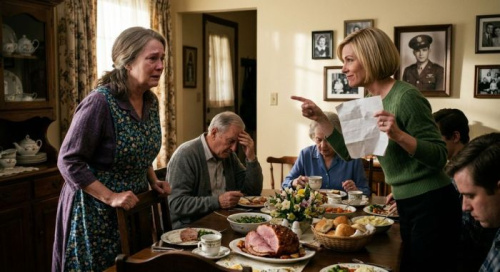
"She knew it," Valerie said quietly, standing behind me in the shop like a mourner at a funeral. "I showed her myself, the night she came by. She said she wanted to help with the deposit."
I turned around and looked at my manager of fifteen years, and for the first time, something cold settled in my chest. Because Maya had never once asked to do the deposit. Maya hated the deposit. She said so every Christmas when I made her help count the cash.
I did not confront Valerie that day. I was too busy being a mother whose child was sitting in a county holding cell. I called the best lawyer in Ashland, a woman named Ruth Chang who had once bought her very first book from me — a dog-eared copy of To Kill a Mockingbird she still kept on her shelf. Ruth did not smile at me when she took the case. She looked at the evidence first.
The evidence was damning, she admitted. There was an email from Maya's address authorizing a wire transfer to an account in Nevada that Maya could not pronounce. There were withdrawal slips signed with a signature that looked, to a normal eye, like my daughter's. And there was the bank bag, found in the trunk of Maya's car during a routine search, holding twelve thousand dollars in twenties with the store's deposit stamp still on the bands.
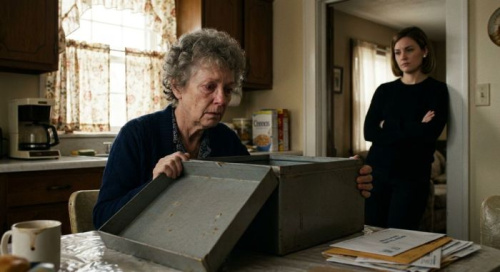
Maya cried in my arms at the courthouse steps. "Mom, I swear, I never put that bag in my car. I don't even know what a wire transfer is." And I held her, and I believed her, because a mother knows. But knowing something in your bones and proving it in a courtroom are two very different things.
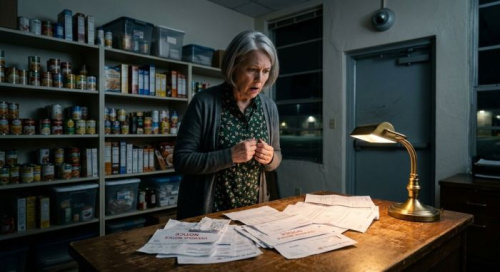
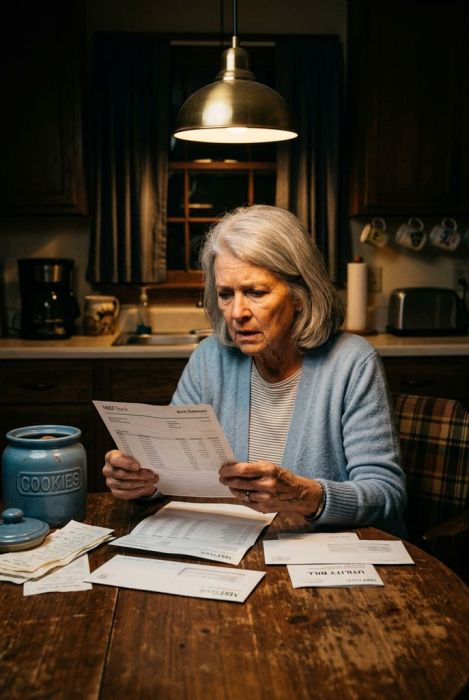
I spent two weeks living in my bookstore. I could not sleep at home, in the house where the walls had started to whisper Valerie's name at me. Every night after closing, I went through the paperwork. Every receipt, every invoice, every bank statement from the past two years. I printed them out the old way, the way my father taught me, because there is something about holding paper in your hands that tells you the truth faster than any screen.
And that is when I found it.
It was a deposit slip, a pale green one from our bank, tucked at the very bottom of the register drawer where Valerie kept the day's receipts. It was dated July 4th. The Fourth of July. I stared at it for a long time, because our branch is closed on the Fourth, and has been closed on the Fourth for as long as anyone in Ashland can remember. The slip had the store's account number on it and the amount of a deposit that had never appeared in the ledger.
I sat with that piece of paper in my hands, and the pieces began to fall like dominoes. A deposit dated a national holiday. A bank bag in a trunk her own mother could have opened. An email from an address Maya's students' parents forwarded spam to, because Maya never used it. And a manager who stayed late every single time the safe was lighter than it should have been.
I did not call the police yet. I wanted to be sure. So I did the only thing I knew how to do: I asked my customers.
The next Tuesday, at ten in the morning, Mr. Henry Henley walked through the door. He is ninety-one years old, a retired mailman, and he has come to Marsh's Books every Tuesday for twenty-one years. He reads Westerns, Louis L'Amour mostly, and he drinks his coffee black with two sugars while he samples the new arrivals. I poured his coffee, set it in front of him, and sat down across the table for the first time in twenty-one years, and I told him everything.
He listened without interrupting. Then he reached into the pocket of his cardigan, pulled out a small spiral notebook held together with a rubber band, and placed it on the table between us.
"I keep a record of everyone who comes and goes," he said. "It's an old habit from the mail route. You never know when a man's dog is going to bite the wrong person, so you learn to notice who's where, and when."
He opened it to the page from two Tuesdays earlier — the night Maya had stopped by. There, in his careful old-man handwriting, was the gift I will never be able to repay. "Valerie Danner, 6:58, stayed to 'help.' Left 9:12. Carrying paper grocery bag. Door to alley." And beneath it: "Maya Marsh, 7:20, picked up book box, out by 7:40."
"That's it," I whispered. "That's the whole case."
Mr. Henley reached across the table and took my hand. "I wasn't spying, Ellie," he said. "I just never trusted a woman who talks about her own family the way she talks about yours."
I still did not confront Valerie. Not yet. Instead, I called Ruth Chang, and then I asked her to call Detective Wells, and together we did something quiet and terrible and completely legal. We pulled Valerie's bank records with a subpoena. We pulled the store's camera footage from the little old camera over the register — the one Valerie said had "stopped working months ago." It had not stopped working. I had fixed it myself, the way I fixed everything in that store, with a screwdriver and patience and my father's old habit of never throwing anything away.
The footage showed Valerie coming in after hours on seven separate nights. It showed her at the bank, on a Tuesday, with a canvas bag that matched the one "found" in Maya's trunk. And her bank records showed deposits that matched the missing money almost to the dollar — deposits that began the same month she started driving a brand-new car and talking about a little cottage up in the hills she said her sister's estate had left her.
Valerie had been skimming for over a year. The big empty safe had never been a burglary. It had been a cover-up — the final act of a woman who had decided the store was hers by right, and that only my daughter stood between her and everything she believed she deserved.
The night of the thirtieth anniversary of Marsh's Books, I almost did not go through with it. I had planned the party months before, when the only thing on my mind was how to thank the town that had kept my little shop alive for three decades. Now the shop was dark, the lights were off, and my daughter was facing a felony charge that could take her teaching license, her savings, her future.
But Mrs. Okafor, my oldest friend in the knitting circle, convinced me to hold the party anyway. "The store is yours," she said. "You built it. You don't get to let her win the anniversary too."
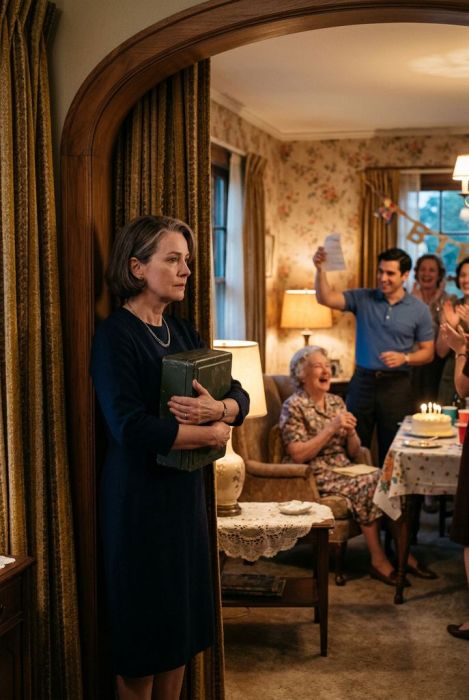
So I opened the doors. I set out the punch and the cookies, and I invited the whole town. Valerie came early, of course, all smiles and sympathy, telling everyone how she was "holding it together" for me while Maya's case was "a tragedy for the family." She wore a new blazer the color of her new car. She hugged me like a sister.
And at seven o'clock, when the front room was full — the book club ladies on the chairs, Mr. Henley in his usual corner with his coffee — Detective Ben Wells walked through the door one more time.
He did not have a warrant this time. He had a folder. And the wonderful, terrible thing about a small town is that everyone leans in when the detective walks into a party.
Valerie's smile lasted about eleven seconds. That was how long it took Mr. Henley to stand up, pull the little spiral notebook from his cardigan, and read the page out loud in his steady mailman's voice, so that everyone could hear how she had carried a paper grocery bag out through the alley door on the very night she claimed her hands were innocent. That was how long it took Detective Wells to lay the deposit slip dated July 4th on the table beside the punch bowl, and to tell the room that the bank had confirmed the slip's account number, and that the account belonged to a trust Valerie had opened in her sister's name. That was how long it took the color to drain out of her face in front of every person she had lied to for a year.
I did not raise my voice. I did not need to. "The store was never a business to me, Valerie," I said, quiet enough that only she and the first two rows heard me. "It was a promise my father made to this town. And you tried to destroy it through my child. You will answer for that."
She tried to run for the back door, but Detective Wells was already between her and it. She was arrested right there, beside the suspense shelf, while the whole town watched in the kind of silence you can hear a pin drop in. She was charged with embezzlement, fraud, tampering with evidence, and filing a false report against Maya. She pleaded guilty to the embezzlement and the false report. She lost the car. She lost the cottage in the hills, which the bank repossessed when the truth came out about the deposits. And the last I heard of her, she had moved to a town three counties away where nobody knew her name — which was, I think, the worst punishment of all, for a woman whose whole world was the opinions of other people.
Maya's charges were dropped the week before Thanksgiving. Ruth Chang stood next to me in the courtroom and watched the judge dismiss them with the kind of finality that makes you want to cry from relief. My daughter hugged me so hard I felt my ribs creak, and she whispered, "You never doubted me, did you?" and I told her the truth: not for one single second.
The town did something else, too. The book club raised nine thousand dollars to cover Maya's legal fees, and they would not take a penny of it back, so Maya used it to start a children's reading program in the store's back room. Now every Saturday morning, she sits cross-legged on the floor with twelve kids and a stack of picture books, and I stand in the doorway and watch her, and I feel my heart grow about three sizes.
We changed the sign over the door last spring. It used to say Marsh's Books. Now it says Marsh & Daughter Books, and below it, in smaller letters, the little motto my father would have loved: "Everyone gets a second chapter."
I am sixty-three years old now. I still open the store every morning at nine. I still alphabetize the mystery section, but I do it faster now and I smile more. Mr. Henley still comes Tuesdays at ten, and every once in a while I catch him writing in his notebook, and I think about how a ninety-one-year-old mailman with a rubber-banded spiral notebook had more wisdom in his pocket than a thief with a brand-new car ever had in her plans.
Some people think justice is a courtroom thing. But I learned that night, with the punch going flat and half the town crying happy tears, that justice is a community thing. It is your oldest customer standing up for you. It is your daughter's name cleared in front of everyone who loves her. It is knowing that the woman who tried to take everything from you ended up with nothing at all — while you got to keep the thing she could never understand.
The store made a profit last year, for the first time in three years. Not because the money changed. Because the love in it changed. And there is no ledger in any bank that can measure that.