The first time I saw my book, it had someone else's name on the cover.
It was a rainy Tuesday in Woodstock, Vermont, four months after Delia Hartwell stopped answering my calls. I was walking home from the pharmacy when the window of Copper Kettle Books stopped me cold. There it was, stacked in a neat pyramid beside a hand-lettered sign that read LOCAL AUTHOR. The Season of Us. By Delia Hartwell.
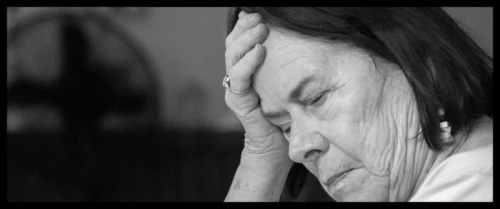
I stood there so long that Ruth, the bookstore owner, came out and asked if I was all right. I couldn't speak. I pressed my palm against the glass like a woman seeing a ghost, because in a way I was. Every word of that book had come from my heart. Every page had been written on yellow legal pads in my attic, in my handwriting, in my grief. And now it wore her name like a coat she had stolen off my back.
My husband Tom Whitfield taught history at the same high school where I taught English for thirty-one years. We were married for thirty-eight years, and he died four years ago, on a Tuesday — a heart attack in our garden, kneeling among the peonies he had planted for our fortieth anniversary. I found him with the trowel still in his hand. For a year after that, I did not know who I was. I slept in his armchair and replayed his voicemail every night.
One night, at my kitchen table, I started writing. Not journaling, exactly. I was telling our story the way I wished someone had told it to me. The way he proposed in the rain at the covered bridge. The way we lost our first baby and held each other in a hospital corridor. The way he learned to make pancakes for our daughter Sarah because my morning sickness lasted seven months. I wrote the way I breathed — a little at a time, without thinking about it.
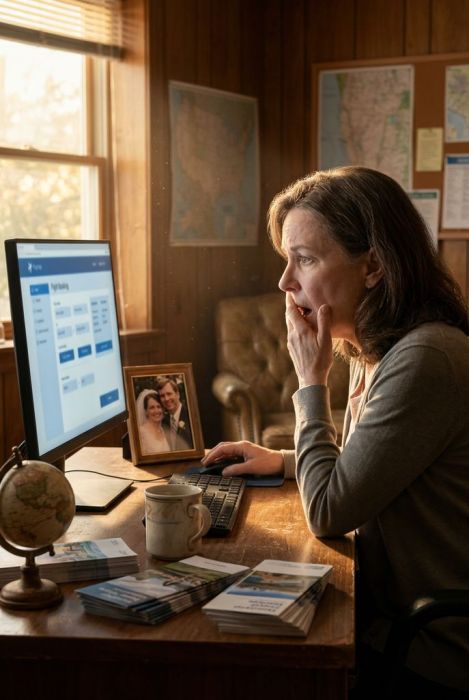
I wrote it longhand, on yellow legal pads, in pencil, in my terrible sideways scrawl. When a chapter was done, I typed it up on the old laptop Tom had bought me for my sixtieth birthday and saved it in a folder called SEASON. Then I put the pad in a cardboard banker's box in the attic, with the date written on the first page, because I am a teacher, and teachers keep records.
For two years the story stayed mine, shared with no one but Sarah. I did not want to publish it. I did not want anything. I just needed to put Tom back on the page, where he could not leave me again. Then Delia found out.
I met Delia Hartwell the year we both joined the Tuesday Night Readers, twenty-two years ago. She was a realtor, sharp and funny, with a laugh that made people want to sit next to her. Her divorce from a man named Greg had been brutal, and she carried it like an old injury — carefully, but still wincing. She never had children, so she decided my family was hers, and I let her. I believed her when she said I was the sister she never had.
She was at the funeral, and she brought casseroles to my house for sixteen straight Tuesdays. She held my hand in the parking lot of the funeral home and said, "Ellie, I will be here for you as long as you need me." And I believed her.
The manuscript came out of me by accident. She stopped by on a Sunday in October and found me at the kitchen table, head down, yellow pad glowing under the lamp, eyes red. "What's this?" she asked, and before I could cover it, she had read two pages. Then two more. Then she started to cry, and she said the words I would replay for the rest of my life: "Ellie, this is the most beautiful thing I have ever read. Please let me read the rest. I promise, not one word to anyone. It's just for me."
I trusted her. That was my mistake, but it was not a foolish one. She was my best friend. She had earned that trust with twenty-two years of loyalty. So one night in November, I sent her the whole manuscript — every chapter, every page, including the dedication I had never shown anyone. For Tom — the man who taught me that quiet love is the longest kind.
The next month, Delia went quiet. She canceled two dinners, then stopped returning my calls. When I finally reached her, she said she was swamped and needed space. I gave her the grace I had always given her.
When the book appeared in the window of Copper Kettle Books, I understood.
I want to tell you exactly what I felt, because anyone betrayed knows it. It was not just anger. It was vertigo. The ground under my feet had a hole in it. The woman I had called sister had reached into my grief, taken my husband's memory, and sold it. She had not stolen a manuscript. She had stolen my mourning. She had made herself the widow, the lover, the one who remembered.
I went to her house that night and knocked until she opened the door. She stood there in a silk robe with a glass of wine, looking at me like I was the one who had done something wrong. "Delia," I said, "the book. The Season of Us. That is mine. Every word is mine, and you know it."
She smiled. That is the part I will never forget. She actually smiled, and said, "Ellie, sweetheart, I know you have been struggling since Tom passed. But I wrote that book. I worked on it for ten years."
"You never showed me a page of your writing in your life," I said. "You always told me you could never finish anything."
Her smile went tight. "Maybe I did not want to show you, because I knew you would do exactly this. You would hear a story about another woman's life and convince yourself it was yours. It's part of your grief, Ellie. I am not angry at you. I am worried about you."
She closed the door. I stood on her porch in the dark, understanding that she was going to lie, and lie well, and that she knew I had no proof anyone would believe.
The worst part came next. Delia told the Tuesday Night Readers that I had become confused since Tom died — that I had asked her to help me write my story, that she had done it for me out of kindness, and that I had become possessive and invented the idea that it was all mine. She said it with tears in her eyes, and the women around that table, my friends, nodded and squeezed her hand. Then she spread the word around town. Eleanor Whitfield has dementia, poor thing. She has been claiming Delia's book is hers. Do not be unkind to her. She cannot help it.
You understand what that is. It is not just theft. It is a slow murder of a person's reputation, done with a kind smile.
People stopped looking me in the eye. At the grocery store, they glanced at me and looked away. My old students heard the gossip. One of them, a boy named Jason, now a lawyer in Burlington, called me out of the blue and said, "Mrs. Whitfield, I do not believe a single word of it. If you ever need anything, you call me."
That call was the first crack of light. I thanked him and said I was fine, but I was not. I was sitting in my attic.
That was when I found the box again. The banker's box with the pads. I had put it up there and told myself the story was gone, the way you put away a dead husband's shirts because you are not ready to look at them yet. But I could look now.
I lifted the lid, and there they were. Seventeen yellow legal pads, every one dated on the first page, every one in my handwriting. Page after page of a story I had lived, rewritten, lived again. The story of us was here, in pencil, in my sideways scrawl. And suddenly I was clear as glass.
I called my daughter Sarah in Sacramento. She said, "Mom, I have every email you ever sent me. Chapter by chapter. I have the drafts from when you were still calling it Daddy's Book. You sent me the dedication page the night you wrote it. I printed it, Mom. I have had it on my fridge for four years."
She had proof. My daughter, who I had sent the story to in pieces because I could not bear to read it myself, had the chain of custody, the timeline, the receipts of a mother's heart.
Then I did the quiet, methodical thing I had done four thousand times in a classroom. I gathered evidence. I called Jason. And I pulled out the copyright registration I had filed two years earlier — thirty-five dollars back then, and it would cost Delia everything now. The registration was in my name, for a manuscript called The Season of Us, filed a full two years before her book appeared in any catalog.
The book launch was scheduled for the first Saturday of March at Copper Kettle Books. Ruth had called me with real distress in her voice. "Ellie, I don't know what to do. She's my author now. I have to host her." I told her it was all right, and that I would be there.
That night, the shop was packed. Delia stood at a small table with a tower of books, glowing, telling the crowd — my neighbors, my former students, my book club — how she had written The Season of Us over ten long years, how it was the story of a great love she had known and lost, how she had locked herself in a cabin to finish it.
I watched from the back, holding a yellow legal pad against my chest the way I had held Sarah the night she was born.
When Delia finished her speech and opened the floor for questions, a woman in the second row asked, "Delia, which chapter is your favorite?"
"Oh," Delia said, pressing her hand to her heart, "the one where she finds him in the garden. I still cannot read it without crying."
The room murmured with sympathy. I waited for it to die, then spoke quietly from the back: "That is strange, Delia. Because in the book, she finds him in the garden on page one hundred and twelve. And the man she finds is my husband. He was kneeling among peonies, and he was holding a trowel."
Every head in that shop turned.
Delia's smile slid off her face like wet paint. "Ellie, please," she began, in that pitying voice she used on me now. "I have explained to everyone. You are not well—"
"I am not not-well, Delia," I said. "I am not confused. And I have something to show you."
I walked to the front of the shop. I set the yellow pad on her table, open to the first page, where my handwriting read The Season of Us, Chapter One, and where my dedication read For Tom — the man who taught me that quiet love is the longest kind.
"Your book does not have this page," I said. "You took the dedication out, because you could not explain it."
Delia looked at the pad, then at me, then at the crowd. She laughed that brittle, sharp laugh I knew so well. "This is a prop," she said. "She is delusional. I wrote every—"
That was when the back door of the shop opened, and Sarah walked in. My daughter had flown in from Sacramento that morning, holding a thick manila folder.
"Hi, Aunt Delia," Sarah said, and the way she said the word aunt made the whole room go quiet. "I have something for you. Every email my mother sent me for two years, chapter by chapter, with dates. I printed them all. Also the dedication page she sent me at 11:47 p.m. the night she wrote it. And the copyright registration, filed two years before your book existed."
She laid the folder beside my yellow pad.
Then Jason stepped forward, and with him came a woman I had never met — the general counsel for the publishing house that had printed The Season of Us. She introduced herself, then said, in the flat, careful voice of a person paid to be unimpressed: "Ms. Hartwell, this evening we received a formal infringement notice with substantial evidence. Effective immediately, all sales of your book are suspended, pending a full investigation."
Delia finally did the only honest thing she did all year. She ran. She grabbed her coat — without her books, without her speech, without her audience — and walked out of Copper Kettle Books into the rain. The door was still swinging when Ruth, standing behind the counter with tears in her eyes, hung a small handwritten sign in the window: SOLD OUT. WATCH THIS SPACE.
The publisher did not just suspend the book. They canceled Delia's contract and demanded the advance back — all two hundred and fifty thousand dollars, plus interest. Delia had already spent it on a new car, a new kitchen, and the down payment on the little saltbox house she had been eyeing for years. She had to sell them all. A judge ordered her to pay me damages, and she paid by handing over the proceeds of exactly the things she had stolen the money for in the first place.
The real karma was slower, and kinder to me. The town found out. I did not have to tell anyone. The Tuesday Night Readers held an emergency meeting in Marla's living room, and this time, when the women looked at me, they did not look away. They looked like people who had failed me, and they were sorry. Ruth put my yellow pad in the front window of Copper Kettle Books under a card that read: THE SEASON OF US — THE ORIGINAL.
Six months later, I signed my own contract. The publisher came to me in person, with an apology I accepted, because I am old enough to know that forgiveness is mostly for the forgiver. They printed The Season of Us with my name on the cover and the dedication right where I had always meant it to be. It was not a bestseller. It did not need to be. But it sold, quietly, the way quiet books do, and every royalty check for the rest of my life goes into the Tom Whitfield Memorial Scholarship at Woodstock High, for a senior who writes the truest essay about the person they love the most.
Delia moved to Florida to live with her sister. The last I heard, she was telling people down there that she had been a realtor in Vermont who got caught up in a nasty lawsuit. That is the thing about people like Delia. They never really tell the story. They just find a new audience.
I am at peace now. I still go to Tuesday Night Readers, and the women still make room for me, and sometimes I look at my hands — the hands that held Tom, that held Sarah, that held a pencil for thirty-one years and seventeen yellow pads — and I understand what my husband taught me in the garden without ever saying a word. Some things can be stolen. The love that writes the story cannot.
The Season of Us is in the window of Copper Kettle Books again this week. My name is on it. And underneath, on a card Ruth refuses to let me take down, in her careful handwriting: The man she loved was real. So are the words. Both of them belong to her.