The first time I saw Wallace standing in my kitchen, I almost did not recognize him. He wore a suit that cost more than a full month of receipts at my little diner, and he clutched a folder against his chest like it was made of gold. He had come for the funeral of my husband Matthew, of course. That part was true. My Matthew had been gone for nine days, and I was still sleeping with the light on because the house felt too quiet to sleep in the dark.
I thought Wallace had come to mourn with me. I even made him a plate of eggs. That had always been who I was, the kind of woman who feeds people even when her own heart is hollow. Wallace was my husband's nephew, the son of the brother Matthew had stopped speaking to years before. When he showed up at my door with red eyes and a borrowed raincoat, I made him breakfast and pretended not to notice that he never once asked how I was truly holding up.
I should have seen it then. But grief makes you soft, and I let it happen.
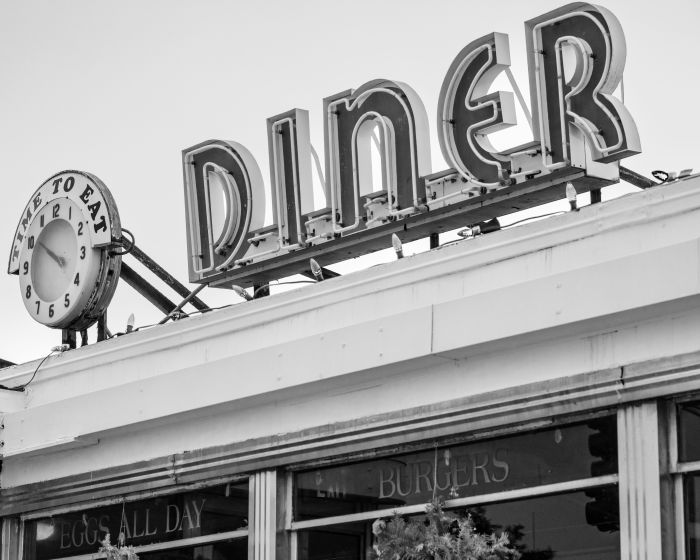
The diner on Beechwood Avenue had been in our family for five decades. Matthew's mother, Mabel, had opened it long before I was born, and when I married Matthew I slid into its rhythm the way a body settles into a warm bed. By the time he passed, I knew every regular by name. I knew Harold liked his eggs scrambled dry and his toast good and burned. I knew Diane's coffee had to be refilled before she even asked. I knew the smell of fresh bacon that drifted onto the pavement before seven every morning. Matthew used to say the place was not a restaurant but a promise we kept to our town. I believed every word.
So when Wallace told me, two weeks after the funeral, that he had found papers in Matthew's desk, old papers he claimed were signed in the last year of Matthew's life, giving him the voting rights to the business, I laughed out loud. I laughed because it was absurd, and I laughed because the thought of it hurt. His face went smooth and serious, and he shook his head slowly, the way you shake it at a child who will not listen.
"Care to see them?" he said.
I did not want to see them. But I wished I had.
The trouble crept in so quietly that I almost missed it. Wallace never once offered to show me those papers after that. He did not need to. He started coming to the diner before the coffee was on, standing beside the register while I greeted customers. When I asked him to step back from the till, he said he was looking after everything now. When I asked who had decided that, he smiled a flat smile and said the family had talked it over.
My own staff turned away from me first. My server Maureen stopped meeting my eye. My line cook Fred started calling him the boss. I watched my diner, my husband's diner, my mother-in-law's diner, drop out from under me like a scarf slipping off a chair, and I could not seem to catch hold of it.
He fired me from my own kitchen three weeks later. He told me I was a woman who had not learned to move forward, and that the family wanted him in charge now. My granddaughter Brie came out into the alley after me, still holding the tray she had carried, and begged me not to let him do it. I told her to keep her temper. Then I took off my apron, folded it nicely, and set it across the counter in front of him.
Wallace thought I was surrendering. The little grin on his face as I walked out the door stayed with me for weeks. It was the exact look of a man who believed he had already won.
But I had not surrendered. I had simply begun to pack the flour.
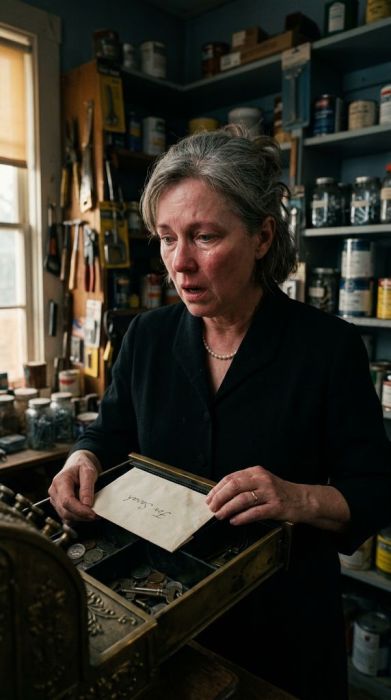
You see, there was a flour bin in the pantry that had stood there for thirty years. It was a plain tin canister, battered and dusted white, the kind of thing no one ever looks at twice. When I asked if I could take a breath of air, I slipped out to that pantry. Tucked at the bottom of the flour, wrapped in an old blue dish towel, I kept one piece of paper. Not the invented papers Wallace was waving around. I kept the real deed to the building, the one signed the day we bought the place, with my name and Matthew's at the bottom like two tired signatures.
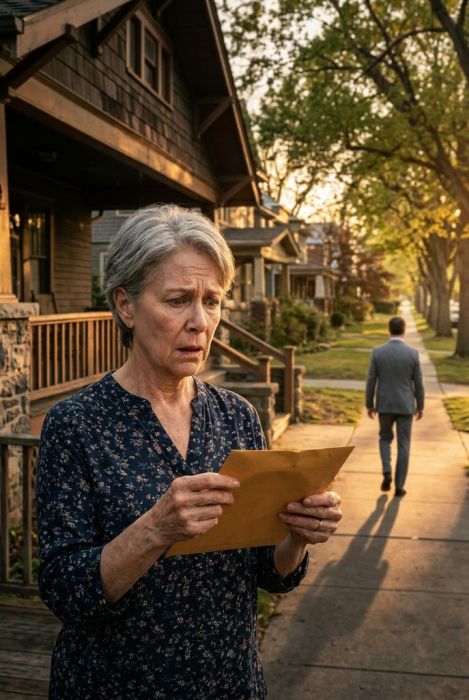
And there, in the corner of that deed, folded into the margin and easy to skim, sat a single clause. I had read it a dozen times and passed over it every time, because it had never once mattered. The clause said this, in the careful language of the lawyer who had drawn it forty years earlier: that in the event any heir of the estate ever attempted to claim, transfer, or sell the property without my signature, the full ownership would pass at once and entirely to me. To my name alone. Matthew and his brother had signed that clause when the trust was made, while they still trusted each other. It had been a quiet fear Matthew had carried, and in the end it became my armor.
I drove that deed straight to our old family lawyer, Rob Callahan. He was nearly deaf and half blind, but there was nothing wrong with his mind. He read the deed in silence. Then he read the clause again, slowly. He pushed his glasses up and said, "Joanna, do you know that this could sink him?" I told him I did. He said, "Then do not tell a soul. Let him lead his own rope. You only need to be standing the day it pulls."
So I said nothing. I came to the diner every morning with my keys and my apron, and I watched, and I waited, and I let my nephew line up his own claims and then walk them straight into the trap he had built. The town watched too. Nobody said anything to me directly, but I could feel the waitress being kinder to me and colder to him, and I could tell the accounts had begun to turn.
The morning it happened, Wallace framed the diner as a tour. There was a man he had been courting, the county developer, with a silk shirt and a pleasant voice. Wallace walked him through the kitchen, showed him with full confidence where he would put the cash register and the new benches, and treated the brick as though it had always belonged to him. He slid the papers across the table, still smiling, and the gentleman was about to sign.
I was not angry. I walked in slowly, unhurried, carrying the flour bin. I opened it, pulled out the deed folded inside the old towel, and set it flat on the table in front of them.
The developer read it. Then he read it again. He traced the two signatures with one finger, checking both edges of the page. Then he lifted his head and looked between me and Wallace the way you measure two people on a scale. He said the deed was signed before that trust existed, that it was recorded, that it was real. He told Wallace the building could not pass to anyone without my signature, and that he sold a claim that was never his to sell.
Wallace's face emptied. He took a step toward me and I saw his hand twitch, and for one terrible second I thought he would strike me. He reached instead for the deed, and I pulled it away with the quickness of a hand that has spent years catching falling plates. His voice cracked as he shouted that the paper was decades dead, that it meant nothing, that the whole town had turned on him.
That was when the deputy's car pulled into the lot.
The lawyer had also done one more quiet thing. He had taken out a life, and laid Matthew's warning, and done it without a sound. Then he had let the young man talk on the ride back to town, on the phone, in the parking lot, long enough to fill a dead page with his own mouth. Wallace had told the entire county, in a warm bright voice, exactly how he had planned to sell his aunt's food out from under her. The recording came up in the office as clear as a bell.
The deputy came in while Wallace was still shouting, read him the paper, and took him out the front past the windows where half the town lined up to watch. He went on swearing at me until they folded him into the county car. I stood still and watched the color run out of him the way a lamp goes warm at dawn.
I felt no triumph in that moment. I felt only the tired of it, which was itself a kind of proof that I had never meant him any harm. But as the town filled the diner the next morning, and Harold took his usual seat, and the coffee came back to the pavements before sunrise, I understood there was a difference between the revenge and the justice, and whichever one it was, I had broken the good of it.
The diner stayed open. I served grits at seven and pancakes all day, exactly as we had always done. People asked me how I had kept the place when a month earlier they had counted it lost, and I would not give them the dramatic answer they wanted. I pointed instead at the flour tin, and they laughed, because it looks like exactly what it is: an ordinary, empty box on a shelf.
But the deed lives inside it yet, next to the blue towel, and it will stay there. When I am gone, it passes to Brie, and she will understand one day why the old woman about the flour bin smiled the way she did. Not because of what it kept hidden. Because of what it refused to let the family steal when the family went greedy.
I still pour coffee for Harold. I still call Diane before she asks. And sometimes, when the evening is slow and the kitchen is clean, I put my hand on the tin and think of Matthew. He had not forgotten me. He had left me a claim that no con, no lie, and no suit in the world could ever take from me. Some promises settle like bacon grease, slow and golden, and they linger on the walls longer than the loudest voice.